Thieves steal $4 million diamond necklace in brazen smash-and-grab heist

Daftar Isi
Two Men Walked Into a Vienna Museum and Walked Out With a $4 Million Egyptian Royal Necklace
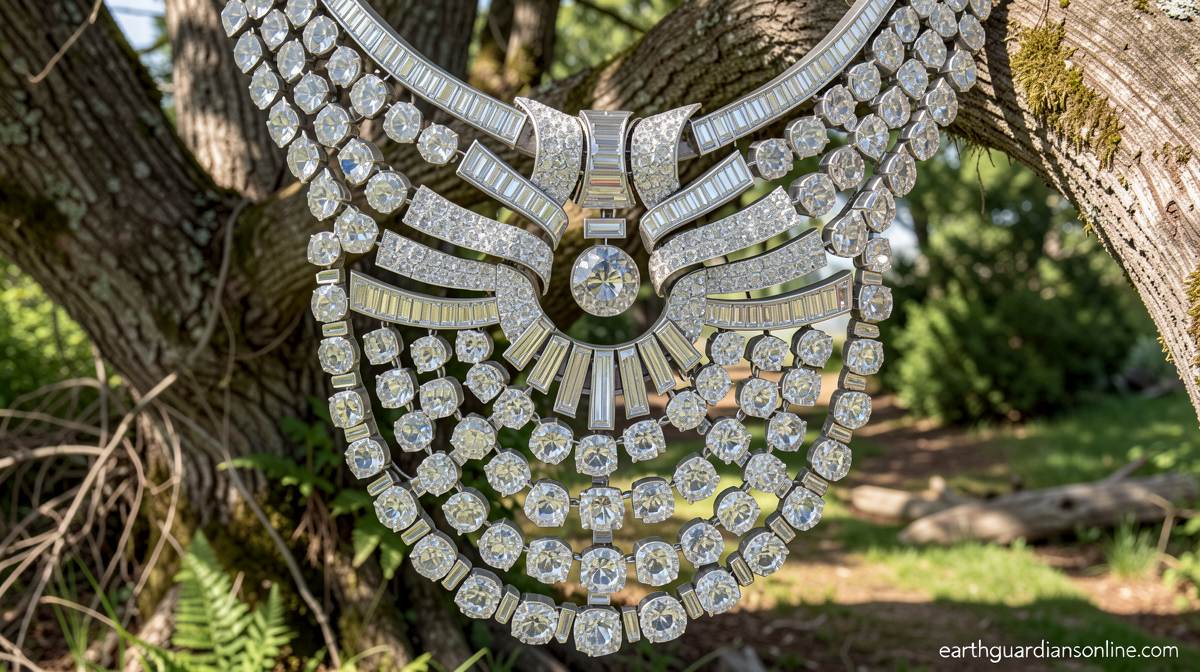
Earthguardiansonline.com – Europe’s museums are becoming soft targets for increasingly bold thieves, and the latest strike landed squarely in the heart of Vienna. On Thursday, two unmasked men entered the Museum of Applied Arts (MAK) under the guise of ordinary visitors, walked straight to a glass display case, and shattered it with a hammer. What they lifted from the broken vitrine was a platinum necklace set with 673 diamonds — a piece valued at more than $4 million that had once adorned the neck of an Egyptian queen.
The daylight robbery unfolded in front of exhibition attendees, and surveillance cameras recorded both men before they reached the jewelry display. Austrian police confirmed that no visitors or staff were harmed, though one of the suspects is believed to have been armed with a firearm. The pair reportedly fled on foot in the direction of a nearby park, and authorities launched what they described as “extensive search operations,” deploying canine units across the surrounding district. Photos of both suspects were released to the public as the manhunt continued.
The Necklace’s Royal Lineage
The stolen piece carries a provenance that stretches back nearly a century. Van Cleef & Arpels, the French maison, crafted the necklace in the 1930s for Queen Nazli, wife of Egypt’s King Fuad I. It was commissioned alongside a matching tiara to mark the 1939 wedding of their daughter Fawzia. The design centers on a six-carat diamond flanked by rows of baguette-cut stones and hundreds of smaller gems arranged in a radiating sunburst pattern, with a combined diamond weight exceeding 200 carats.
Nazli’s royal life ended abruptly in 1950, when her son — King Fuad’s successor, Farouk I — stripped both her and another daughter, Fathia, of their titles. The trigger was Farouk’s objection to Fathia’s planned marriage to a Coptic Christian diplomat of commoner birth. Nazli spent her remaining years in the United States, where financial pressures mounted. In the 1970s she sold the necklace and tiara to settle debts.
The piece resurfaced at a Sotheby’s auction in 2015, fetching nearly $4.3 million. The catalog entry praised its construction as “truly masterful” and noted that the careful distribution of stones made it “surprisingly comfortable to wear.” From auction house to museum vitrine, the necklace had traveled a long road before Thursday’s hammer blow.
Family Grief and Institutional Response
Fawzia Farouk, the queen’s great-granddaughter, took to Facebook to voice what she called her “profound sorrow” over the theft.
“It is an irreplaceable part of our family’s history and of Egypt’s cultural heritage. It is a precious testament to an era of elegance, artistry, and vision, whose significance extends far beyond personal interests.”
At MAK, director general Lilli Hollein acknowledged the emotional weight of the loss in a statement distributed to multiple media outlets.
“The theft has hit us hard. Especially considering the incidents at major museums in recent years, we took this as an opportunity to thoroughly review our own security measures at the museum in general.”
Local press noted that metal detectors were installed at the exhibition within days. The show, which paired items from the museum’s own holdings with more than 300 Van Cleef & Arpels designs, closed briefly on Thursday before reopening later that afternoon. By Friday, a blue panel had been fitted over the damaged case. The exhibition remains scheduled to run through September 27.
A Pattern Across the Continent
Vienna’s robbery is the newest entry in a troubling run of smash-and-grab raids at European cultural institutions. Last October, thieves forced a window at the Louvre in Paris and carried off a cache of Napoleonic-era artifacts in what was dubbed the “heist of the century.” Earlier that same year, explosives were used to breach a Dutch museum, where four ancient objects were taken — among them an approximately 2,500-year-old gold helmet on loan from Romania.
On the very morning of the Vienna theft, a separate crew struck an archaeological museum in Alicante, Spain, lifting dozens of gold and silver Bronze Age artifacts from the collection known as the Treasure of Villena. Spanish outlet El País reported the entire operation lasted under four minutes.
Europol, the EU’s law-enforcement agency, published a report last week flagging a “concerning rise in violent and forceful tactics” among thieves targeting artifacts composed of precious metals and gemstones. The agency also pointed to “new criminal actors” and “opportunists from other criminal sectors” entering the museum-robbery space, suggesting that the old model of quiet, specialist theft is giving way to something faster, louder, and more physically aggressive.
Interpol confirmed that Austrian authorities have entered the necklace into its international database of stolen artworks, a step that alerts customs and police posts worldwide to the possibility of the piece crossing a border. Whether the two men remain within Vienna’s parkland or have already moved beyond the city’s limits, the search continues — and for now, the sunburst of 673 diamonds remains somewhere in the dark, waiting to be found.
Related Reading
Frequently Asked Questions
What is Thieves steal 4 million diamond necklace?
Thieves steal 4 million diamond necklace is the main topic of this guide. The article explains the context, practical details, and next steps readers should understand.
Why does Thieves steal 4 million diamond necklace matter?
Thieves steal 4 million diamond necklace matters because readers are looking for a useful answer, not just a short summary. Good content should match search intent and help them decide what to do next.