
Secrets of the sultan’s palace where concubines and eunuchs lived
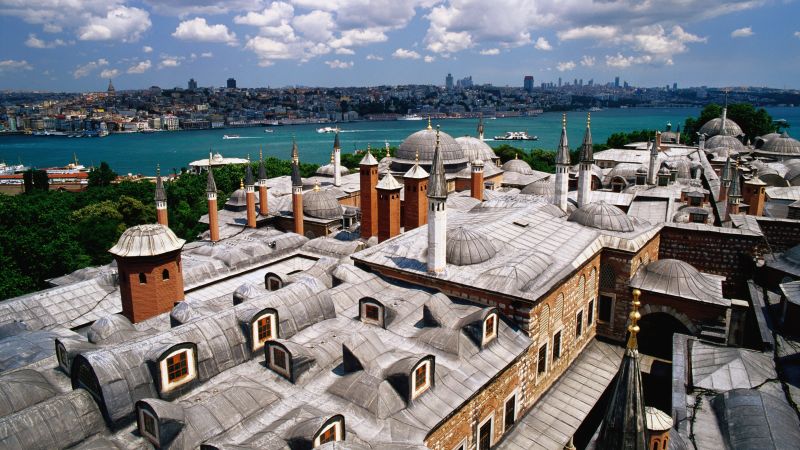
Secrets of the Sultan’s Palace: A Hidden Monument of Power and Splendor
Secrets of the sultan s palace – For centuries, the Ottoman Empire has been a symbol of imperial grandeur, its influence stretching across continents. Yet, while many empires build towering citadels to announce their might, Istanbul’s Topkapi Palace offers a quieter, more insidious form of power. This sprawling complex, nestled within the heart of Sultanahmet, has long been a secret of the sultan’s domain, its opulence concealed behind layers of history and architecture. Though its 15th-century Imperial Gate welcomes visitors with a sense of majesty, the palace itself remains elusive, hidden among the UNESCO-listed landmarks that dominate the city’s skyline.
Sultanahmet, a historic crossroads of empires, is a place where time seems to fold upon itself. The neighborhood is home to iconic sites like the Hagia Sophia and the Blue Mosque, which draw millions of visitors each year. But Topkapi, with its five-kilometer perimeter walls and 700,000-square-meter expanse, dwarfs these structures in scale. The palace’s labyrinthine design and sheer size make it feel like a self-contained world, a testament to the empire’s ambition. These walls were not just barriers; they were a declaration of authority, a physical embodiment of the hierarchy that governed Ottoman life. The palace’s isolation from the bustling streets of Istanbul underscores its role as a secluded seat of power.
A Legacy of Empire
By the 16th century, Topkapi had reached its final form, a layout that would endure for centuries. As historian Gülru Necipoglu explains in her book “Architecture, Ceremonial, and Power: The Topkapi Palace in the Fifteenth and Sixteenth Centuries,” the original configuration of the palace was remarkably preserved, even through repeated renovations. This resilience suggests an almost sacred reverence for its design, as if altering it would diminish the empire’s essence. The palace was more than a residence; it was the epicenter of political and cultural life, where decisions shaped the course of history.
At the heart of the palace lies the harem, a complex of 400 rooms where the sultan’s family lived in seclusion. Access to this private domain was strictly controlled, allowing only eunuchs and trusted courtiers to enter. The harem’s architecture reflects the empire’s blend of luxury and secrecy, its walls echoing the whispers of intrigue that defined the Ottoman court. For over four centuries, the palace stood as the empire’s “beating heart,” a place where alliances were forged, rivalries simmered, and the fate of nations was often decided.
The site of Topkapi is itself a story of transformation. Located on a peninsula where the Bosphorus Strait, the Golden Horn, and the Sea of Marmara meet, it was once the acropolis of Byzantium, the ancient city that would later become Constantinople. When Sultan Mehmed II captured the city in 1459, he began constructing the palace, integrating the remnants of Byzantine walls into its defenses. This fusion of past and present is a recurring theme in the palace’s design, as ancient stones and structures were repurposed to serve the needs of the new empire.
Hidden Wonders and Tales of the Past
Beyond the grand entrances, Topkapi reveals its treasures in quieter corners. The first courtyard, once a public space open to all, now houses remnants of the empire’s early years. Its plane and cypress trees, some over a millennium old, stand as silent sentinels. These trees, hollowed by a fungal invasion, are a testament to nature’s resilience and the passage of time. Among the verdant surroundings, the Imperial Mint and the sixth-century Hagia Irene Church offer glimpses into the palace’s multifaceted role as a center of administration and culture.
Yet, not all stories within Topkapi are rooted in history. One of its most peculiar features is the Fountain of the Executioner, a picturesque element that carries a darker legend. According to local tales, this fountain was the site where the chief swordsman would clean his blade after a beheading, its waters said to absorb the echoes of death. Such details highlight the palace’s duality: a place of beauty and elegance, yet also of brutal efficiency and political machinations.
As visitors progress deeper into the palace, the atmosphere shifts. The Gate of Salutation, with its imposing facade resembling a European medieval fortress, marks the threshold to the sultan’s private quarters. This gateway, a symbol of transition from public to private, was where the most critical decisions were made. The sultan’s inner sanctum, protected by layers of courtyards and corridors, was a realm of controlled access, where the empire’s future was shaped by the quiet authority of its ruler.
Topkapi’s legacy endures, not just as a relic of the past but as a benchmark of imperial architecture. Alongside France’s Palace of Versailles and China’s Forbidden City, it is recognized as one of the world’s most enduring royal residences. The palace’s design, blending grandeur with secrecy, mirrors the complexities of the Ottoman Empire itself—both a powerful entity and a delicate balance of power. Its five-kilometer walls, which once protected the sultan from the outside world, now enclose a space where the echoes of history linger in every stone.
From Byzantium to Ottoman Majesty
Though the Byzantine Empire fell in 1453, its legacy lived on in Topkapi. The palace’s foundations were built upon the ruins of the ancient city, its structures repurposed to serve the needs of the new ruler. Sultan Mehmed II, who had conquered Constantinople, envisioned a space that would reflect the empire’s expansion. The result was a complex that, in its design, encapsulated the transition from one era of power to another.
Caroline Finkel, author of “Osman’s Dream: The History of the Ottoman Empire 1300-1923,” describes Topkapi as the “beating heart” of the empire. “All the intrigue” and “a lot of the action” unfolded within its walls, from the elaborate ceremonies of the court to the whispered strategies of its eunuchs. The palace’s four courtyards, each more secluded than the last, reflect this hierarchy, with the innermost courtyard reserved for the sultan and his closest family.
Even today, Topkapi remains a symbol of imperial ambition. Its intricate layout and vastness continue to captivate historians and tourists alike, offering a glimpse into the life of the sultan and the world he ruled. While the empire itself has faded, the palace stands as a reminder of its former glory, its walls a silent archive of power, culture, and history. In an age where monuments often declare their presence with grandeur, Topkapi’s quiet dominance is a reminder that some empires leave their mark not through size, but through the subtlety of their influence.
