
An ICE officer fired at an SUV fleeing a car stop in Pennsylvania. That’s not how it should happen, policing experts say
An ICE Officer Fired at SUV During Pennsylvania Traffic Stop
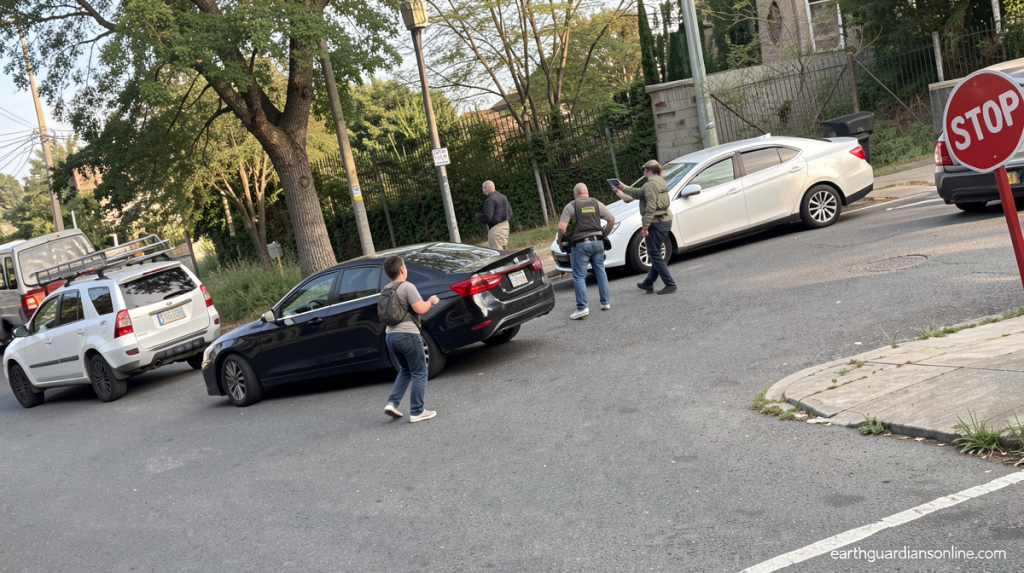
An ICE officer fired at an SUV in Pennsylvania early this month, sparking debate among policing experts about whether the response was appropriate. Surveillance video from Harrisburg shows federal immigration officers attempting to block a white SUV with an unmarked ICE vehicle. When the driver failed to exit after repeated commands, an officer broke the window before the SUV drove off, appearing to graze the ICE car as it turned onto a one-way street. One ICE officer fired his weapon as the vehicle sped away and struck a parked car.
According to an ICE spokesperson, the driver had a criminal record including assault, hit-and-run, and domestic incidents. The agency claimed the man “weaponized his car and rammed an ICE law enforcement vehicle.” However, Kenneth Corey, former New York Police Department chief of department, disputed this characterization. He noted that the SUV only sustained minor damage and did not forcefully break through the blockade.
“The vehicle pulls in front to stop the car from fleeing, but isn’t even effective at doing that. It’s not even properly positioned to do that because the guy’s pretty easily able to get around him,” Corey explained.
Broader Concerns About ICE Tactics
This incident occurred just days before an ICE agent fatally shot a 52-year-old man during a car stop in Houston. Within a week, another ICE agent killed a 25-year-old man in Maine during a similar vehicle stop. Neither victim was the intended target of immigration enforcement operations. The shootings prompted community vigils and renewed criticism of the Trump administration’s aggressive immigration policies.
Following the Maine shooting, ICE temporarily paused most vehicle stops, but President Donald Trump quickly overturned the decision. Mass deportations have become a cornerstone of his second term, and car stops have become more frequent as the administration aims for 2,000 immigration-related arrests daily. Previously, agents typically arrested individuals from jails or targeted locations like homes and workplaces.
Corey observed that the shift toward street-level policing has not been accompanied by adequate preparation. “They didn’t really try to pick people up off the street the way they are now,” he said. “So now you’ve shifted these tactics into really what’s more akin to local policing.” While all federal law enforcement officers receive basic vehicle stop training upon joining, experts say ICE’s recent tactical changes lack additional instruction.
Former acting ICE director John Sandweg highlighted the experience gap among agents. “There’s basic protocols at the academy, but you haven’t done this for 8, 9, 10 years,” he noted. Recent concerns also surround the onboarding of new federal immigration officers, particularly after the administration reduced required training days. A CNN analysis found that ICE agents receive significantly less training than almost any other federal agents carrying badges and firearms.
Corey expressed sympathy for the officers caught in this transition. “I really feel for the agents,” he said. “There’s been this change in approach without the commensurate retraining and practice that’s kind of needed.” In response, a Department of Homeland Security spokesperson told CNN that ICE will implement additional training for high-risk vehicle stops and crowd control. The agency extended its training program to 71 days and promised follow-on training for previous graduates.
The incident in Harrisburg serves as another example of how surveillance footage can challenge official narratives. As An ICE officer fired at the fleeing SUV, the video captured moments that contradicted the agency’s public statements about the encounter. With vehicle stops becoming increasingly common under the current administration, experts warn that without proper training, similar confrontations may continue across the country.
