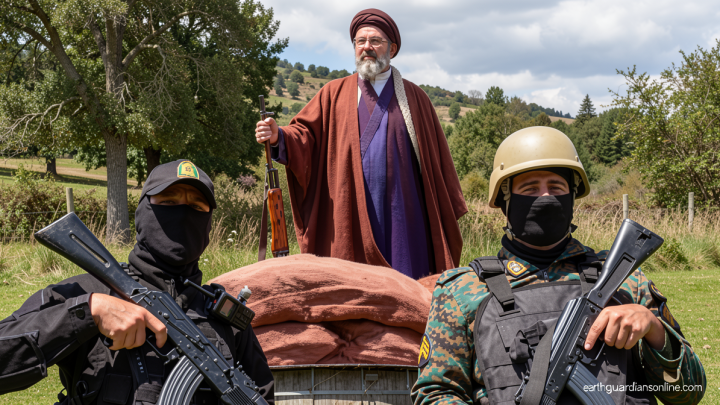
As elections near, Netanyahu casts Turkey as Israel’s latest enemy

Daftar Isi
Billboards, Bombs, and a Ballot Box: Netanyahu’s Turkey Gambit Ahead of Israel’s October Vote
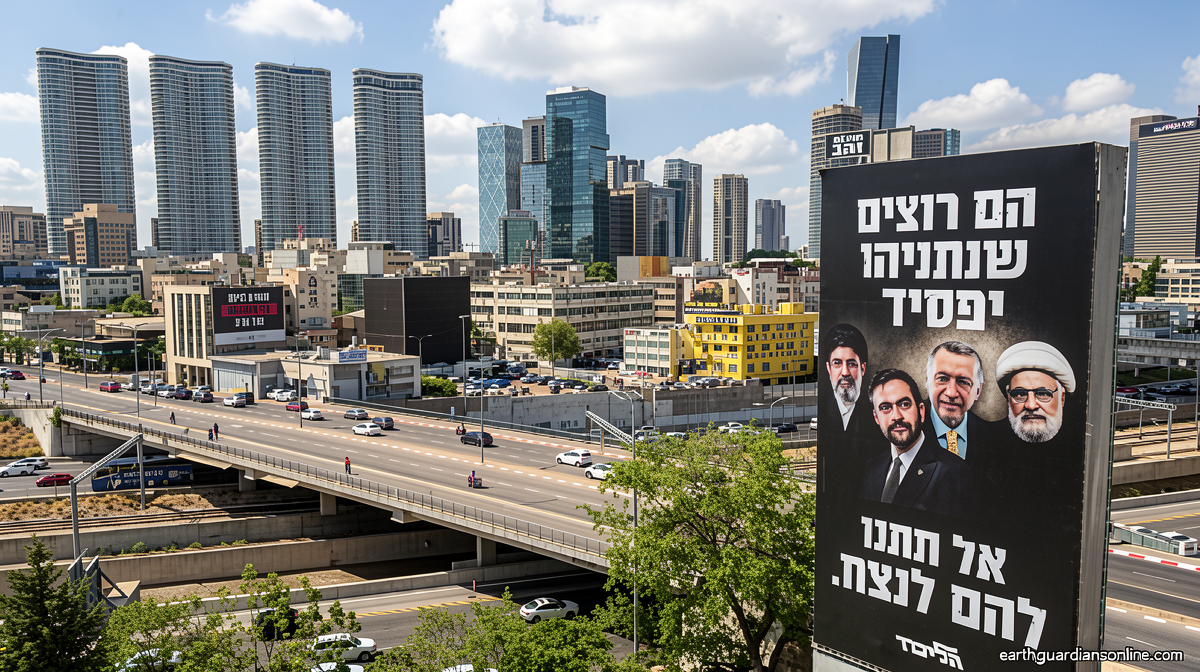
Earthguardiansonline.com – Less than three months before Israelis head to the polls, a massive billboard bolted to Tel Aviv’s busiest arterial road has turned a foreign president into the face of a domestic campaign. The image pairs Recep Tayyip Erdogan with the supreme leader of Iran, the head of Hezbollah, and the mayor of New York City, Zohran Mamdani, beneath a blunt imperative: “They want Netanyahu to lose. Don’t let them win.” Prime Minister Benjamin Netanyahu himself shared a video and photograph of the billboard on social media, ensuring the message reached far beyond the highway’s daily commuters.
The campaign’s geopolitical framing did not remain confined to advertising. Within days of the billboard going up, Israeli fighter jets struck the Abu al-Dahar airbase in northern Syria, hitting what officials described as an incipient Turkish military installation. The strike landed squarely inside the window of Netanyahu’s election messaging, igniting a heated debate both inside Israel and across the region: was the operation a genuine preemptive response to a strategic danger, or a calculated escalation designed to shore up the prime minister’s standing with voters?
The Official Military Rationale
Jerusalem’s account is straightforward. Netanyahu and Defense Minister Israel Katz have both stated that Israeli intelligence indicated Ankara was preparing to station forces and equipment at the airbase. An Israeli military source explained that the IDF had collected information on Turkish plans to deploy personnel, drones, and air-defense systems at the site. Such a buildup, the source argued, would constrain Israel’s freedom of action in Syrian airspace and shift the regional strategic balance in Turkey’s favor.
A second source added that the intelligence had been shared with the Trump administration and with Syria’s President Ahmed Al-Sharaa. Over the preceding year, Israel and Syria conducted deconfliction talks aimed at preventing accidental clashes, reaching what Netanyahu characterized as a “status quo in security matters.” Following the strike, Roman Goffman, head of Mossad, met Syrian Foreign Minister Asaad al-Shaibani in Jordan to defuse the latest round of tension, a step confirmed by the Syrian state news agency.
Washington’s Unusual Rebuke
Tom Barrack, who serves simultaneously as US President Donald Trump’s envoy to Syria and ambassador to Turkey, broke from diplomatic convention to publicly criticize the strike. He labeled it an “unnecessary escalation” and, in an interview with podcaster Mario Nawfal, floated what he called a “theory” that Israel “simply tried to bait Turkey.” Barrack went further, describing the operation as “a very aggressive move, but one that might play well going into elections.” For a senior American diplomat to voice such a motive openly is rare, and it has given fuel to those who suspect the strike was timed for political effect.
Ankara’s Response and the Broader Feud
Turkey rejected the Israeli explanation as “untenable.” The government accused Netanyahu of “pursuing expansionist and destabilizing policies in the region” ahead of the October vote, while insisting it would continue cooperating with the Syrian government “on a legitimate basis for the establishment of peace, stability, and prosperity.” The language signals Ankara’s determination to frame itself as a stabilizing actor in Syria rather than an aggressor, even as it absorbs the blow of a direct Israeli strike on territory where Turkish assets were reportedly being positioned.
The Netanyahu-Erdogan rivalry is neither new nor incidental. It flared dramatically during the wars in Gaza, Lebanon, and Iran. Erdogan has called Netanyahu a war criminal and repeatedly accused Israel of atrocities in Gaza; Netanyahu has in turn accused Erdogan of backing Hamas. Most recently, the Israeli prime minister publicly opposed the sale of US F-35 fighter jets to Ankara, warning of Erdogan’s “aggressive ambitions” in the region. On Friday, Netanyahu’s office went further still, branding the Turkish president in an X post as an “antisemitic tyrant who oppresses his own people.”
Domestic Politics and the Security Calculus
Netanyahu has spent decades cultivating the persona of “Mr. Security,” the leader uniquely equipped to confront every threat facing the state. He is also a veteran political operator with a long record of converting crises into electoral advantage. Critics at home and abroad note that the proximity of the billboard’s messaging to the airbase strike is difficult to dismiss as coincidence. Netanyahu and Katz have pushed back on the political-motive narrative, warning instead of an impending Turkish footprint in Syria.
“We will not tolerate a military Turkish presence taking root in Syria and threatening Israel,” Netanyahu said last week.
Amos Harel, a senior security analyst at the left-leaning Haaretz newspaper, argues that both explanations carry weight. “There are indeed indications that Erdogan’s approach toward Israel is very hostile, and that Turkey is undertaking various military moves in Syria, some of which concern the IDF,” Harel noted, suggesting the operational and political rationales are not mutually exclusive.
What makes the episode particularly consequential is its intersection of three timelines: Israel’s domestic electoral calendar, the fragile post-war architecture in Syria, and the long-running friction between Ankara and Jerusalem. A Turkish air-defense umbrella over northern Syria would alter calculations for Israeli aviation, drone operations, and future strikes. Simultaneously, a visible Israeli strike on Turkish-linked assets days before a national vote gives opposition parties a ready-made narrative about a prime minister who manufactures external threats to deflect internal scrutiny. The billboard on the highway, the jets over the airbase, and the ballot boxes in October are now entangled in a single story, and the coming weeks will determine which interpretation prevails.
Related Reading
Frequently Asked Questions
What is As elections near Netanyahu casts Turkey?
As elections near Netanyahu casts Turkey is the main topic of this guide. The article explains the context, practical details, and next steps readers should understand.
Why does As elections near Netanyahu casts Turkey matter?
As elections near Netanyahu casts Turkey matters because readers are looking for a useful answer, not just a short summary. Good content should match search intent and help them decide what to do next.