
Consumer sentiment rises for the first time in three months
Consumer Sentiment Rises for the First Time in Three Months
Consumer sentiment rises for the first – After months of decline, U.S. consumer sentiment has shown signs of improvement, according to the latest data from the University of Michigan. The survey, released on Friday, reported a 9% surge in sentiment, reaching a preliminary reading of 48.9 early this month. This marks the first upward trend since February, when the global conflict between the U.S. and Israel with Iran began to disrupt economic stability. The war has been a major driver of rising energy costs, which in turn have heavily impacted how consumers perceive the overall economy.
Gas Prices and Sentiment Shift
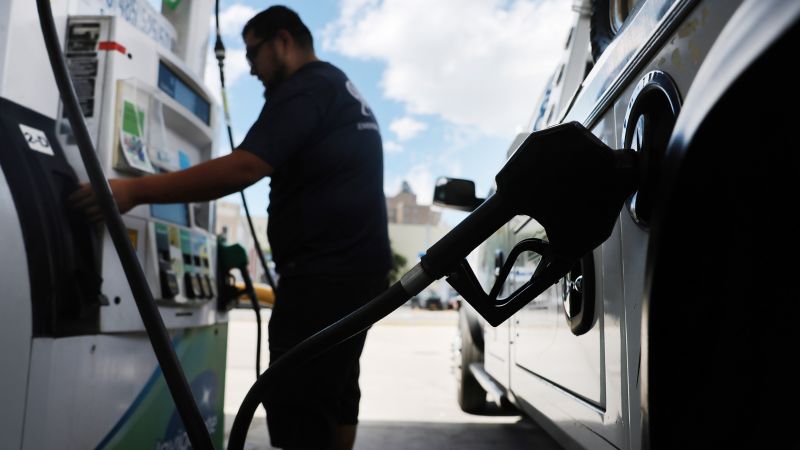
Gasoline prices, a critical factor in shaping consumer confidence, have been a double-edged sword. Following the war’s outbreak, energy costs skyrocketed, pushing sentiment to a record low. However, recent weeks have seen a decline in fuel prices, which has contributed to a gradual recovery in consumer morale. Joanne Hsu, director of the surveys, noted in a statement that “this month, consumer sentiment ticked up… with consumers experiencing some relief due to the early-month easing in gasoline prices.”
“Lower-income consumers exhibited a particularly strong sentiment increase, consistent with the fact that gasoline comprises a larger share of their budgets.”
The easing of fuel costs has had a noticeable effect, especially among households with tighter financial constraints. These consumers are more vulnerable to price fluctuations, as energy expenses often represent a significant portion of their monthly budgets. The improvement in sentiment suggests that, for now, people are beginning to feel less economic strain, though the long-term outlook remains uncertain.
Historical Context of Declining Sentiment
Consumer confidence has been in a prolonged slump, influenced by a series of disruptive events since 2020. The pandemic initially triggered a sharp economic contraction, which led to a decline in sentiment after the longest expansion in U.S. history. Post-pandemic inflation, peaking at 9.1% in June 2022, further eroded optimism. That period saw sentiment reach its lowest level in decades, surpassing the impact of past crises like the Great Recession and the 9/11 attacks.
In 2023, the Federal Reserve’s aggressive rate hikes to combat inflation, combined with political gridlock over the debt ceiling, added to the pressure. While sentiment began to rebound in 2024, this progress was short-lived, as the rollout of President Donald Trump’s sweeping tariffs in 2025 introduced new uncertainty. The Iran war, which began in early 2026, has compounded these challenges, sending energy prices into a volatile spiral.
Despite these setbacks, there are early signs that consumers are adapting to the economic turbulence. “We see a lot of resilience in consumers that maybe have gotten a little bit more accustomed to the volatile times that we live in, and a lot of price uncertainty,” said Charlie Wise, head of global research and consulting at TransUnion. A separate quarterly survey from TransUnion revealed that optimism among consumers has not significantly dropped from a year ago, when Trump’s “Liberation Day” tariffs were announced in April.
“The level of pessimism dropped, noted Charlie Wise, TransUnion’s head of global research and consulting.”
Nevertheless, inflation remains the dominant financial concern. The latest TransUnion Consumer Pulse Survey found that 50% of Americans cited inflation as their primary worry in the second quarter, up from 47% in the previous period. This reflects a broader trend, as inflation has surged to its highest level in three years, driven by global supply chain disruptions and persistent price shocks.
Long-Term Challenges and the Path to Recovery
Kevin Warsh, an economic analyst, emphasized that sustained improvement in sentiment will depend on the economy stabilizing over a prolonged period. “A cynic might say they’re getting numb to it, but I think more realistically they’re getting used to the realities that price stability is going to be a little out of normal balance for a continuing amount of time,” he said. The current inflationary environment is seen as a new normal, with consumers gradually adjusting to higher costs.
Warsh pointed out that the June 2022 inflation spike, which reached 9.1%, was a defining moment. At the time, many Americans were unaccustomed to such extreme price volatility, as it marked the highest inflation level since the 1980s. However, as the months have passed, people have begun to form a new psychological baseline. “So now, when you look at gas prices and energy prices that have increased, I think that consumers may be more likely to say at this point, ‘you know, I lived through this fairly recently and managed to come out OK on the other side; I’ll probably be OK this time too,’” Warsh added.
The ongoing challenges highlight a complex interplay of factors. While lower gas prices have provided a temporary boost, the broader economic landscape remains fraught with uncertainty. The Strait of Hormuz, a crucial shipping route for one-fifth of the world’s oil, continues to be a focal point of geopolitical tensions. For sentiment to fully recover, oil prices must stabilize, which requires consistent flow through this key chokepoint.
Adaptation and the Road Ahead
As the U.S. economy navigates this turbulent period, consumer behavior is shifting. The prolonged exposure to economic shocks has led to a kind of psychological adaptation, where people are less likely to react with panic to rising prices. This resilience is evident in the survey data, which shows that while sentiment has improved, the overall mood remains cautious.
Experts caution that the recovery is fragile. “Sentiment will likely remain in the dumps unless gas prices continue to fall meaningfully,” said Hsu. This underscores the critical role that energy costs play in shaping consumer confidence. Even with recent declines, the war’s lingering effects and the specter of future disruptions could keep inflation at the forefront of public concern.
Looking ahead, the path to sustained optimism depends on a combination of factors. Stable energy prices, continued low inflation, and a resolution to geopolitical conflicts like the Iran war will be essential. For now, the small uptick in sentiment offers a glimmer of hope, but it remains to be seen whether this trend will hold as the economic landscape continues to evolve.
