Dogs know if we’re happy, sad or scared just from our expressions, study suggests

Dogs Know If We’re Happy: New Study Reveals How They Read Our Faces
Earthguardiansonline.com – Dogs know if we’re happy, sad, or scared—simply by reading our facial expressions. A groundbreaking study from the University of Vienna confirms what pet owners have long suspected: dogs actively process human emotions through their brains in ways remarkably similar to our own. Using magnetic resonance imaging, researchers discovered that canine neural circuits respond to human faces displaying happiness, sadness, anger, and fear with distinct patterns of activity.
The research, published Monday in the journal iScience, offers new insights into how dogs evolved their emotional intelligence. Unlike primates, who share ancestral traits for emotional recognition with humans, dogs followed an entirely separate evolutionary path. Through thousands of years of living alongside humans, these animals developed sophisticated social abilities that allow them to understand and respond to human feelings with impressive accuracy.
How Dogs Process Human Emotions
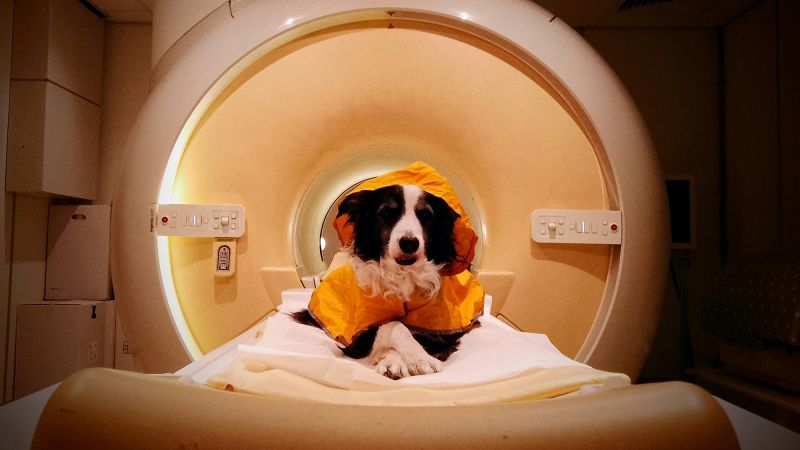
The study began with brain scans of eight dogs—six border collies, one labrador retriever, and one golden retriever. While undergoing MRI imaging, each dog viewed photographs of unfamiliar humans showing either cheerful or neutral expressions. When happy faces appeared, researchers observed heightened activity in two brain regions: the temporal cortex and the caudate nucleus. These areas are responsible for higher cognitive functions and reward processing, indicating that joyful human expressions hold genuine emotional significance for dogs.
When we compare humans with primates, we are looking at abilities that may have come from a common ancestor. With dogs, the story is totally different. They followed a very different evolutionary path, yet through domestication, they developed the social abilities needed to understand and cooperate with us.
Laura Cuaya, the study’s senior author, led the research from Vienna after completing her academic work at Mexico’s National Autonomous University and Hungary’s Eötvös Loránd University. Her team expanded the investigation to twelve dogs, showing them images representing four different emotions. Machine learning algorithms then analyzed the complex brain activity patterns to identify how dogs distinguish between various emotional states.
While the temporal cortex and caudate nucleus showed strong responses to happiness, the neural signatures changed considerably when dogs encountered angry, fearful, or sad expressions. A comprehensive whole-brain analysis revealed unique activity patterns for each negative emotion, proving that dogs don’t simply respond to all negative emotions the same way—they recognize the differences between them.
What This Means for the Human-Dog Bond
First author Raúl Hernández-Pérez noted that dogs possess the same capacity as humans to detect subtle facial cues. This ability likely evolved alongside domestication, creating neurological adaptations that facilitate communication between species.
Humans are really good at picking up small details on the face, so are dogs. This makes dogs very interesting. By studying their brains, we can understand what adaptations have developed to support their remarkable social and emotional understanding of humans.
The caudate nucleus’s role in processing happy faces proved particularly significant. This brain region typically handles reward processing across species. While researchers had previously connected caudate activity in dogs to food rewards, this study extends that association to social rewards—such as hearing verbal praise or recognizing a familiar person’s scent.
Although we cannot access dogs’ subjective experience directly, our results suggest that seeing happy faces, even those of strangers, involves positive affective processing.
Research Methodology and Future Directions
Conducting brain scans on dogs presented unique challenges. Hernández-Pérez explained that participants required careful selection based on size, health, and temperament. Medium-sized dogs fit the MRI equipment dimensions, while candidates needed to remain calm around loud noises and unfamiliar environments.
Training protocols began with teaching dogs to stay motionless for brief intervals, gradually extending the duration. Researchers introduced scanner sounds and positioning incrementally, ensuring each animal participated voluntarily and could exit the procedure at any time. The research team noted that one of the most difficult aspects involved communicating to dogs that remaining perfectly still constituted the actual task.
The study acknowledged several constraints. The sample size remained relatively small, and all participating dogs originated from affectionate households. Researchers cautioned that street dogs or those raised in different environments might respond differently. Future studies could explore whether dogs of various breeds and backgrounds show similar neural patterns when reading human emotions.
Frequently Asked Questions
How did researchers train dogs for brain scanning? Dogs underwent gradual training to stay motionless inside the MRI machine. Researchers introduced scanner sounds and positioning incrementally, using positive reinforcement to help dogs associate the equipment with calm behavior. Each dog could exit the procedure at any time during the process.
Which brain regions are most active when dogs see happy faces? The temporal cortex and caudate nucleus showed heightened activity when dogs viewed happy human expressions. These areas govern higher cognitive functions and reward processing, suggesting that joyful human expressions carry genuine emotional weight for dogs.
Can dogs distinguish between different negative emotions? Yes, the study found that dogs respond differently to angry, fearful, and sad expressions. A comprehensive whole-brain analysis identified unique neural activity patterns for each negative emotion, demonstrating that dogs recognize distinctions between various types of distress.
What makes this study different from previous research on primate emotions? While humans and primates share ancestral traits for emotional recognition, dogs charted an entirely separate evolutionary course. This research shows that dogs developed their emotional intelligence through domestication rather than through shared ancestry with humans.
How many dogs participated in the study? The initial phase included eight dogs—six border collies, one labrador retriever, and one golden retriever. The research team later expanded the investigation to twelve dogs to present them with images depicting four distinct emotions.