
Explosion near Macron’s Damascus hotel as French president meets Syrian counterpart
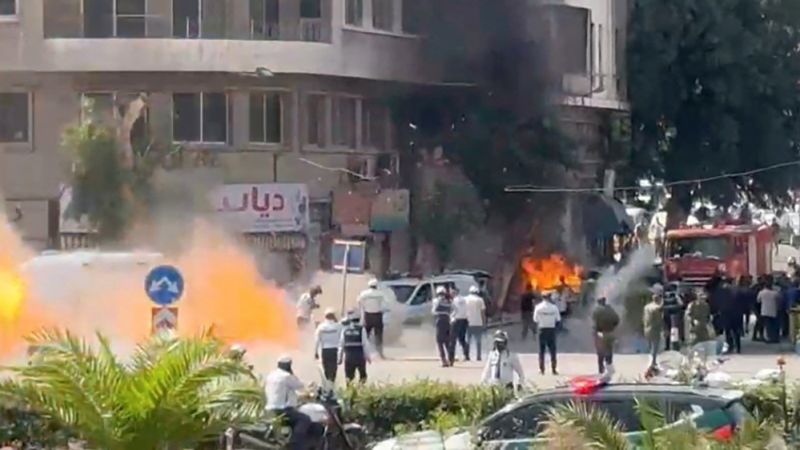
Explosion near Macron’s Damascus Hotel as French President Meets Syrian Counterpart
Explosion near Macron s Damascus hotel – Two explosive incidents erupted in Damascus on Tuesday, shaking the city and raising concerns over security during French President Emmanuel Macron’s visit to Syria. The attacks occurred close to the Four Seasons Hotel, where Macron had been staying the previous night, according to reports from French and Syrian media outlets. Despite the blasts, Macron remained unharmed and was already at the Presidential Palace when the explosions took place, as confirmed by the Élysée Palace in a statement.
Two Blasts Targeted Security Perimeter
The Syrian Arab News Agency (SANA) reported that the attacks happened while security personnel were attempting to dismantle two explosive devices discovered during field operations. The first blast struck near the Four Seasons Hotel in the capital’s central area, while the second detonated beside the adjacent Ministry of Tourism, a source told CNN under the condition of anonymity. At least 18 individuals were injured, including four police officers, according to SANA.
“The site of the explosion was located outside the security perimeter designated for the French president’s residence,” stated a Syrian official, citing the Ministry of Interior’s assessment.
The Four Seasons Hotel has long served as a hub for international visitors, including diplomats, NGO workers, and journalists, due to its strategic location and accessibility. The twin blasts, however, disrupted the tranquility of the area and underscored the challenges faced by security forces in maintaining safety for foreign dignitaries.
Primitive Explosive Devices Used in Attack
SANA described the explosive devices as being constructed in a “primitive way,” indicating a possible lack of sophistication in their design. The first device was positioned within a vehicle parked along a road, while the second was concealed inside a garbage container, the agency noted. Authorities are now conducting a thorough investigation to uncover the circumstances surrounding the attacks and identify the perpetrators.
Macron’s visit to Damascus marks a significant moment in diplomatic relations between France and Syria. This is the first official trip by a Western leader to the country since the fall of the Assad regime in December 2024. Prior to Macron, the emir of Qatar, Sheikh Tamim bin Hamad Al Thani, and Ukrainian President Volodymyr Zelensky had visited Syria in January 2025 and April 2026, respectively. The French president’s arrival on Monday evening, local time, was hailed as a symbolic gesture of continued engagement with the region.
Previous Attack in Damascus Adds to Tension
The explosions came just days after a separate attack in the Syrian capital resulted in nine fatalities and 22 injuries. Syria’s Ministry of Health confirmed these casualties, highlighting the persistent threat to security in the city. This latest incident, however, occurred in a different location and context, raising questions about the motivations behind the attacks.
While the exact cause of the blasts remains under investigation, the Syrian government has emphasized the importance of maintaining stability during Macron’s stay. The timing of the attacks, just before the French leader’s scheduled meetings with Syrian President Ahmed al-Sharaa, has drawn attention to potential challenges in the bilateral discussions.
Security Measures and Diplomatic Implications
Despite the explosions, security forces managed to protect Macron, demonstrating their preparedness for such threats. The French president’s team had established a secure perimeter around the hotel, which reportedly covered the area where the first blast occurred. However, the second attack, near the Ministry of Tourism, suggests that the threat may have extended beyond the immediate security zone.
The attacks have sparked discussions about the security situation in Syria and the risks associated with high-profile visits. Analysts suggest that the use of primitive devices indicates a possible attempt to disrupt the diplomatic process rather than cause mass casualties. The Syrian government, meanwhile, has reaffirmed its commitment to ensuring the safety of visiting leaders.
Macron’s presence in Damascus is part of broader efforts to stabilize the region and support the new administration. His meetings with al-Sharaa are expected to focus on economic cooperation, humanitarian aid, and regional security. The explosions, however, may cast a shadow over these talks and influence the pace of negotiations.
“Both explosive devices were crafted using basic materials, suggesting a targeted effort to create disruption rather than widespread destruction,” noted SANA in its report.
As investigations continue, authorities are reviewing footage and witness accounts to piece together the sequence of events. The Syrian government has also announced plans to enhance security protocols for future visits, emphasizing the need for vigilance in the face of ongoing threats. This incident serves as a reminder of the delicate balance between diplomacy and safety in a region still navigating post-conflict challenges.
French media outlets, including BFMTV, confirmed that Macron had been residing at the Four Seasons Hotel before the attacks. The hotel’s role as a common lodging spot for international guests highlights its significance in Syria’s political landscape. While the attacks did not directly target Macron, they have raised concerns about the potential for future incidents during his stay.
Historical Context of Western Engagement in Syria
The French president’s visit is a milestone in Western-Syrian relations, as it follows years of tension and shifting alliances. Since the Assad regime’s collapse in December 2024, Syria has welcomed a series of foreign leaders, signaling a new era of collaboration. Macron’s presence underscores France’s ongoing interest in Syria’s recovery and its willingness to engage with the new administration.
International observers have noted that the attacks may be aimed at testing the resolve of visiting leaders or expressing discontent with the political changes in Syria. The use of two separate devices, one in a vehicle and the other in a garbage bin, suggests a decentralized approach to targeting the area, which could indicate coordination among different groups.
As the investigation unfolds, the focus will likely shift to determining whether the attacks were premeditated or a spontaneous act. The Syrian government has already begun interrogating those involved in the field operations, seeking to identify any links to the perpetrators. Meanwhile, French officials have expressed confidence in their security arrangements and reassured the public of their readiness to handle such threats.
The twin explosions near Macron’s hotel have also prompted a reevaluation of security measures for other high-profile visits. With the potential for further attacks, the Syrian government is working closely with international partners to strengthen surveillance and response capabilities. The incident highlights the persistent challenges of maintaining security in a country that has become a focal point for diplomatic efforts.
Despite the disruptions, Macron’s itinerary remains intact, with scheduled meetings and press briefings proceeding as planned. The French president’s team has described the attacks as an isolated incident, expressing optimism about the progress of their discussions. The resilience of the Syrian government and its ability to accommodate foreign leaders amid security threats is seen as a critical factor in the country’s diplomatic outreach.
As the world watches the developments in Damascus, the focus remains on the aftermath of the explosions and their implications for Syria’s future. The French president’s visit, now taking place in the shadow of the attacks, represents both a symbolic and strategic move in a complex geopolitical landscape. The outcome of these meetings may shape the trajectory of Syria’s relations with the West for years to come.
