Hong Kong’s Tiananmen vigil fell dark years ago. Now its organizers have been convicted

Hong Kong’s Tiananmen Vigil Organizers Convicted
Earthguardiansonline.com – Two key figures behind Hong Kong’s Tiananmen vigil have been found guilty of inciting subversion, formally closing one of the territory’s longest-running public memorial traditions. The verdicts, delivered at West Kowloon Court on Friday, carry a maximum sentence of ten years under the national security law Beijing enacted in 2020.
Chow Hang-tung, a human rights lawyer who represented herself throughout the trial, and Lee Cheuk-yan, a former opposition legislator, each received guilty verdicts. A third defendant, veteran pro-democracy lawmaker Albert Ho, had pleaded guilty earlier and awaits a separate sentencing hearing.
Three Decades of Candlelight in Victoria Park
Every June since the early 1990s, mourners packed Victoria Park in Causeway Bay to light candles commemorating the June 4, 1989 crackdown in Beijing’s Tiananmen Square. The annual gathering that became Hong Kong’s Tiananmen vigil, organized by the Hong Kong Alliance in Support of Patriotic Democratic Movements of China, grew to fill the equivalent of multiple soccer pitches. It survived the 1997 sovereignty handover and continued alongside a political system that allowed pro-democracy candidates to contest legislative elections. The tradition effectively ceased after the 2019 protests, which prompted Beijing to impose sweeping new security offenses on the city.
No official death toll has ever been released by the Chinese government. Independent estimates range from several hundred to several thousand killed, with many more injured. The event remains heavily censored on the mainland.
Prosecution Theory and Defense Response
Prosecutors argued that the alliance’s public calls to end what they described as “one-party dictatorship” amounted to an attempt to overthrow China’s fundamental political system. They contended that advocating the removal of the Chinese Communist Party after the national security law took effect constituted subversion in itself, and they linked the group to a wider catalogue of events they characterized as fostering hostility toward Beijing.
The defense pushed back, framing the campaign as a straightforward push for democratic governance rather than a bid to topple the ruling party. They argued the distinction fell squarely within the freedoms the Basic Law was designed to guarantee.
Reactions and Courtroom Tensions
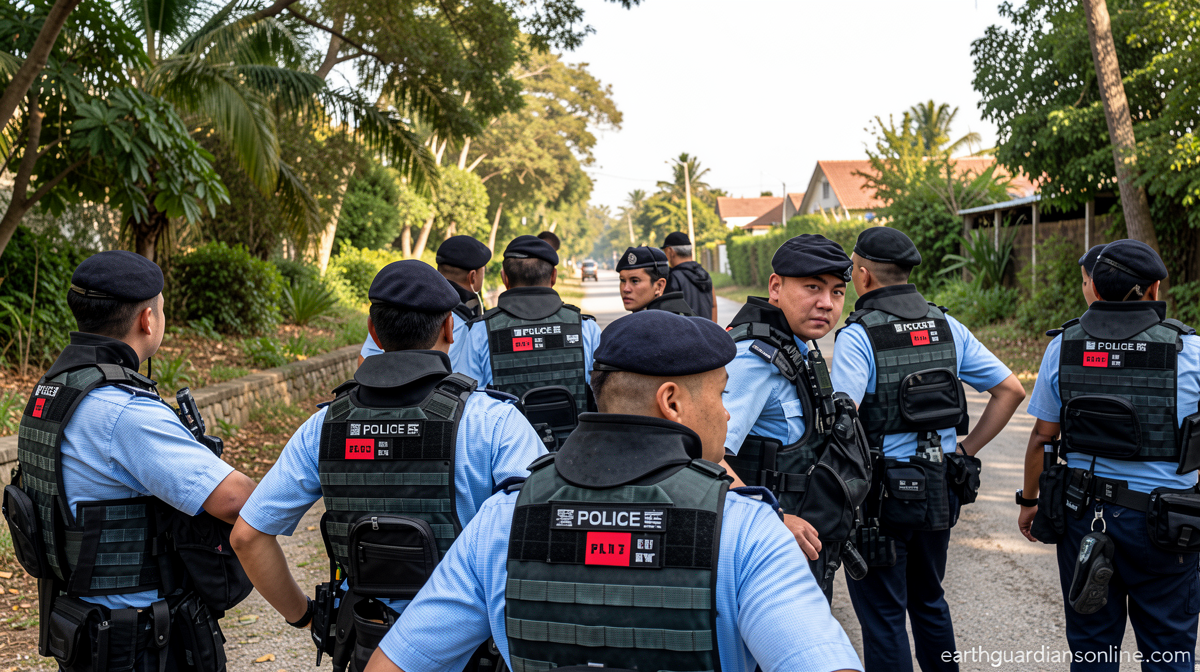
The conviction marks the final legal chapter for Hong Kong’s Tiananmen vigil. It arrived days after President Xi Jinping, in a speech making an unusually direct reference to the 1989 turmoil, endorsed the decision to suppress the Tiananmen protests. Security around the courthouse was visibly heightened on Friday; officers checked identities and searched bags before granting entry. Tang Ngok-kwan, a former member of the organizing alliance, told reporters that police denied him access after he refused to surrender copies of earlier news coverage about the crackdown.
Supporter Margaret Chan, present at the proceedings, dismissed the case as incoherent:
“Patriotism is in the alliance’s name. We all love our nation. What does it incite people for? To love their country?”
The HKSAR government, responding to inquiries ahead of the verdict, stated:
“The HKSAR Government strongly condemns any biased remarks and smears against the HKSAR’s effort for safeguarding national security.”
Its spokesperson added that rights and freedoms remain protected under the national security framework.
FAQ
What happened to Hong Kong’s Tiananmen vigil? The annual candlelight gathering, held every June since the early 1990s, effectively ended after the 2019 protests. Two of its principal organizers were convicted of inciting subversion in August 2026, formalizing the legal consequences of continuing the tradition.
What penalty faces the convicted organizers? Each guilty verdict carries a maximum sentence of ten years’ imprisonment under the national security law enacted in 2020. Sentencing dates for the two defendants found guilty at trial have not yet been announced.
Why did prosecutors bring the case? They argued that the alliance’s public advocacy for ending one-party rule constituted an attempt to overthrow China’s fundamental political system, a charge of inciting subversion under the national security statute.