How a scenic enclave at the bottom of the Grand Canyon turned into an epicenter of deadly destruction

How a Scenic Enclave at Grand Canyon Became a Death Trap
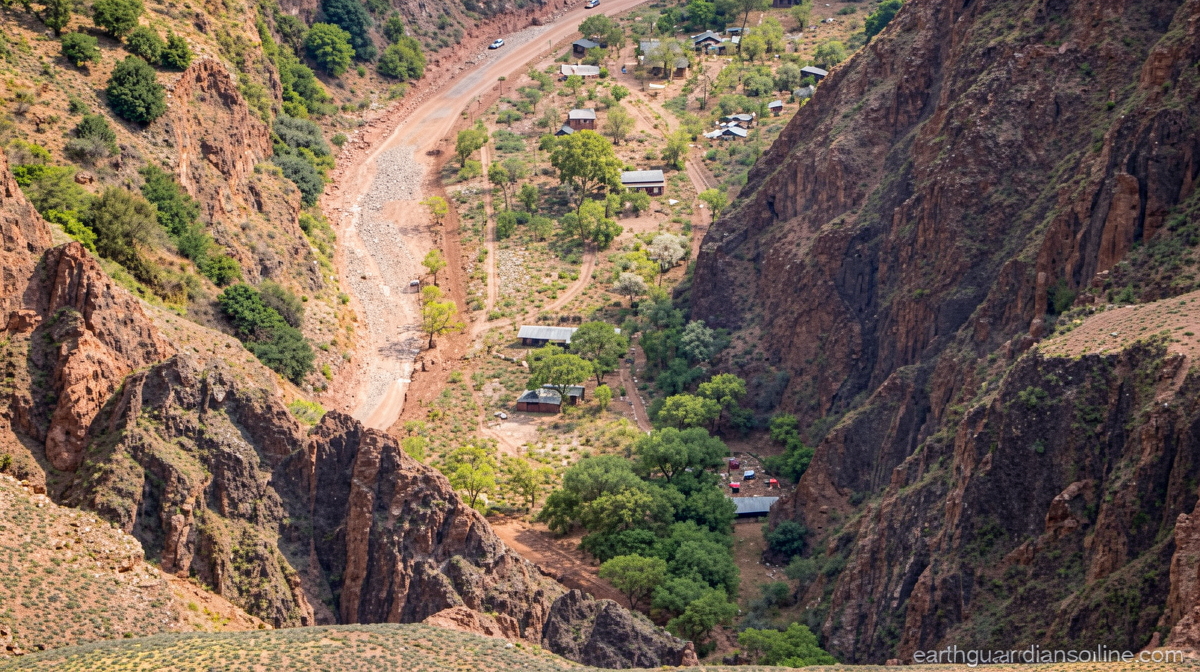
Earthguardiansonline.com – How a scenic enclave at the base of America’s most famous canyon could transform from a bucket-list destination into a killing zone in under an hour is a question families are now asking with shattered hearts. On Saturday, a violent storm cell dumped torrential rain onto Bright Angel Canyon, sending Phantom Ranch — the lone lodging operation situated below the Grand Canyon rim in Arizona — into chaos. Within minutes, gentle creek channels became roaring conduits of mud, timber, and rock. At least two visitors were killed and a third remains missing as of Tuesday, after the flood tore apart footbridges, campsites, and every structure in its path across the canyon floor.
The terrain itself explains why the consequences were so severe. Rain falling across the broad plateau above the rim accelerates into narrow side canyons with no lateral escape and sheer walls on either side. A storm that would merely close a highway in a metro area becomes, in this geography, a moving wall of debris faster than any person can outrun. Understanding how a scenic enclave at such a remote, vertically confined location operates under normal conditions makes the Saturday event all the more terrifying: there was simply nowhere to go.
The Supercell Hits
For observers still above the rim, the shift from routine weather to extreme event was nearly instantaneous. Jesse Jaremczak, stationed at the South Rim, described watching a standard thunderstorm mutate without warning into what he called a supercell of extraordinary intensity.
“In the beginning, we had a normal thunderstorm. Then the supercell monster came.”
Christopher Dry, hiking at higher elevation alongside his son, saw a lightning strike followed by brief rain. Within minutes his visibility dropped to zero. He recalled the cloud layer appearing to originate below the canyon rim and surge upward in rapid succession — a pattern consistent with orographic lifting in steep terrain.
“The clouds actually formed below and rose up out of the canyon quickly,” Dry recalled.
Phantom Ranch: Ten Minutes to Get Out
Phantom Ranch, the sole lodging facility beneath the canyon rim, sits squarely in the channel of Bright Angel Creek. David Gregory had just started unpacking his gear when a park ranger appeared to advise him to prepare for a possible evacuation. Ten minutes later the same ranger returned with a different message: leave now, immediately, non-negotiable.
“We realized the creek near camp was black with debris and flowing rapidly. When the rain hit, it just got faster and faster. It was probably moving faster than I think I could run,” Gregory said.
He was ultimately airlifted out by helicopter. Nearby, Parth Desai and a group of colleagues scrambled into a stand of cacti after a coworker shouted repeatedly to climb upward as a four-foot wall of debris and water surged toward their position. Desai described waterfalls appearing from nowhere, boulders shifting, and landslides cascading across multiple points at once. His group, too, was extracted by air.
Three Friends, One Final Adventure
Not everyone made it out. Three companions — John Giusti, a chiropractor from Texas; Brent Rosenkranz; and Timothy Smith — had been on what family members described as a long-planned multi-day trek through the canyon. The day before the storm, both Giusti and Rosenkranz posted about their excitement on social media. Giusti shared photographs of his trekking progress on his chiropractic practice’s Facebook page. Rosenkranz wrote about confronting a personal fear of heights while undertaking a route with over a mile of vertical gain.
“Will be hiking over 31 miles next four days with vertical change of over a mile. Carrying a 40 lb backpack. This should be an adventure!” Rosenkranz posted Friday. “Most of you know don’t handle heights. So I should have lots of funny stories when I get back.”
By Tuesday morning, families confirmed that Giusti and Rosenkranz were killed in the flooding. Smith remains missing. His wife, Elisha Rosenkranz, posted a tribute on Facebook:
“It is with a broken heart that I share the passing of my husband, Brent Rosenkranz, while on his final adventure, a hike at the Grand Canyon. Thank you for every adventure, every meal, every laugh, and every hug. Most of all, thank you for giving me the love of a lifetime.”
Search and Rescue in Hostile Conditions
Authorities have expressed hope that the unidentified missing person is still alive, though repeated downpours have hampered ground search operations by making terrain unsafe for rescuers. Incident commander Dave Black indicated Monday evening that weather conditions were improving heading into Tuesday. Specialized search teams and helicopter assets continue to work the canyon floor, though the scale of debris and the speed at which water moved make recovery operations extraordinarily difficult. Families of all three hikers have been kept informed by park officials throughout the search.
FAQ: Practical Questions About Canyon-Base Lodging and Flash-Flood Risk
How a scenic enclave at the canyon floor differs from rim accommodations in terms of flood exposure: Phantom Ranch is the only lodging below the rim. Because it sits directly in the path of Bright Angel Creek, it is exposed to flash-flood surges that rim facilities never experience. Rim lodges sit at roughly 7,000 feet elevation and are not in a drainage channel.
What should hikers do if a storm forms above the canyon while they are below the rim? Move to higher ground immediately. Do not shelter in creek beds, narrow slots, or low-lying flat areas. If a ranger issues an evacuation order, comply without delay — the window between “prepare” and “leave now” can be as short as ten minutes.
Is Phantom Ranch open year-round, and how do guests access it? The facility operates seasonally and is reached by mule trail or helicopter from the South Rim. Guests cannot drive to the canyon floor; all access is via trail or air, which also means evacuation depends on helicopter availability.
How common are flash floods in Bright Angel Canyon? Flash flooding is a recurring seasonal hazard in the Grand Canyon’s side canyons, particularly during monsoon season (July through September). Park rangers monitor creek levels and issue evacuation orders when water rises rapidly. The Saturday event was unusually intense, but the underlying risk is well documented.
Where can families of missing persons get updates? The National Park Service