How an icy shipping route at the top of the world is bringing China and Russia together

Daftar Isi
Arctic Waterways Become Vital Link Between Beijing and Moscow
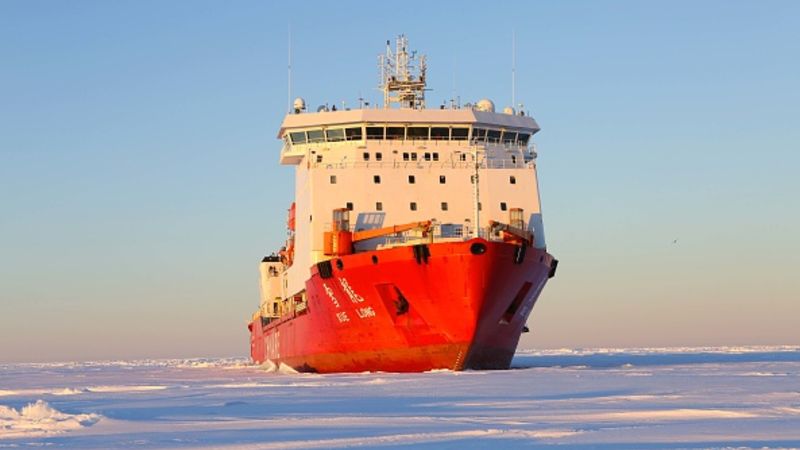
Earthguardiansonline.com – Heavy ice still clung to the surface when the massive Christophe de Margerie tanker began its inaugural voyage of the season along the Northern Sea Route during the final days of May. Shipping records indicate the vessel had recently departed from a terminal linked to Arctic LNG-2, a liquefied natural gas installation situated deep within Russia’s Arctic territory that faces American sanctions. Guided primarily by an icebreaker through much of its journey, the enormous ship navigated thousands of miles across Arctic waters and the Bering Sea. After approximately fourteen days at sea, the tanker reached the Kamchatka Peninsula in Russia’s easternmost region, where it entered a quiet bay once occupied by a Soviet military base.
Satellite photographs examined by CNN reveal the Christophe de Margerie positioning itself alongside an extensive floating storage facility, arranged in a pattern commonly used for ship-to-ship cargo exchanges. The vessel seemed to discharge its sanctioned cargo into the storage unit before commencing its return passage toward the Arctic, as Marine Traffic information confirms. The Moscow-administered Northern Sea Route remains a contentious passage through territory increasingly viewed as a fresh battleground for major power competition. Navigable without icebreaker assistance only during a brief summer period and locked in impassable ice for the remainder of the year, this waterway connects European Russia with Asian markets.
Chinese Dominance on the Arctic Trade Corridor
A CNN examination of shipping statistics gathered by the Norway-based Centre for High North Logistics demonstrates that international traffic along this route has been overwhelmingly controlled by commerce with a single foreign nation since Russia launched its comprehensive military campaign against Ukraine. This commercial relationship strengthens Moscow’s wartime financial position while simultaneously enhancing Beijing’s energy security. Chinese shipping activities in the region continue to grow, accompanied by mounting Western apprehension that Beijing’s expanding presence might signal eventual military utilization of Arctic facilities.
Following the departure of the Christophe de Margerie from Kamchatka, the Arctic Mulan—a second tanker subject to American sanctions—reached the entrance of the identical bay. The vessel remained in the area for multiple days before being maneuvered alongside the same floating storage platform, where tracking information indicates it deactivated its transponder for roughly twenty-four hours. Difficult weather conditions prevented satellites from documenting subsequent events, but the following day the transponder reactivated and the ship, presumably carrying Russian cargo, started its voyage toward China’s Beihai port.
A satellite photograph taken eleven days afterward appears to show the Arctic Mulan moored at the southern Chinese port. Charles Costerousse, a senior LNG analyst at trade intelligence organization Kpler, noted that the terminal has been specifically designated for receiving sanctioned Russian liquefied natural gas shipments since September of last year. Shipping records confirm the same vessels conducted identical operations during July, highlighting how the Northern Sea Route has developed into an expedited pathway for Chinese access to American-sanctioned energy resources.
Geopolitical Implications and Future Prospects
With American-led tensions in the Middle East currently immobilizing oil and gas tankers while constraining worldwide commerce, both nations are preparing for potentially unprecedented activity along this alternative northern shipping corridor. For Beijing, this represents a significant opportunity in a region where it has consistently sought to broaden its influence as a self-declared “near-Arctic state.” Melting ice conditions may enable extended navigation seasons and additional routes throughout the coming decades.
(China has) a huge frontier in front of them now,
stated Daisuke Harada, director general of the energy business unit at the government-backed Japan Organization for Metals and Energy Security, who possesses knowledge of both the Arctic LNG-2 development and Chinese operations within the region.
Russian President Vladimir Putin has maintained for years that the 3,500-mile passage following Russia’s irregular Arctic coastline should evolve into a principal commercial artery and catalyst for investment in Russian ports and hydrocarbon fields. During recent months, he has argued that trade interruptions caused by conflicts surrounding the Red Sea and the Strait of Hormuz demonstrate that this seasonal route represents “the safest, the most reliable and efficient” option available. Chinese leader Xi Jinping has similarly envisioned a “polar silk road” traversing the Arctic for many years, creating an icy continuation of his signature Belt and Road infrastructure initiative.
First proposed by Xi in 2018, this strategy aims to extend Chinese influence throughout the Arctic region from Russia toward Scandinavia and potentially further territories. Nevertheless, anticipated substantial Chinese investment in polar ports and supporting infrastructure failed to fully develop. Elevated expenses and challenging conditions along the passage had already complicated Putin’s ambitions—circumstances that intensified following Russia’s military engagement against Ukraine, which prompted numerous international participants to withdraw from Arctic activities.
The convergence of American sanctions, Middle Eastern instability, and climate-driven Arctic accessibility has created a unique moment for Sino-Russian cooperation. Energy markets worldwide are watching closely as these two nations test the viability of their northern connection as an alternative to traditional maritime routes. The success or failure of this Arctic experiment could reshape global energy flows and influence broader geopolitical alignments for years to come.
Related Reading
Frequently Asked Questions
What is How an icy shipping route at?
How an icy shipping route at is the main topic of this guide. The article explains the context, practical details, and next steps readers should understand.
Why does How an icy shipping route at matter?
How an icy shipping route at matters because readers are looking for a useful answer, not just a short summary. Good content should match search intent and help them decide what to do next.