
Japan is running out of royals. So why won’t it let women become emperor?
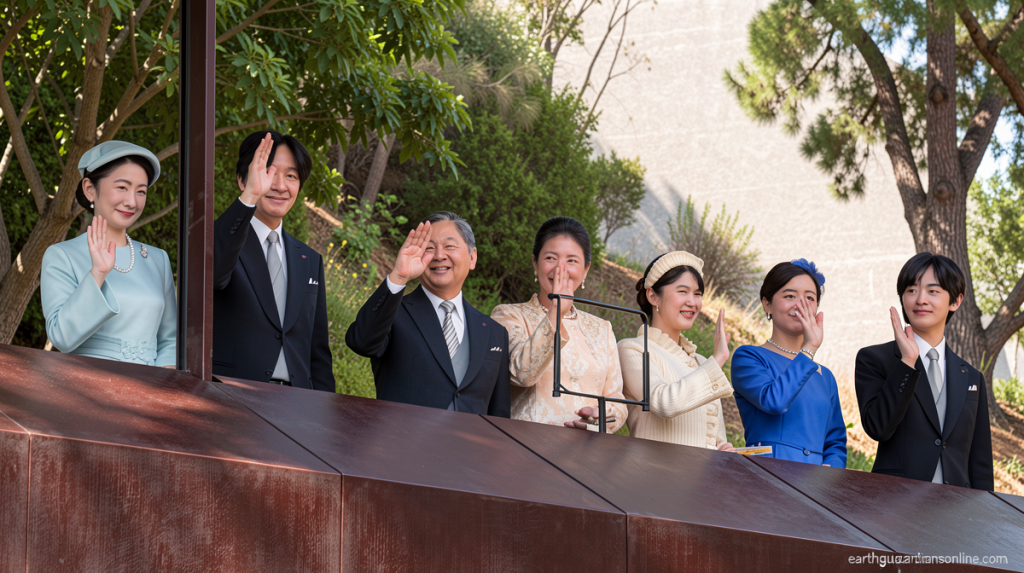
The Imperial Dilemma: Japan’s Gender Barrier Amid a Shrinking Dynasty
Japan is running out of royals – Japan stands at a crossroads in its centuries-old monarchy. While the nation may soon welcome its first female prime minister, the path toward a woman ascending the Chrysanthemum throne appears increasingly narrow. With only three individuals currently eligible to inherit the imperial crown—and two of those candidates already past the age of sixty—the royal family confronts an unprecedented succession emergency. For generations, Japan’s monarchy has adhered to strict male-only succession, a tradition that aligns with the country’s deeply patriarchal social structure where men continue to dominate business and political arenas.
This longstanding rule now threatens the very existence of the world’s oldest continuous monarchy. In recent decades, the imperial family has produced more daughters than sons, creating a demographic challenge that traditional solutions may no longer address. Government ministers have proposed bringing back former branches of the royal family to expand the pool of male successors, though these changes still await parliamentary confirmation.
Historical Precedents and Legal Barriers
The question of why Japan resists female succession has prompted considerable debate among scholars and citizens alike. Professor Makoto Okawa of Chuo University in Tokyo observes that rational justification for excluding women remains elusive. “It is difficult to find any rational basis for refusing to allow a woman to become emperor,” he stated.
“The idea of excluding women in advance as persons incapable of becoming emperor should be understood plainly as misogyny,” said Okawa.
Japan’s history actually includes eight female emperors, who typically assumed power when male heirs were too young to rule. The current prohibition stems from the Imperial House Law enacted in 1889 during the Meiji era, which officially banned female emperors. However, as Okawa points out, Japan’s overarching constitution does not prevent women from taking the throne, and the exclusion cannot fairly be characterized as an unbroken “Japanese tradition.”
The 1947 Turning Point
The roots of today’s crisis trace back to 1947, when Japan faced economic devastation following World War II. The Imperial House Law underwent significant amendments designed to reduce the imperial family’s size and cut royal expenditures. This legislation restricted imperial membership to immediate relatives of Emperor Hirohito, eliminating eleven collateral branches known as Oke. The royal household contracted dramatically from sixty-seven members to just sixteen—a situation worsened by the requirement that female members must depart the imperial family upon marrying commoners.
The imperial family’s centrality to Japanese national identity cannot be overstated. Douglas MacArthur, the American general who oversaw Japan’s postwar development, described the emperor in a telegram as “a symbol which unites all Japanese,” warning that “Destroy him and the nation will disintegrate,” according to the US State Department’s Office of the Historian.
Government Proposals and Political Opposition
The latest government proposal aims to permit the imperial family to adopt members of former collateral branches who are at least fifteen years old, unmarried, and childless. Their children would subsequently become eligible for the throne. However, Prime Minister Sanae Takaichi and her Liberal Democratic Party remain among the strongest opponents of female succession. During parliamentary discussions earlier this year, Takaichi maintained that it remained “appropriate to limit eligibility to male descendants of the imperial lineage.”
The government’s proposed amendments, anticipated to become law this month, contain no provision allowing a princess to ascend to the throne. Furthermore, the children of princesses who marry commoners—something nearly inevitable given the shrinking royal family—would also be excluded from succession.
Public Sentiment and the Future
Despite political resistance, various polls indicate that most Japanese citizens remain open-minded about the possibility of female emperors. Kana Sakakura, a Japanese resident, highlighted the international context: “I suppose when you really compare it to other countries, it does feel like Japan still has an atmosphere where women taking on leadership roles in society is avoided.” She noted that European nations like the United Kingdom possess long histories of female monarchs.
At the heart of this debate sits Princess Aiko, the twenty-four-year-old daughter of Emperor Naruhito, who is sixty-six. Widely beloved by the public, Aiko is legally barred from inheriting the throne solely because of her gender. She currently has no children, and even if she were to have a son, that child would not be eligible to succeed to the throne under current law.
As Japan navigates this critical juncture, the question remains whether the monarchy will adapt to modern realities or continue clinging to traditions that may ultimately prove unsustainable. The outcome will shape not only the future of the imperial family but also reflect broader societal attitudes toward gender equality in one of the world’s most traditional nations.
