
JetBlue pilot reports hitting drone at JFK International Airport same day helicopter reports near collision with model plane
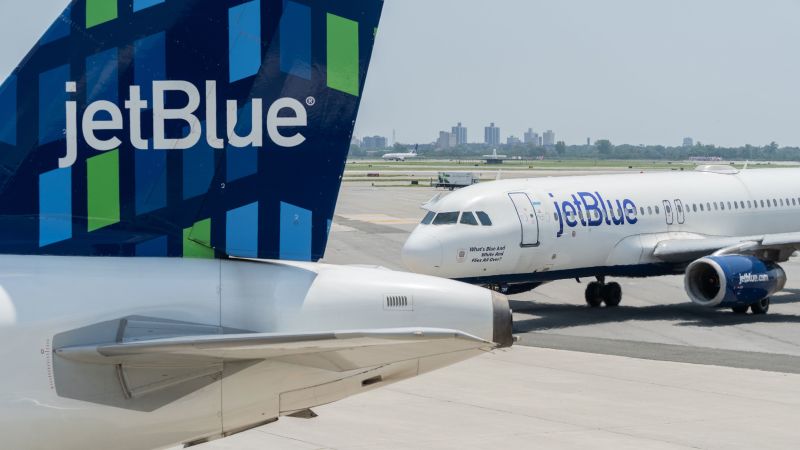
JetBlue Pilot Hits Drone at JFK Airport
JetBlue pilot reports hitting drone at JFK – On June 29, 2026, a JetBlue Airways pilot reported a drone collision with their aircraft while landing at John F. Kennedy International Airport, raising concerns about drone safety in commercial airspace. This incident occurred on the same day a helicopter narrowly avoided striking a model airplane, according to the Federal Aviation Administration (FAA). The FAA confirmed both events as separate but noteworthy, highlighting the increasing risks posed by drones near airports.
Collision Details and FAA Response
Flight 948, en route from Las Vegas to JFK, was descending when the drone collision was reported. The pilot informed air traffic control that the incident happened at approximately 3,000 feet altitude around 7:15 a.m. local time. “We are clear to land, 13 left,” the pilot stated in a recorded transmission. “Just quickly, I couldn’t talk to approach, but we collided with a drone back there in the turn.”
“You said you collided?” the controller asked. The pilot confirmed, “Yep, it hit us right, right above the cockpit.”
According to Flightradar24 data, the Airbus A321 was near Sea Bright, about 10 to 12 miles from JFK, when the collision occurred. JetBlue noted that the flight landed safely at 7:21 a.m., with no reported injuries. “Customers deplaned normally, and the plane was removed for inspection, which found no damage or evidence of a collision,” the airline said, emphasizing its safety protocols.
Helicopter’s Close Call with Model Airplane
A separate incident involved a Bell 407 helicopter traveling from JFK to Manhattan, which nearly collided with a model airplane near Floyd Bennett Field. The pilot described the encounter as “a giant RC airplane over at Floyd Bennett,” as captured in a recording from ATC.com. The FAA confirmed the events are unrelated but stressed the importance of monitoring all airspace threats.
Floyd Bennett Field, a National Park Service site in Brooklyn, is a popular location for model aircraft enthusiasts. The helicopter was at around 300 feet when the near-miss occurred, prompting the FAA to alert local authorities for further investigation. This incident underscores the need for consistent safety measures in both manned and unmanned aviation sectors.
Historical Context of Drone Incidents
While the JFK collision is recent, drone-related incidents are not new. In January 2025, a drone struck a CL-415 firefighting aircraft in Los Angeles, causing damage and forcing it out of service. The FAA later pursued legal action against the operator, illustrating the severity of such encounters. Other near-misses have been attributed to birds or mechanical failures, making it challenging to isolate drone impacts.
Despite existing FAA guidelines restricting drone flights near airports, the agency receives roughly 100 sightings monthly. This suggests that drone activity remains a persistent challenge. Earlier this week, a United Airlines pilot recounted a similar incident at Newark Liberty International Airport, reinforcing the need for stricter adherence to regulations.
Enhanced Safety Measures and Regulatory Actions
As drone incidents continue to rise, the FAA has intensified efforts to monitor and manage air traffic. Recent actions include increased coordination with local authorities and real-time tracking systems to detect potential threats. The JFK collision and the helicopter near-miss serve as reminders of the risks drones pose, especially during high-traffic periods.
During major events, such as the ongoing World Cup tournaments, drone activity is restricted in critical zones. The FBI reported seizing 500 drones in restricted airspace across 11 host cities, underscoring the seriousness of these safety measures. While these steps aim to prevent collisions, they also highlight the balance between innovation and risk management in the evolving aviation landscape.
