
Kevin Warsh has little to say about interest rates. But he has plenty to say about AI
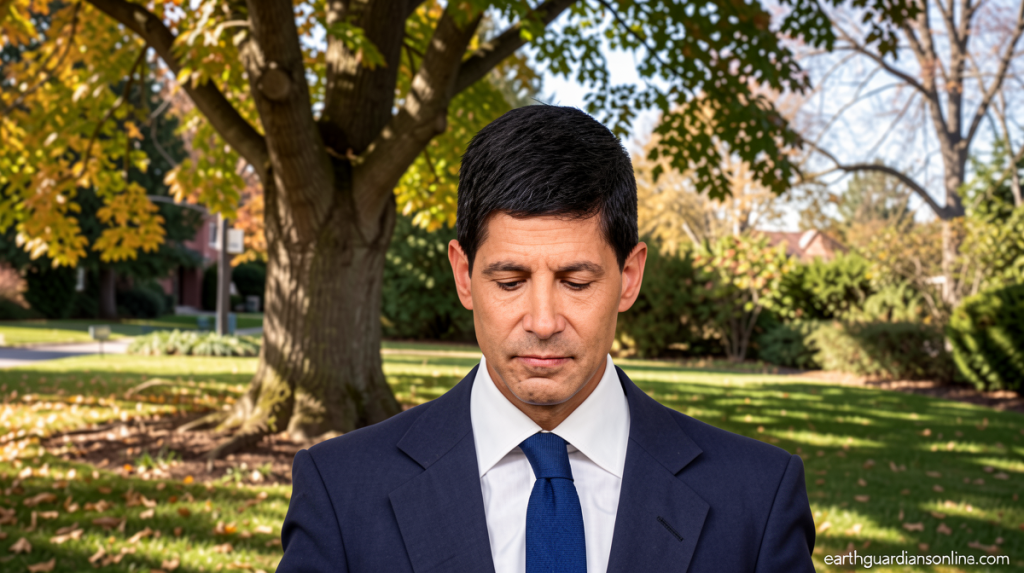
Warsh’s Quiet Revolution: AI Optimism Meets Rate Ambiguity at the Fed
Earthguardiansonline.com – Kevin Warsh has emerged as one of the Federal Reserve’s most vocal advocates for artificial intelligence’s transformative potential, yet his stance on interest rates remains deliberately elusive. Since assuming leadership of the nation’s central bank nine weeks ago, the chairman has conspicuously avoided the traditional practice of offering forward guidance—public signals about where monetary policy might head based on economic conditions.
This strategic silence became particularly evident following the Fed’s most recent policy decision to maintain its benchmark lending rate at current levels for a fifth consecutive meeting. Rather than elaborating on what recent economic indicators suggest for future rate movements, Warsh simply characterized the shift as “a change for the better,” leaving markets to interpret his meaning.
The AI Connection: Productivity and Price Stability
Where Warsh has been notably transparent is in his enthusiasm for artificial intelligence’s capacity to reshape the American economy. He has repeatedly emphasized that robust business investment—much of it channeled toward AI infrastructure—creates favorable conditions for sustained economic expansion. This optimism extends beyond mere technological enthusiasm; Warsh has constructed an argument that AI-driven productivity gains could simultaneously strengthen growth while easing inflationary pressures.
The mechanism is straightforward yet powerful. When companies can produce more goods and services without proportionally increasing their costs, the economy gains capacity to meet rising demand without triggering price increases. This dynamic, if sustained, would provide the Federal Reserve with greater flexibility to reduce borrowing costs without reigniting inflation concerns.
“He is intently obfuscative,” said Thierry Wizman, global FX and rates strategist at Macquarie Group. “The only semi-clear opinion that Warsh has offered is that the supply side of the economy is likely to follow a path that improves productivity, presumably on AI-oriented investment, and that this will be disinflationary.”
Task Forces and Congressional Signals
Warsh’s AI advocacy extends beyond rhetoric into institutional action. He has directed one of the Fed’s five task forces to examine artificial intelligence’s potential to generate disinflationary effects—a policy focus that underscores his conviction that technological advancement could fundamentally alter the central bank’s traditional approach to monetary management.
Derek Tang, a policy economist at Monetary Policy Analytics, noted the deliberate nature of this emphasis. “The productivity task force is focused very much on AI and how that could be disinflationary,” Tang explained. “It does seem that Warsh wants to keep that hope alive that productivity will be a convincing story to lower rates.”
During congressional testimony last month, Warsh identified AI’s impact on business investment as “the most striking feature of the economy right now.” He described what he characterized as a supply shock—rapidly expanding capacity for goods and services—occurring at a pace faster than he would have anticipated just eighteen months or two years prior. When directly asked whether artificial intelligence presents an opportunity for rate reductions, Warsh offered measured optimism: “I think this could be that opportunity. But I can’t say it for certain as of yet.”
Markets as Monetary Policy Partners
Perhaps Warsh’s most distinctive approach involves allowing financial markets to perform part of the Fed’s traditional tightening function. In his post-meeting press conference last week, he highlighted what he described as the largest-ever movement in long-term interest rates between Federal Reserve meetings, interpreting this as evidence that financial conditions had tightened organically without requiring a formal policy adjustment.
“Market participants are learning to play the ball, not the referee — and market prices will continue to respond in the direction and magnitude they see fit,” Warsh said.
This market-centric philosophy received additional validation when yields on thirty-year U.S. Treasury securities climbed to nineteen-year peaks following Warsh’s comments, before moderating slightly as trading progressed. “The markets have done quite a bit,” he observed, suggesting that investor sentiment could substitute for explicit central bank action.
Context and Implications
Warsh’s approach warrants scrutiny given persistent inflation concerns. Price increases have remained above the Federal Reserve’s two percent target for more than four years, prompting some analysts to question whether the chairman’s AI optimism might be clouding his assessment of inflationary risks. However, Warsh maintains that markets—alongside central bankers—should play an expanded role in evaluating economic conditions and determining appropriate financial policy.
Luke Tilley, chief economist at M&T Bank and Wilmington Trust, provided historical perspective on Warsh’s AI thesis. “Artificial intelligence can increase productivity in the same way that the internet revolution did, but it will probably do so over a multi-decade basis, like the internet,” Tilley noted, tempering expectations about the speed of AI’s economic impact while affirming its potential magnitude.
The broader implication of Warsh’s strategy is significant. By emphasizing AI’s disinflationary potential while remaining deliberately vague about rate trajectories, he is positioning the Federal Reserve to potentially cut borrowing costs sooner than traditional economic indicators might suggest. This approach could benefit borrowers, investors, and businesses that have endured elevated interest rates, though it also carries the risk of underestimating persistent inflationary pressures if AI’s productivity gains materialize more slowly than anticipated.
“Markets have made decisions because we stepped back from trying to influence,” Warsh said, adding that it’s crucial for the Fed to not get the market’s perspective “all fogged up by giving it our own forecast.”
Related Reading
Frequently Asked Questions
What is Kevin Warsh has little to say about?
Kevin Warsh has little to say about is the main topic of this guide. The article explains the context, practical details, and next steps readers should understand.
Why does Kevin Warsh has little to say about matter?
Kevin Warsh has little to say about matters because readers are looking for a useful answer, not just a short summary. Good content should match search intent and help them decide what to do next.
