
Man who killed Dartmouth professors at 17 to get a chance at parole in about 20 years, judge rules
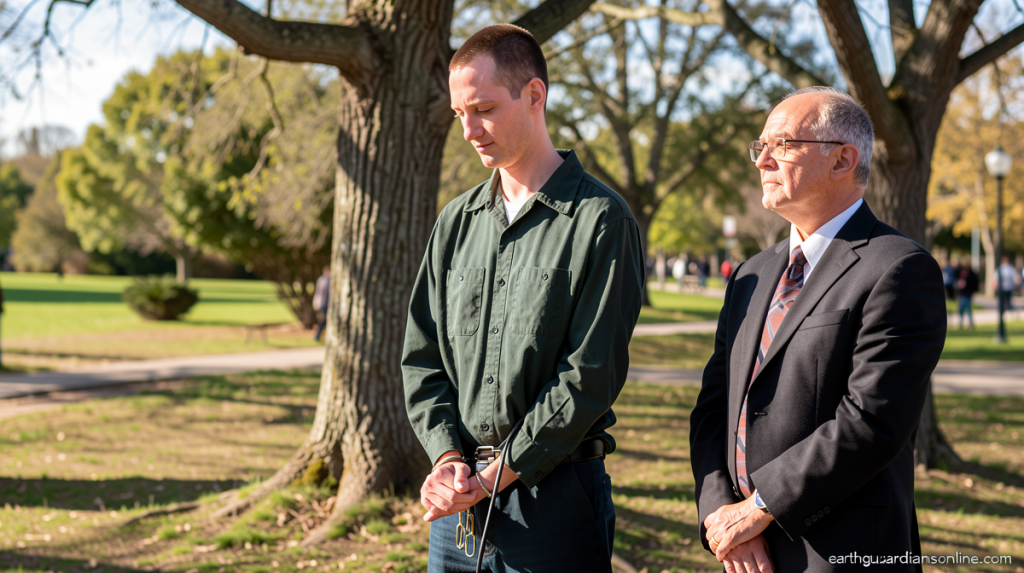
Tulloch Receives New Sentence in Dartmouth Professor Murders Case
Man who killed Dartmouth professors at 17 – Robert Tulloch, currently 43 years old, will become eligible for parole consideration approximately two decades from now following a judicial decision made on Monday. The Vermont native was merely 17 years old when he and his companion James Parker took the lives of two married academics at Dartmouth College a quarter-century prior. Under the terms of the new arrangement, Tulloch may apply for release when he turns 62, matching the age of victim Half Zantop at the time of his death.
Legal Background and Supreme Court Precedent
Following his guilty plea to first-degree murder charges in 2001, Tulloch received an automatic life sentence without any possibility of parole. However, the legal landscape shifted dramatically when the United States Supreme Court determined in 2012 that mandatory life-without-parole sentences violated constitutional protections for juvenile offenders. This landmark decision was subsequently applied retroactively, opening doors for hundreds of young people serving life terms across the nation. Five individuals in New Hampshire alone, all convicted of teenage murders, found renewed hope through these rulings.
The resentencing proceeding for Tulloch represented the final hearing among those five cases. Originally scheduled for three days, the matter was resolved through an agreement between defense attorneys and prosecutors, eliminating the need for extended proceedings. The hearing took place within Grafton County Superior Court, located in North Haverhill, New Hampshire.
Victim Impact and Courtroom Proceedings
During the Monday session, Tulloch remained shackled throughout, his head bowed as witnesses recounted the brutal stabbing attacks. He offered a personal apology to Veronika Zantop, one of the professors’ daughters, who participated remotely via video connection. Veronika, a psychiatrist and mother of two boys—one of whom shared Tulloch’s age at the time of the crimes—shared her perspective on adolescent brain development.
“This wasn’t a crime of passion or retribution,” she stated. “He wasn’t using substances, he wasn’t psychotic. There was just sheer depravity.”
While acknowledging that neurological development continues through adolescence, Veronika expressed skepticism regarding Tulloch’s case. She characterized his actions as carefully orchestrated rather than impulsive, noting his methodical approach to the murders. She recommended that he remain incarcerated for the maximum duration possible.
Sentence Details and Future Considerations
Tulloch’s legal team had advocated for a minimum term between 30 and 40 years, citing comparative analysis of juvenile homicide cases throughout New Hampshire and across the country following the Supreme Court decisions. Judge Lawrence MacLeod ultimately imposed a minimum sentence of 45 years before parole eligibility, setting the potential release date at 2046.
“The agreed upon sentence provides certainty that Tulloch will remain incarcerated for a substantial period of time, allows Tulloch to pursue some measure of rehabilitation, and it secures important protections for the community,” Attorney General John Formella explained.
Defense attorneys Richard Guerriero and Oliver Bloom highlighted Tulloch’s institutional record, emphasizing his transition from early behavioral issues to consistent compliance. According to their documentation, Tulloch committed no significant violations since 2012 and maintained a clean record regarding minor infractions since 2017. Therapy evaluations revealed what his attorneys described as genuine remorse for what he characterized as “warped youthful thinking.”
The Crimes and Aftermath
According to James Parker, now 40 and released on parole in 2024, the teenagers grew restless with their existence in Chelsea, Vermont. They devised a scheme targeting random strangers, intending to rob them and relocate to Australia. Over several months, the pair approached residents in New Hampshire and Vermont under the guise of conducting environmental research surveys.
Susanne Zantop, 55, served as head of Dartmouth’s German studies department, while her husband Half taught Earth sciences. Parker testified that Tulloch delivered the fatal stab wounds to Half Zantop before instructing Parker to assault Susanne. Both women were stabbed, and physical evidence—including fingerprints on a knife sheath and a blood-stained boot impression—connected the teenagers to the scene. After police questioning, the pair escaped Vermont and traveled westward by hitchhiking. Authorities apprehended them several weeks later at a truck stop in Indiana. Parker, who cooperated fully with investigators and accepted a plea agreement for accomplice liability to second-degree murder, eventually secured his freedom at age 40.
