
Monkey with orange lips identified as newfound species
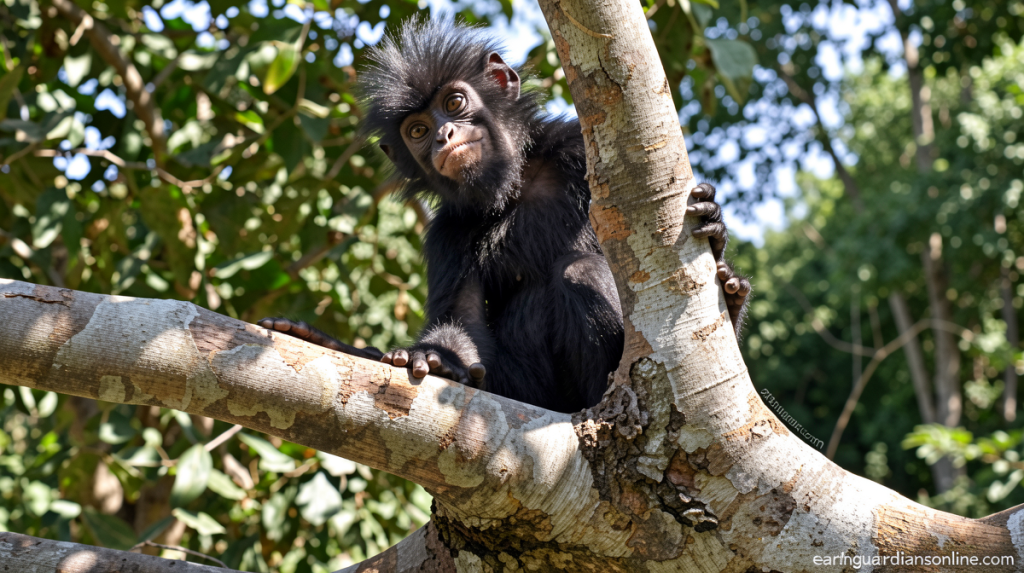
Scientists Unveil Rare New Monkey Species in Congo Rainforest
Monkey with orange lips identified as newfound – Researchers have officially documented a previously unknown primate living in the Democratic Republic of Congo, marking a significant addition to our understanding of African wildlife. The newly identified monkey, scientifically named Colobus congoensis and locally called Likweli, possesses remarkable orange lips and produces a powerful roaring vocalization. This discovery represents only the fifth instance of a new monkey species being recognized across the African continent within the past seventy-five years, according to research published Wednesday in the academic journal PLOS ONE.
Distinctive Physical Characteristics
According to statements released Wednesday by scientists affiliated with Florida Atlantic University and the City University of New York Graduate Center, this primate exhibits several unique physical traits. The animal features a lustrous black coat, extended fur length, and an elegant sweeping tail. Its face displays striking orange-cream colored markings that contrast beautifully with its dark fur. Researchers noted that the species possesses cranial, dental, and skeletal features that clearly distinguish it from all other African colobus monkeys currently known to science.
The new species is notably smaller than its relatives within the Colobus genus, with adults weighing approximately fifteen pounds or 6.8 kilograms. Florida Atlantic University described the primate as having sleek, light-reflecting fur combined with dramatic facial features formed by long black facial hairs and large folded ears.
Evolutionary Significance and Genetic Evidence
The discovery has important implications for understanding how African monkeys evolved over millions of years. Study senior author Kate Detwiler, an associate professor of biological sciences at FAU’s Charles E. Schmidt College of Science, emphasized the evolutionary importance of this finding.
“The discovery of Colobus congoensis is reshaping our understanding of African monkey evolution,” Detwiler explained. “Its closest known relative is Colobus satanas, found more than 1,200 kilometers (746 miles) away in west-central Africa.”
Despite the geographic distance between these two species, genetic analysis reveals they diverged approximately four to five million years ago, representing one of the oldest known evolutionary splits within the entire Colobus lineage.
A Decades-Long Research Journey
The process of formally describing this new species began in 2008 when researchers conducting fieldwork in east-central DRC photographed an unusual monkey. A decade later, scientists obtained clearer observations and subsequently recorded 114 sightings between 2018 and 2022. Beyond anatomical examination and field observations, researchers analyzed genetic material and incorporated local ecological knowledge to confirm this primate represented an entirely new species.
Christopher Gilbert, professor of anthropology at the CUNY Graduate Center and Hunter College, highlighted the rigorous methodology employed.
“When a potential new species is discovered, the evidence has to be overwhelming,” Gilbert stated. “We analyzed museum collections and comparative datasets, examining skulls, pelts, and skeletal anatomy alongside specimens from known African colobus monkeys.”
These comprehensive comparisons enabled researchers to demonstrate conclusively that Colobus congoensis constitutes a distinct species separate from all previously documented members of its genus.
Conservation Challenges Ahead
Despite the excitement surrounding this discovery, conservationists have raised concerns about the future of Likweli. The documented sightings span a relatively limited area of approximately 1,700 square kilometers or 656 square miles. The CUNY statement indicates that researchers recommend classifying Colobus congoensis as Endangered due to its restricted geographic range, ongoing habitat loss, and increasing hunting pressure.
Most of the species’ known habitat exists within Lomami National Park, making the protection of this region essential for the primate’s continued survival.
Expert Reactions and Local Knowledge
Alexander Georgiev, a senior lecturer in primatology at Bangor University in Wales who did not participate in the study, praised the research as “very thorough and convincing.” He noted that discovering a new monkey species unknown both to science and to local populations is exceptionally rare and exciting.
Georgiev highlighted an interesting aspect of the discovery: study authors reported that residents in only eight of fifty-two villages bordering the new species’ range could provide information about this primate and describe it. This limited local knowledge helps explain why the species remained undocumented for so long. The Congolese rainforest where this primate resides is vast, and scientists have explored only portions of it thoroughly.
