NASA’s new ‘discovery machine’ is launching to unravel the invisible universe

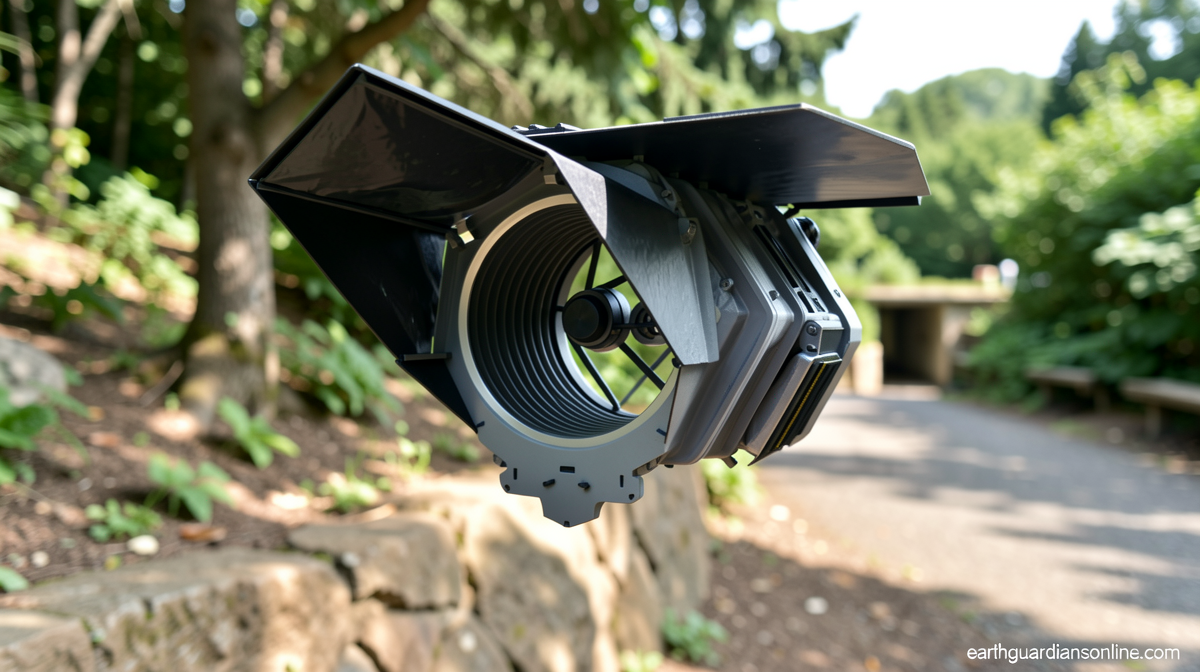
NASA’s New Discovery Machine Launches for Deep Space
Earthguardiansonline.com – Sunday morning at Kennedy Space Center in Florida will send NASA’s new discovery machine hurtling toward a stable orbit roughly one million miles (1.6 million kilometers) from Earth. The Nancy Grace Roman Space Telescope — a bus-sized observatory built to catalogue faint, previously invisible objects across the galaxy — will ride a SpaceX Falcon Heavy rocket no earlier than 7:26 a.m. ET. After approximately three months of coasting, the spacecraft will settle into position and begin a five-year primary science mission that NASA describes as its most ambitious survey effort since the Hubble era.
The instrument’s mandate reaches into cosmology’s two most intractable puzzles. Dark energy, the unidentified force accelerating cosmic expansion, and dark matter, the unseen scaffolding holding galaxies together, will both come under sustained scrutiny. Roman will also sweep for galaxies never before logged, exoplanets circling distant suns, and rogue planets drifting unmoored through interstellar space. In NASA’s own framing, the agency’s new discovery machine is purpose-built to turn questions that have persisted for decades into measurable data.
Throughput No Previous Telescope Can Match
What sets Roman apart from earlier observatories is not simply sensitivity but raw survey velocity. Its scanning rate exceeds Hubble’s by more than a factor of 1,000, and its wide-field instrument captures a patch of sky over 100 times broader than Hubble’s. Neither Hubble nor the James Webb Space Telescope can replicate that combination of breadth and speed, placing Roman in a category of observation of its own.
“Together, the three missions will complement each other, giving us a more complete picture of the cosmos and advancing our understanding of the universe,” said Dr. Nicky Fox, associate administrator for NASA’s Science Mission Directorate.
Dr. Shawn Domagal-Goldman, director of NASA’s Astrophysics Division, offered a more tactile comparison during an August 5 briefing. He compared Roman’s capability to standing in a forest and simultaneously resolving the full canopy, individual leaves, and perched birds. “Of course, this isn’t a forest we’re talking about; it’s the known universe, and those birds and trees are supernova galaxies, planets and stars,” he explained. In that framing, NASA’s new discovery machine does not merely look harder — it looks wider, faster, and at scales no prior instrument has addressed.
One Terabyte a Day from a Million Miles Out
Before science begins, Roman must complete a commissioning sequence: powering instruments in vacuum, calibrating detectors, and unfurling the high-gain antenna that will relay its data home. The telescope is projected to transmit roughly one terabyte of imagery per day. Jeremy Perkins, Roman integration and test scientist at Goddard, translated that figure into consumer terms — the equivalent of streaming one million songs continuously from a million miles away.
First science images are anticipated by January. After that, Dr. Julie McEnery, Roman’s senior project scientist, expects the largest planetary census ever attempted across the Milky Way to commence. Tens of thousands of previously unknown worlds could enter the catalog within the telescope’s first survey cycles alone.
The Astronomer Behind the Name
The observatory honors Dr. Nancy Grace Roman, whom NASA’s astrophysics leadership has called a “brilliant astronomer” whose vision shaped the agency’s entire space-telescope lineage. In the 1960s Roman served as NASA’s first chief of astronomy and championed the principle that telescopes must be lifted above Earth’s distorting atmosphere to reach full potential. That conviction ultimately produced Hubble, earning her the enduring title “mother of the Hubble Space Telescope.”
“Although she’s often most associated with those first space telescopes, it’s really our full fleet that she deserves credit for,” Domagal-Goldman noted. “Every time we build a new space telescope, we add capabilities we didn’t have before and that adds to her legacy. The Nancy Grace Roman Space Telescope is no exception.”
A Decade of Engineering, a Century of Questions
The Roman program has consumed roughly a decade of active development at an estimated cost of $4.3 billion. Its conceptual roots stretch back about 16 years, when the scientific community elevated the mission to a top priority. Dominic Benford, Roman program scientist at NASA, has worked on projects connected to the concept for more than two decades.
“When you develop a tool that is radically different from anything you’ve had before, you will discover things that you didn’t know were out there,” Benford said.
Frequently Asked Questions
When exactly does the Roman Space Telescope launch?
The earliest launch window opens Sunday at 7:26 a.m. ET from Kennedy Space Center, Florida, aboard a SpaceX Falcon Heavy rocket. Weather and range conditions can shift the window.
How long will the mission last, and where will it operate?
Roman will coast for roughly three months to a halo orbit about one million miles (1.6 million kilometers) from Earth, then execute a five-year primary science mission before entering extended operations.
What makes Roman different from Hubble or James Webb?
Roman’s survey speed exceeds Hubble’s by more than 1,000×, and its field of view is over 100× wider. Unlike Webb, which excels at deep infrared spectroscopy of individual targets, Roman is optimized for wide-area, high-cadence surveys of faint objects at scale.
How much data will the telescope send back each day?
Approximately one terabyte per day — comparable, in Jeremy Perkins’s analogy, to streaming one million songs continuously from a million miles away.
Who is the telescope named after, and why?
Dr. Nancy Grace Roman, NASA’s first chief of astronomy in the 1960s, championed placing telescopes above the atmosphere. Her advocacy directly enabled Hubble and, by extension, every subsequent space observatory in the fleet.