
Putin’s false claim of the capture of one Ukrainian town exposes the slow pace of Russia’s bloody advance
Putin s False Claim of Kostyantynivka Capture Reveals Slow Russian Advance
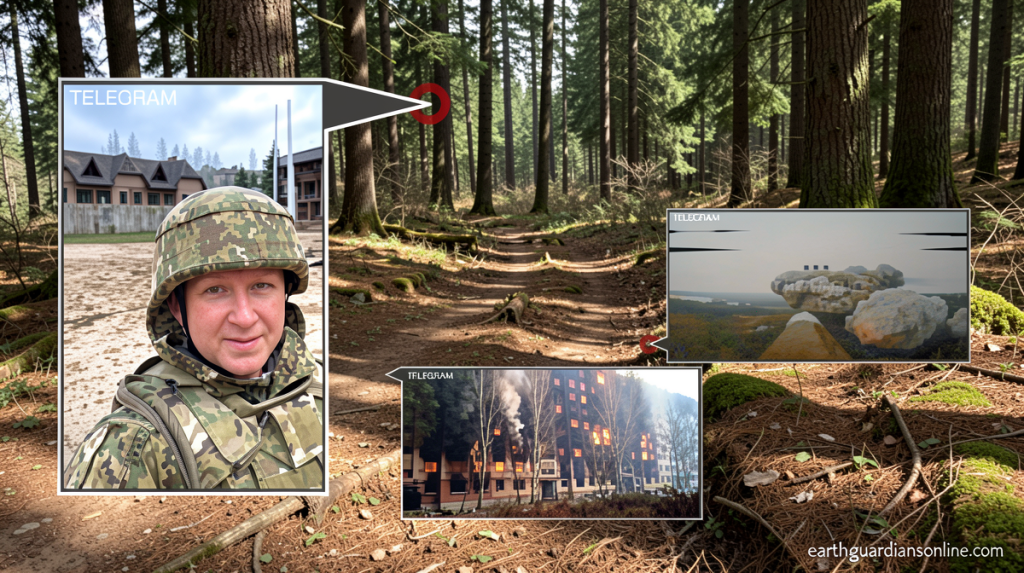
Putin s false claim of the capture – Putin s false claim of capturing the Ukrainian town of Kostyantynivka has exposed the grinding pace of Moscow’s military campaign in eastern Ukraine. Despite Russian defense ministry announcements on July 3 declaring the settlement fully occupied, multiple sources confirm the town remains under Ukrainian control. The official statement included footage of soldiers waving Russian flags through central streets, yet this assertion crumbled under scrutiny from independent observers and local witnesses.
Video documentation, Ukrainian military statements, and detailed mapping analysis all contradict the Kremlin’s narrative. This misrepresentation follows a pattern of exaggerated territorial claims made by Russian leadership over recent months. Such announcements appear calculated to convince both domestic audiences and international partners that Russia’s military operation maintains momentum despite mounting casualties.
Evidence Contradicts Russian Victory Narrative
Ukraine’s President Volodymyr Zelensky swiftly seized on the falsehood, and urged Russian President Vladimir Putin to meet with him in the town to talk peace, if indeed it was under Moscow’s control.
CNN journalists have documented conditions in and around Kostyantynivka on two separate occasions throughout the past twelve months. Through geolocation of video evidence and firsthand accounts, they have illustrated both the tremendous human toll and the incremental nature of Russian territorial gains that preceded the erroneous capture announcement.
Current mapping conducted by Deep State, an independent Ukrainian analytical group, reveals that Russian military units remain positioned outside the town’s boundaries while attempting to establish a foothold. Defensive measures are already visible along the primary approach routes, where fishing nets have been strung overhead to intercept incoming aerial drones. Despite these threats, civilian vehicles continue entering the settlement, and the central marketplace maintains regular activity.
During a visit in July of the previous year, a CNN team observed active streets filled with local residents. Some individuals showed hesitation when being recorded, possibly concerned about potential future Russian control and subsequent penalties for engaging with Western news organizations. As winter approached, cartographic data indicated that contested territory was gradually encroaching upon the town’s core areas.
Intensified aerial bombardment targeted residential buildings in the southwestern sector, with Ukrainian military channels sharing footage of apartment complexes engulfed in flames. One Russian surveillance drone captured the aftermath of an explosion striking structures mere streets from the contested zone. Nevertheless, Ukrainian forces maintained their presence in central locations, with military headquarters releasing video evidence of an officer standing casually in Victory Square during November.
Additional Russian footage from that period appears to show infantry perspectives from within an apartment building courtyard situated along Gromov Street on the southwestern perimeter. The most significant territorial movements occurred toward year’s end, with Deep State documenting Russian advances during the opening week of 2026. At that point, disputed territory had reached the town limits while two separate Russian columns approached primary access routes.
Two critical developments have shaped the extent of Moscow’s progress. First, the operational range of attack drones continues expanding on a monthly basis. These include both compact first-person-view models designed for targeting individual soldiers and vehicles, as well as heavier machines capable of destroying buildings. This growing reach pushes the safe zone surrounding Kostyantynivka further away, complicating Ukrainian defensive operations.
Second, Western government officials have begun echoing Ukrainian assessments regarding Russian battlefield losses. According to these estimates, Moscow suffers between thirty thousand and thirty-five thousand casualties—killed or wounded—each month. This substantial figure reflects both Ukraine’s systematic drone warfare strategy aimed at maximizing enemy losses and Russia’s continued reliance on aggressive wave assault formations.
Video evidence from January confirms that Ukrainian forces remained firmly positioned in the town center near the heavily contested railway station as the month concluded. The broader conflict has now reached a point where total Russian casualties are estimated to have surpassed two million, making this one of the bloodiest engagements in modern military history.
By February 2026, the situation in Kostyantynivka exemplifies the broader reality of Russia’s costly advance. Putin s false claim of capturing the town highlights how Moscow continues to overstate its achievements while facing mounting losses and limited territorial gains. The town’s resilience serves as a testament to Ukrainian determination amid one of the most devastating conflicts of the twenty-first century.
