
Severe storms with intense tornadoes possible in Central US through Monday
Severe storms with intense tornadoes possible in Central US through Monday
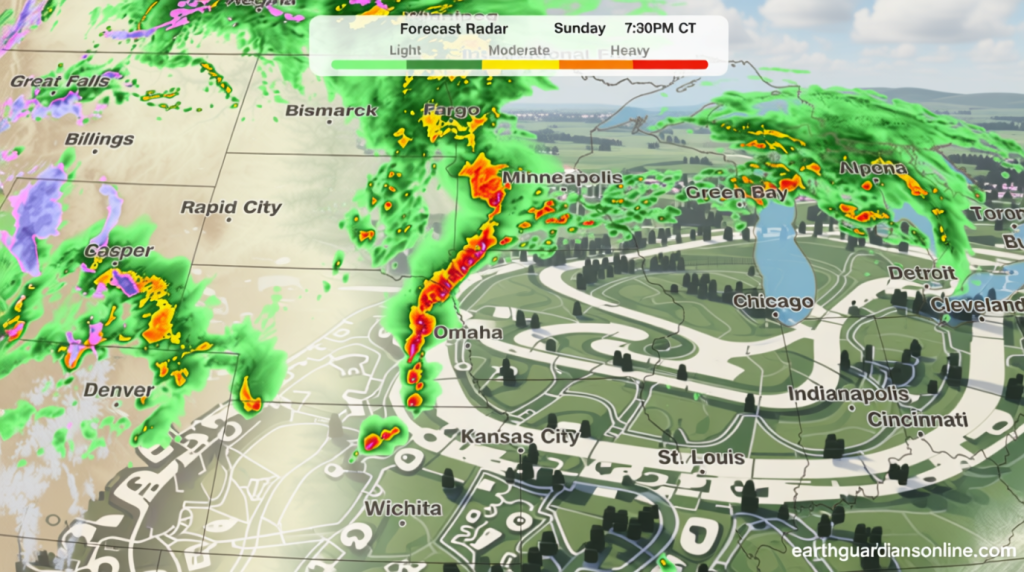
Severe storms with intense tornadoes possible – The central United States is set to experience a significant shift in weather patterns as May transitions from a relatively calm beginning to a period of heightened storm activity. A dynamic sequence of severe thunderstorms is anticipated to sweep across the Plains and Midwest over the next few days, introducing a range of severe weather phenomena. This includes the potential for powerful tornadoes, with EF3 or stronger classifications, alongside destructive hail, damaging winds, and heavy rainfall. These conditions are likely to intensify as the region grapples with the most formidable storms of the spring season, which often arrive with considerable force.
May has historically been marked by intense thunderstorm activity in the Plains and Midwest, and this particular event could surpass previous records. The jet stream’s current position has maintained a calm weather pattern across the central United States, stalling the typical severe storm activity until now. As this pattern evolves, it will unleash a surge of severe weather, creating a stark contrast to the earlier days of the month. The most critical tornado threat is expected to peak on Sunday and Monday, with storm systems shifting eastward by Tuesday, altering the primary dangers from tornadoes to wind and hail.
Sunday: High Tornado Risk in the Central Plains
Severe thunderstorms are projected to rapidly intensify in the mid to late afternoon hours across Nebraska and the southeastern portion of South Dakota. These storms will generate very large hail, posing a notable threat to property and infrastructure. The evening will bring the highest tornado risk, stretching from approximately 4 p.m. to 10 p.m. CT, affecting eastern Nebraska, southeast South Dakota, and western Iowa. Key cities like Omaha, Lincoln, and Sioux City are within the most vulnerable zones. A tornado watch was issued for parts of the region on Sunday afternoon, signaling the need for heightened vigilance.
Monday: Widespread Thunderstorms and Tornado Threat
A broad outbreak of severe thunderstorms is anticipated to spread across the central United States on Monday, driven by a surge of jet stream energy interacting with ample moisture in the Plains. Supercells expected to develop in the afternoon may spawn tornadoes of EF2 or stronger intensity, along with massive hailstones. The primary danger will remain strong tornadoes, extending from central and eastern Kansas into southeastern Nebraska and northwestern Missouri. While the risk of tornadoes will remain elevated, the late evening hours may see a shift toward widespread damaging winds as the main threat, though a few tornadoes could still develop during the overnight period.
The exact timing and strength of these storms will depend on how cloud cover and morning conditions influence afternoon development. Areas where storms persist from Sunday night into the morning will have reduced energy available for the subsequent storm activity, making it crucial to track the evolution of these systems. This variability will play a key role in determining which regions face the most intense tornado threats, requiring continuous monitoring by meteorologists and local authorities.
Tuesday: Storms Shift East, Tornadoes Diminish
By Tuesday, the storm threat is expected to move eastward, with severe thunderstorms likely to persist from northern Texas to Michigan. The risk of strong to severe storms will increase as the day progresses, but the tornado threat will decrease. This change is attributed to the emergence of a cold front as the primary trigger for storm development, which will shift the focus to wind and hail rather than tornadoes. The National Weather Service highlights that the same system responsible for dangerous tornadoes in the Central Plains will also contribute to dry and windy conditions in the Southern High Plains, creating a high likelihood of rapid fire spread.
“Sustained winds of 25 to 30 mph, gusts up to 50 mph, and relative humidity under 10% will combine with dry fuels to cause any fires that ignite to spread at a life-threatening pace,” the National Weather Service states.
While the immediate tornado danger eases, the fire risk in the Southern High Plains remains extremely critical. A level 3 threat, categorized as “extremely critical,” is active from southwestern Kansas to the Texas Panhandle and northeastern New Mexico. This is compounded by a level 2 threat, which spans a larger area, including much of New Mexico. The dry conditions and strong winds will create ideal conditions for wildfires to ignite and grow quickly, particularly in regions with dry vegetation. Residents and emergency responders are urged to remain alert for fire outbreaks and take preventive measures to mitigate potential damage.
As the storm system moves east, the central United States will gradually transition to a new phase of weather. While the intensity of tornado threats will subside, the impact of severe weather will continue to be felt, with damaging winds and heavy rainfall expected to affect a wide area. The combination of these factors underscores the importance of preparedness across the region, ensuring that communities can respond effectively to the changing conditions. The National Weather Service will provide updates throughout the week, helping to guide public safety efforts and mitigate the effects of these weather extremes.
