
Stranded houseboats and grounded cruise ships: Europe’s rivers are shrinking amid heat and drought
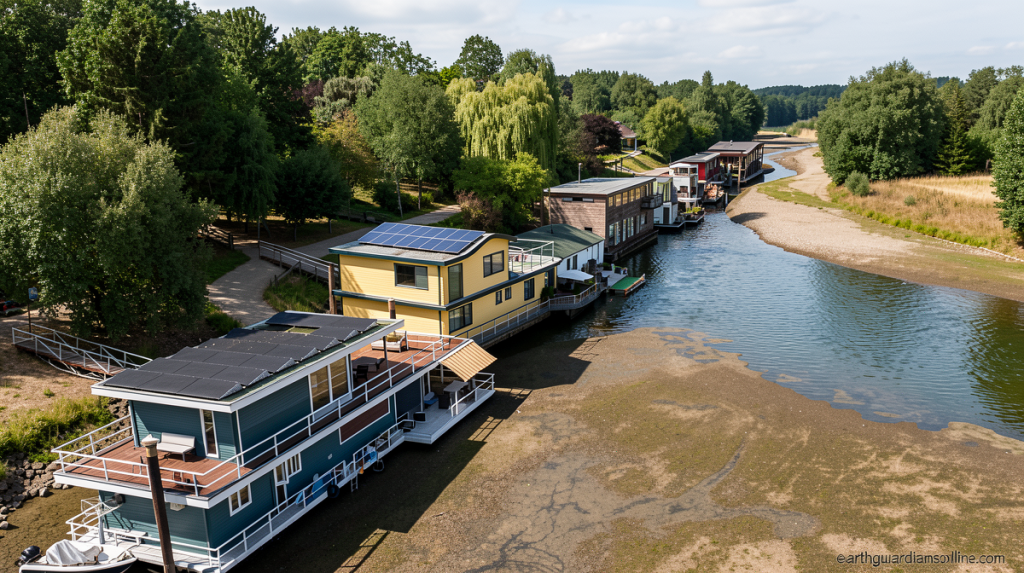
European Waterways Face Unprecedented Drought as Rivers Shrink Under Heat
Earthguardiansonline.com – Across the continent, waterways are experiencing dramatic declines in water levels, creating challenges for navigation, ecosystems, and communities alike. From the Netherlands to Hungary, rivers that once served as reliable transportation corridors are now revealing their beds, leaving vessels stranded and prompting officials to declare emergency measures.
Netherlands Declares Water Shortage Amid Unusual Conditions
The Netherlands, a nation historically accustomed to managing excess water through sophisticated engineering, has officially announced a water shortage. This declaration, made on Thursday, elevates the country’s drought response to Level 2 status. According to the Ministry of Infrastructure and Water Management, the situation stems from reduced water inflow through both precipitation and river systems, combined with increasing demand for water resources.
Government agencies and water utility companies are now evaluating necessary interventions. Potential measures under consideration include limiting groundwater extraction and reducing the frequency of river lock operations to prevent saltwater from advancing further inland. While authorities have assured the public that drinking water supplies remain secure, citizens have been encouraged to use water more thoughtfully.
“Due to persistent drought, less water is entering our country via rain and rivers, while the demand for water is rising,” the Ministry of Infrastructure and Water Management explained in an official statement.
Historical Context and Climate Implications
The current crisis represents a significant shift for a country that has long been celebrated for its flood management capabilities. The Netherlands has traditionally been viewed as a model for adapting to water challenges, particularly those involving rising seas and flooding. Now, however, the nation faces the contrasting challenge of severe dryness.
Jan Verkade, a hydrometeorologist at Deltares, an independent water research organization in the Netherlands, characterized the phenomenon as a reversal of traditional patterns. “Droughts are the new floods,” he observed, noting that the country is experiencing conditions typically associated with late summer, if they occur at all during this period.
The meteorological record for July shows a notable absence of substantial rainfall, alongside temperatures exceeding historical averages. River water temperatures in the Rhine and Meuse have reached approximately 77 degrees Fahrenheit, or 25 degrees Celsius, creating conditions favorable for blue-green algae proliferation and fish mortality.
“Droughts are the new floods,” said Jan Verkade, hydrometeorologist at Deltares, an independent water research institute in the Netherlands.
Shipping Disruptions Across Europe
The economic ramifications extend well beyond Dutch borders. The Rhine, serving as a critical commercial artery for European trade, flows through multiple nations including Germany. In certain sections, water levels have dropped sufficiently to require cargo vessels to reduce their payloads and distribute goods across additional ships, thereby increasing transportation expenses.
During July, a river cruise vessel became grounded on the Rhine near the German city of Bonn. Recovery operations required several hours before a freighter could successfully tow the stranded ship into deeper waters. Although rainfall in recent days has contributed to rising water levels in German sections of the Rhine, experts caution that the situation remains precarious.
“We have come back from the brink, with an improvement compared to the lowest water levels earlier this week, but much more rain is still needed,” one commodity trader told Reuters.
Similar disruptions have occurred elsewhere. In Hungary, cruise ships found themselves immobilized near Budapest due to near-record low levels on the Danube River, negatively impacting tourism revenues. Meanwhile, Romanian officials reported that the Danube reached its lowest point in three decades over the weekend.
Expert Perspectives on the Crisis
Hannah Cloke, Regius professor of meteorology and climate science at the University of Reading in the United Kingdom, expressed particular concern about the timing of this drought. “The calendar is what worries me most. The Netherlands has declared an actual water shortage in mid-July,” she noted, emphasizing that substantial summer remains ahead with forecasts offering minimal relief for several weeks.
“This is not bad luck,” Cloke said. “The heat dries the soil, empties the rivers and drives up demand for water all at once. That is the fingerprint of a changing climate.”
Cloke further explained that rivers retain memory of extended dry periods. “Rivers have long memories. They reflect months of missing rain, not just a hot fortnight. So, the deficit we see now cannot be fixed by a few showers,” she clarified.
Looking Ahead
The Netherlands last experienced Level 2 water shortage conditions in August 2022, and has not encountered Level 3 status—classified as a “water crisis”—since 2003. Ministry spokespersons indicated that sustained high temperatures coupled with continued low precipitation could necessitate more severe interventions if conditions persist through September.
While the country has gained valuable experience from previous shortages in 2018 and 2022, officials acknowledge that prolonged drought may require difficult decisions regarding water allocation and usage restrictions.
