
Supersonic flight is making a comeback decades after the Concorde. But one big hurdle remains
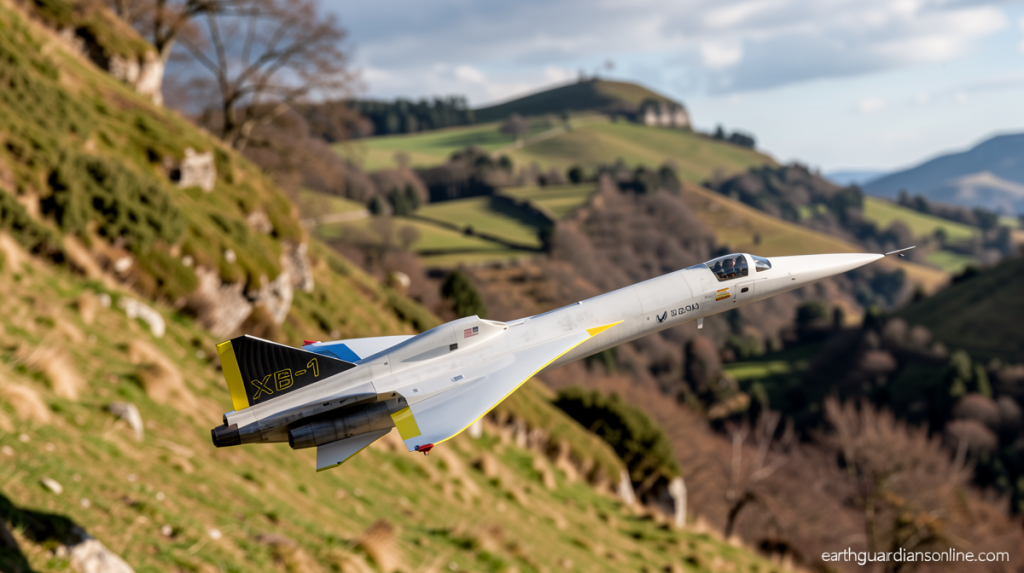
Supersonic Flight Making a Comeback After Concorde Era
Earthguardiansonline.com – Supersonic flight is making a comeback decades after the Concorde’s retirement. The Federal Aviation Administration has proposed sweeping changes to decades-old regulations that once grounded commercial supersonic travel. This regulatory overhaul could finally unlock faster-than-sound passenger flights across American skies.
The journey toward this moment began with a landmark experiment in Oklahoma City. Between 1964 and 1965, military jets created 1,253 sonic booms over the city to gauge public reaction. A University of Chicago survey of 3,000 residents revealed that 73 percent believed they could live with the noise. Despite this acceptance, the test generated 12,400 complaints and prompted the FAA to compensate residents for window and wall damage.
From Golden Age to Grounded Ambitions
The Oklahoma City findings came at a critical juncture for aviation. While supersonic travel promised to cut transcontinental journeys in half, public concerns helped shape policy. Congress withdrew funding for Boeing’s 2707 project in 1971, leaving only the Concorde and Tupolev Tu-144 in the passenger race.
The most significant shift occurred in 1973 when the FAA banned civilian supersonic flight over U.S. territory. This decision restricted civil aircraft to subsonic speeds below Mach 1, effectively preventing sonic booms from disturbing American communities. The Concorde remained the only commercial supersonic airliner, operating from 1976 until 2003 without producing a successor.
New Rules for a New Era of Aviation
The regulatory landscape is transforming once again in 2026. The FAA’s June proposal marks a fundamental shift from speed-based restrictions to noise-based standards. This approach could repeal the 1973 prohibition that has limited supersonic development for half a century. The agency plans to finalize these standards by mid-2027.
It’s a long time in coming. I think it’s a welcome legislation, and I would say NASA and the US industry have been pushing in this direction for a very long time.
Juan Alonso, a professor at Stanford University’s aeronautics and astronautics department, highlighted the significance of this regulatory evolution. His remarks reflect years of advocacy by NASA and American aerospace companies working toward this milestone.
The industry has developed two distinct strategies for addressing the sonic boom challenge. When aircraft exceed the speed of sound, they create a powerful shock wave that produces the characteristic explosion-like sound on the ground. This acoustic phenomenon can startle residents, crack windows, and potentially affect human health according to emerging studies.
Colorado-based Boom Supersonic, specifically mentioned in the FAA’s proposal, uses a physics-based approach designed to prevent sonic booms from reaching the ground entirely. Meanwhile, NASA is conducting flight tests with its experimental X-59 aircraft, which features a purpose-built design engineered to reduce sonic boom intensity rather than eliminate it completely.
Looking Beyond the Concorde Legacy
The post-Concorde supersonic landscape promises to differ significantly from its predecessor’s operational model. When the Concorde entered passenger service in January 1976, British and French airlines offered transatlantic routes at premium prices. Today’s new entrants aim to make supersonic travel more accessible while addressing the noise concerns that limited the original aircraft’s routes.
Frequently Asked Questions
When will supersonic flights resume over the United States?
The FAA aims to complete its new noise-based standards by mid-2027. Once finalized, commercial supersonic traffic could begin operating over U.S. territory for the first time in decades.
How do new supersonic aircraft reduce sonic booms?
Companies like Boom Supersonic use physics-based strategies to prevent sonic booms from reaching the ground entirely. NASA’s X-59 aircraft takes a different approach, featuring a purpose-built design that reduces sonic boom intensity rather than eliminating it completely.
What was the impact of the Oklahoma City sonic boom test?
The 1964-1965 test created 1,253 sonic booms over six months. While 73 percent of surveyed residents believed they could accommodate the noise, the test generated 12,400 complaints and prompted the FAA to compensate residents for property damage.
Why did the Concorde not have a successor?
The 1973 FAA prohibition on civilian supersonic flight over U.S. territory limited the Concorde’s operational routes. Combined with high operating costs and limited market demand, these factors prevented the development of a commercial successor despite the aircraft’s technological achievements.
