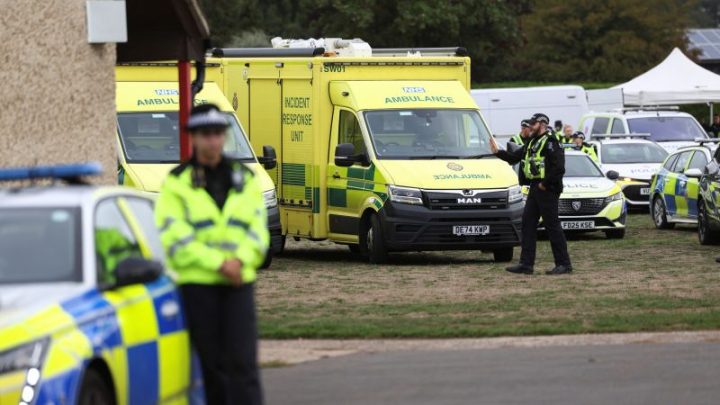
These men had a hellish escape from Nepal’s flooded hydro tunnels. They were the lucky ones

Daftar Isi
Nepal’s Hydro Workers Face a Race Against Time as Floodwaters Bury the Himalaya’s Tunnels
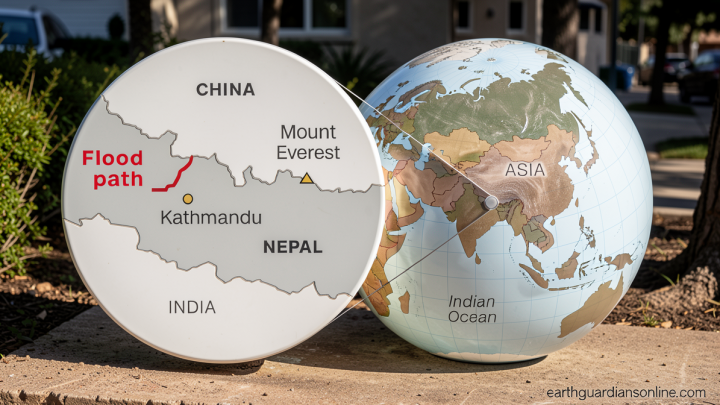
Earthguardiansonline.com – More than 900 construction workers remain unaccounted for after a catastrophic glacial flood tore through the Trishuli river valley, sending a wall of water, ice, and silt cascading 62 miles (100 km) downstream and swallowing entire communities in what has become Nepal’s worst natural disaster in years. The victims are overwhelmingly men who had driven deep tunnels into the world’s highest mountain range to harness the kinetic energy of its glacial rivers — men who, in the hours after the deluge struck, found themselves sealed inside concrete corridors with no exit and rising water at their ankles.
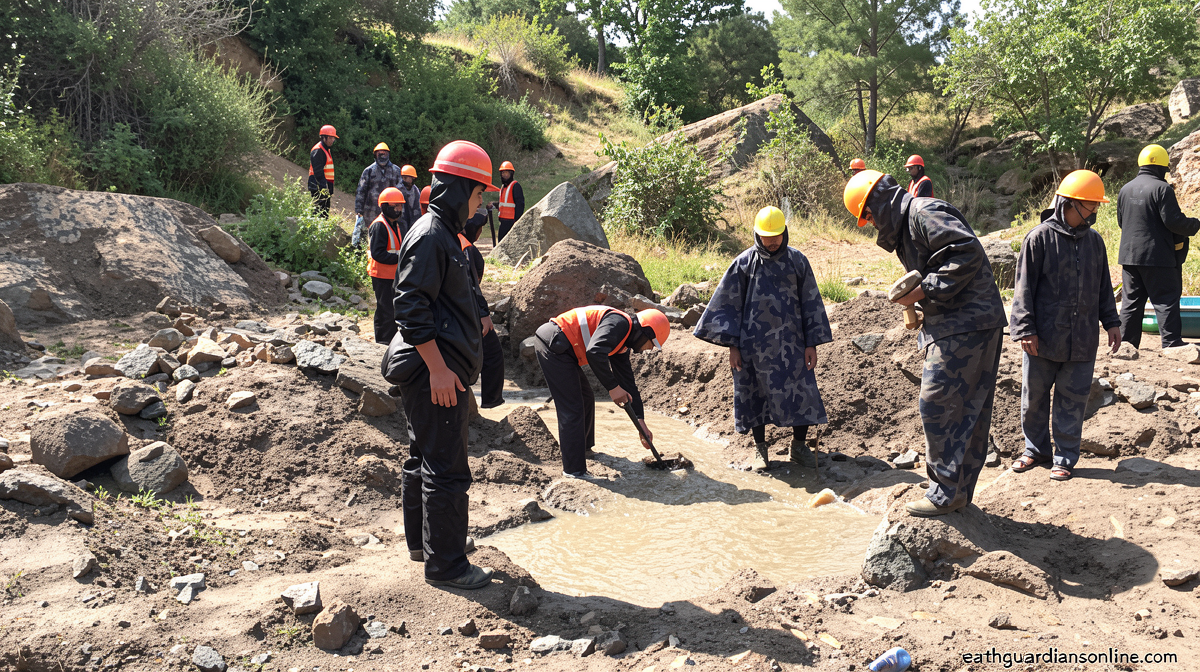
Of those trapped, roughly 279 hydro power workers have since been pulled out or managed to crawl their way through mud-choked passages. But at the Trishuli 3A hydropower plant, rescue crews worked through the night into Sunday, boring narrow shafts downward to pump compressed air and lower food supplies into the flooded tunnel, hoping to reach anyone still breathing in the darkness below.
A Six-Hour Climb Through Black Water
For Ram Chandra, the escape was a matter of reflex and sheer will. Working on the banks of the Trishuli, he felt the tunnel begin to fill almost instantly — water, shattered concrete, and debris surging through the dark with enough force to knock him off his feet. He latched onto a steel rung bolted into the tunnel’s ceiling and held on.
“The water was rising and it was difficult to move my legs. If I had let go from that rung I would have fallen.”
He and five colleagues were hundreds of meters from the nearest exit. Chandra grabbed a sheet of tin to create a makeshift foothold beneath his boots, then passed it hand to hand as the group inched forward, rung by rung, for six hours. When they finally reached the tunnel gate, they found a seventh man already waiting there. By the time daylight reached them, the torrent had stripped their clothing entirely. Above them, the mountains had unleashed a deluge of such magnitude that the river below ran black with debris, ice, and silt, still surging with unspent fury.
The Jumla Connection
Chandra, Madan Singh Budha, and roughly fifteen other rescued workers CNN interviewed all hail from Jumla, a remote district in Nepal’s far west where maize terraces cling to near-vertical slopes and village life moves in tight, interlocking circles. For these men, the disaster was not an abstract statistic. Every single one of them had lost a relative or close friend in the flood. Many, like Chandra, had also lost their clothes to the torrent and stood in borrowed trousers, shirts, and sandals lent by villagers who rushed to help them reach safety.
Madan Singh Budha had just stepped off the night shift at Upper Trishuli tunnel number 2 when the water hit. He looked outside, saw the river transformed into a churning wall, and began running uphill.
“The hill was rocky, with grass growing in between. We used that grass to hold on to as we climbed.”
He was airlifted out of the disaster zone by helicopter on Sunday. Those who could not climb fast enough, he said, were swept away.
“Only Around 100 Made It Out”
Bhakti Ram Bohara, another survivor, places himself in a grim minority. He estimated that roughly 1,000 men were working across his project and adjacent sites when the flood struck. Only about 100 emerged alive. Among the missing was his brother-in-law — a man who had spent weeks at a time away from his family on the same crew, wiring money home to their village in Jumla.
“His wife is my sister, and she is pregnant.”
Boara broke down in tears as he spoke the words, a small fracture in the composure of a man who had already survived the worst night of his life.
The Guide Who Would Not Sleep
Amar Bista was not on the tunnel crews. He is a tour guide. But when word of the catastrophe reached him, he rushed to the site where dozens of his own family members and friends had been working. The task of determining who was missing, who was safe, and then physically extracting those still inside proved nearly impossible. Standing beside the small group of men he had helped save, Bista told CNN he had not slept in four days.
“They all are from my area, you know.”
He gestured to the silent men around him, his voice cracking. When he first arrived by helicopter and took in the scale of destruction, he said, hope still flickered in him — fueled by media reports of rescues from the worst-hit zones.
“People still have hope. But the reality is nothing.”
He described nights spent crying, thinking of cousins and sisters who had lost children — teenagers, eighteen years old. Above him, a constant stream of military and civilian helicopters roared overhead in what appeared to be a ceaseless rotation, ferrying survivors and the dead out of the valley. He expressed gratitude for the authorities’ efforts, though the work demanded something almost unthinkable: sending rescuers back into the very tunnels that had swallowed so many of his own people.
As of Sunday, the search continued. The Trishuli valley, carved over millennia by the same glacial forces now turned lethal, held its silence over the missing, and the helicopters kept flying.
Related Reading
Frequently Asked Questions
What is These men had a hellish escape?
These men had a hellish escape is the main topic of this guide. The article explains the context, practical details, and next steps readers should understand.
Why does These men had a hellish escape matter?
These men had a hellish escape matters because readers are looking for a useful answer, not just a short summary. Good content should match search intent and help them decide what to do next.