This city had a flooding problem. So it turned to an animal that had been extinct there for 400 years

This city had a flooding problem. So it turned to an animal that had been extinct there for 400 years
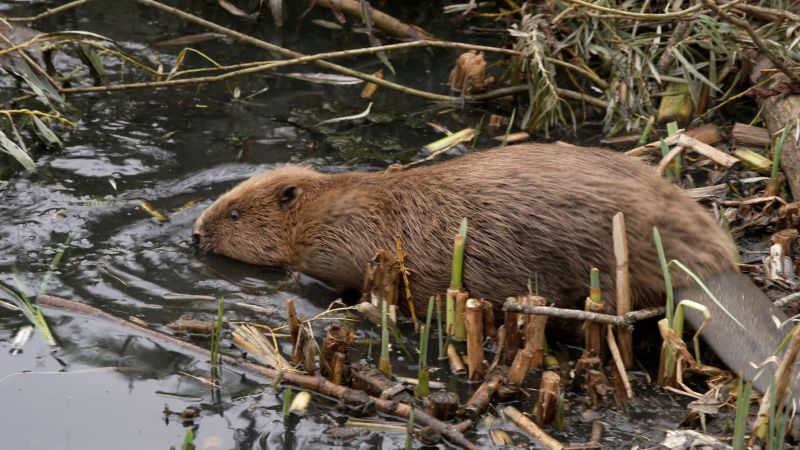
This city had a flooding problem – Nestled near a McDonald’s and a bustling strip mall, a verdant urban wetland is being revived by a group of industrious beavers in Ealing, West London. This overlooked corner of the borough, once prone to frequent flooding during heavy downpours, now hosts a thriving ecosystem shaped by the return of these ancient engineers. Water that once surged into local streets and submerged the Greenford tube station—part of the London Underground—now flows more slowly, thanks to the beavers’ natural knack for creating reservoirs. The project, initiated by conservationists, has transformed a neglected space into a living example of how wildlife can combat the challenges of climate change.
A nature-based approach to urban resilience
While traditional flood mitigation efforts typically involve concrete reservoirs and heavy machinery, the Ealing Beaver Project has opted for a different strategy. “Why don’t we try a nature-based solution?” Sean McCormack, a veterinarian and project leader, mused. “Why don’t we bring back beavers?” The idea, which gained traction in 2023, involved relocating a family of five wild beavers to a 24-acre site known as Paradise Fields. Once a forgotten patch of land, the area has since become a focal point for ecological restoration. The beavers’ work has not only reduced flood risk but also created a diverse habitat that supports a range of wildlife, from birds to freshwater fish.
“It was kind of a forgotten and neglected space,” McCormack said. “Over the last few years, it’s been transformed.”
Climate change has intensified the frequency and severity of storms, making flood management more critical than ever. Rewilding initiatives, such as the one in Ealing, are gaining traction as a way to harness the power of nature to build more resilient landscapes. Beavers, with their ability to engineer wetlands, have become a key player in this movement. Their dams and canals slow water flow, allowing the ground to absorb excess rain and reducing downstream flooding. This natural process, once lost in the UK for centuries, is now being reintroduced to combat the growing impacts of extreme weather.
The return of a lost species
Wild beavers vanished from the UK around 400 years ago, primarily due to hunting for their fur, meat, and scent gland secretions. These musky, vanilla-like oils were once prized as food flavoring and in perfumes, leading to the near-eradication of the species. However, recent years have seen a resurgence in beaver reintroduction efforts, driven by their remarkable ecological benefits. As semi-aquatic rodents, beavers are adept at shaping their environments through a combination of dam-building and canal-digging, creating complex wetland systems that support biodiversity.
Beavers’ strong, iron-fortified teeth—brightly colored in orange—allow them to gnaw through trees and sticks with ease. This process not only provides them shelter but also forms natural water retention areas. These pools act as buffers during heavy rainfall, reducing the speed at which water reaches rivers and preventing urban flooding. Moreover, the intricate network of canals and ponds created by beavers can spread floodwaters over a larger area, minimizing damage to infrastructure. “These are like little micro-streams that radiate outward from their ponds across valley bottoms like a spiderweb of water,” explained Emily Fairfax, an assistant professor of geography at the University of Minnesota. “They further mitigate flood damage by dispersing water more evenly.”
Ecological advantages beyond flood control
The benefits of beaver rewilding extend beyond just managing stormwater. The wetlands they construct can also provide relief during droughts, acting as reservoirs that release water slowly into surrounding areas. This dual function makes beavers invaluable in adapting to both extreme wet and dry conditions. Additionally, the constant moisture in their habitats reduces the risk of wildfires, as the land becomes too damp to ignite. “There’s a joke in the beaver science community that if you’ve got a problem, there’s a beaver for that,” Fairfax said. While she admits it’s an oversimplification, the ecological impact of beavers is undeniable.
According to McCormack, the Ealing project has already shown promising results. By their second winter at Paradise Fields, the beavers had successfully prevented flooding in the target area for the first time in a decade. The site now features a mosaic of habitats, including reed beds, shallow pools, and forested areas, which have attracted a variety of species. Currently, the population includes eight adult beavers and a new litter of kits, or baby beavers, born in the spring. The project team will wait until the kits emerge from their lodge to determine their exact number, expected later this month.
Challenges and considerations for rewilding
Despite its success, the Ealing project highlights the need for careful planning in rewilding efforts. “Beavers cannot be released just anywhere,” Fairfax cautioned. “There must be enough food, water, and space for them to build their wetland home.” Additionally, local communities must be willing to accept the animals and prepare for potential disruptions. A contingency plan is essential in case the beavers’ engineering activities encroach on human infrastructure, such as roads or drainage systems. Without such measures, the project could face opposition from residents or landowners.
George Holmes, a conservation professor at the University of Leeds, emphasized that not all rewilding initiatives are equally successful. “Illicit introductions of beavers, such as ‘beaver bombing,’ often lead to conflict with landowners,” he noted. This tactic, where beavers are released without proper coordination, can result in unintended consequences. For instance, tunnels dug by beavers in riverbanks might trap livestock or damage agricultural land. Such challenges underscore the importance of collaboration between conservationists, local authorities, and communities to ensure the sustainability of rewilding projects.
While the Ealing project has been a model of success, its approach is not without hurdles. The transformation of the site required a balance between nature’s rhythms and human needs. Conservationists had to secure funding, gain public support, and monitor the beavers’ activities to prevent over-engineering. The result, however, is a living testament to the potential of rewilding as a tool for climate adaptation. As storms grow more intense and unpredictable, the role of beavers in shaping resilient landscapes is becoming increasingly vital.
A global movement toward ecological restoration
Beaver rewilding is not limited to the UK. Across the United States, particularly in the western states, similar projects are gaining momentum. These initiatives often focus on restoring river ecosystems and improving water management in arid regions. However, the success of such projects depends on factors like habitat suitability and community engagement. In Ealing, the collaboration between conservationists and residents has created a framework for other cities to follow.
As the world grapples with the effects of climate change, rewilding offers a unique blend of tradition and innovation. By reintroducing species like beavers, cities can tap into ancient ecological processes to address modern environmental crises. The Ealing project, with its blend of scientific insight and community involvement, serves as a case study in how nature-based solutions can complement traditional engineering. While challenges remain, the results so far suggest that beavers may hold the key to a more sustainable future for urban areas.
The story of Ealing’s beavers is a reminder that ecological resilience often lies in the revival of forgotten natural systems. As the project continues to evolve, it may inspire other cities to rethink their approach to climate adaptation. By working with rather than against nature, urban environments can become more adaptive, vibrant, and harmonious. The return of these furry architects to London is more than a triumph of conservation—it’s a step toward a new era of environmental stewardship.