
Tracking US wildfires in maps and charts
Tracking US Wildfires in Maps and Charts
Tracking US wildfires in maps and charts – Wildfires have become a persistent challenge across the United States, with annual reports indicating the destruction of millions of acres and the loss of thousands of homes and structures. The National Interagency Fire Center (NIFC) provides critical data on these incidents, highlighting the scale of damage caused by flames that spread rapidly due to prolonged dry spells and a warming climate. In recent years, Western states such as California have experienced particularly severe fire seasons, fueled by rising temperatures and erratic weather patterns. This trend underscores the need for real-time tracking tools to monitor the spread of blazes and their impact on communities and the environment.
Interactive Tools for Real-Time Monitoring
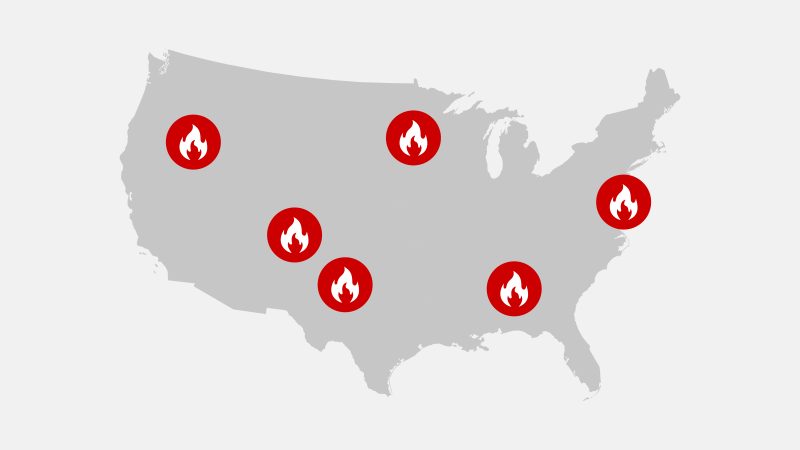
CNN offers an interactive platform to visualize the most significant active wildfires nationwide, utilizing dynamic maps and charts to present up-to-date information. The map highlights current fire locations, while a separate list details specific characteristics of the largest blazes under observation. These tools are refreshed regularly throughout the day, allowing users to access the latest data on fire behavior, affected regions, and potential threats. For instance, the chart tracks the total number of acres burned in the current year, placing this year’s figures within the context of historical trends. This allows for a clearer understanding of whether the fire season is intensifying or aligning with past averages.
Data Sources and Methodology
The accuracy of these resources relies on data collected from the National Interagency Fire Center, which aggregates information from multiple agencies and local fire departments. The map and table exclude fires that have been active for more than 30 days, as well as those smaller than 10 acres, fully contained incidents, and prescribed burns. This filtering ensures that only the most significant and ongoing wildfires are represented. The state names listed on the map correspond to the origin of each fire, with smoke areas identified through satellite imagery provided by the NOAA Hazard Mapping System. Annual cumulative acreage totals are calculated using weekly situation reports published by NIFC, though these figures may be revised during the year due to updated assessments or discrepancies in reporting.
Climate change has exacerbated the conditions that lead to wildfires, creating a scenario where fires are not only more frequent but also more intense. In 2026, for example, the combination of high temperatures and reduced precipitation has contributed to a heightened risk of outbreaks, particularly in regions like California and Oregon. The NIFC’s annual data reveals that the total area burned can fluctuate significantly from year to year, influenced by factors such as seasonal weather variations and human activity. This variability highlights the importance of continuous monitoring and the use of visual tools to track progress and anticipate future developments.
Health Risks and Air Quality Monitoring
Wildfire smoke poses significant health risks, especially for vulnerable populations such as children, the elderly, and individuals with respiratory conditions. Fine particulate matter, or PM2.5, is a primary concern, as it can penetrate deep into the lungs and cause a range of health issues. To address this, federal officials advise residents in affected areas to check local air quality indices, which are updated hourly at hundreds of locations across the country. This table, sourced from AirNow.gov, provides a real-time snapshot of PM2.5 levels, helping individuals make informed decisions about their health and safety.
“Residents should monitor air quality indices closely during wildfire events, as fine particles can linger in the air for days and affect visibility, breathing, and overall well-being.” – Federal officials
Understanding the correlation between fire activity and air quality is essential for mitigating health risks. The chart not only displays the number of acres burned but also compares this year’s data to the past decade, offering insights into whether current trends align with long-term patterns. For instance, the 2026 fire season has already surpassed the average for the first half of the year, indicating a potential for higher-than-usual destruction. This information is crucial for emergency responders, policymakers, and residents alike, as it helps predict resource needs and plan for evacuations or health interventions.
One of the key features of the interactive tracker is its ability to integrate spatial data with environmental indicators. The residents living in wildfire-prone areas are calculated using a spatial analysis of 2020 US Census data, combined with boundaries of National Weather Service fire weather watches and red flag alerts. This method allows for a more precise estimation of populations at risk, ensuring that health advisories reach those most affected. Additionally, the map and table provide a snapshot of the current situation, with updates reflecting the latest fire activity and air quality changes.
Historical Context and Future Implications
While the map and chart focus on the present, they also offer historical context, enabling users to recognize patterns and potential long-term consequences. The NIFC’s data shows that the average number of wildfires has increased over the past two decades, with a corresponding rise in the total area burned. This trend is expected to continue as global temperatures rise and drought conditions persist. For example, the 2026 fire season has already seen a 25% increase in large wildfires compared to 2025, a figure that could grow if current conditions remain unchanged.
State-level variations in fire activity are also notable. While California remains the epicenter of intense wildfires, other regions such as Colorado and Washington have reported significant outbreaks in recent months. The map visually represents these differences, allowing for a comparison of fire hotspots across the country. This spatial analysis is critical for resource allocation, as it helps identify areas where firefighting efforts are most urgent. Furthermore, the chart includes a breakdown of the top states by acres burned, providing a clear ranking that reflects the severity of the situation.
Experts emphasize that the data collected and displayed on these tools is a vital component of wildfire management. Sam Hart, a senior data and graphics editor at CNN, explains that the combination of real-time tracking and historical comparisons gives the public a comprehensive view of the crisis. “These tools are not just about displaying numbers; they’re about telling a story of how wildfires are evolving and what that means for communities,” Hart notes. Curt Merrill, the interactive developer, adds that the design of the tracker focuses on usability, ensuring that even non-experts can interpret the information effectively.
As the fire season progresses, the importance of these tracking tools becomes increasingly evident. They serve as a bridge between scientific data and public awareness, enabling individuals to take proactive measures to protect themselves and their property. Whether through the map’s visual representation of active fires or the table’s hourly updates on air quality, the resources provided by CNN offer a multidimensional perspective on the challenges posed by wildfires. This approach not only informs but also empowers communities to respond to the crisis with greater preparedness.
Challenges in Data Accuracy
Despite the utility of these tools, there are challenges in maintaining data accuracy. Some dates may be missing due to government shutdowns or report anomalies, which can create gaps in the timeline of fire activity. Additionally, the exclusion of fully contained fires and prescribed burns ensures that the focus remains on active threats, but it also means that the total number of fires may not reflect the full scope of annual activity. The NIFC addresses these challenges by continuously revising reports and incorporating new data as it becomes available, ensuring that the information remains as reliable as possible.
For the residents living in wildfire-prone areas, the integration of census data with weather alerts offers a nuanced understanding of their risk exposure. By analyzing population density alongside fire weather conditions, the tracker provides a clearer picture of which communities are most vulnerable. This approach is particularly valuable during periods of high risk, such as the summer months when temperatures peak and humidity drops. The ability to visualize these factors in real time enhances the effectiveness of public health and safety initiatives, allowing for targeted interventions and timely communication.
In conclusion, the tracking of US wildfires through maps and charts is a powerful way to understand the scale and impact of these natural disasters. By combining current data with historical trends and health-related metrics, these tools offer a holistic view of the situation. As the climate continues to change, the need for such resources will only grow, ensuring that the public has access to the information necessary to stay safe and informed. Whether it’s the map showing the locations of active fires or the table updating air quality conditions, these visualizations play a critical role in disaster response and environmental awareness.
