
UK cyberspying chief says the West is between peace and war as Russia ramps up hybrid attacks
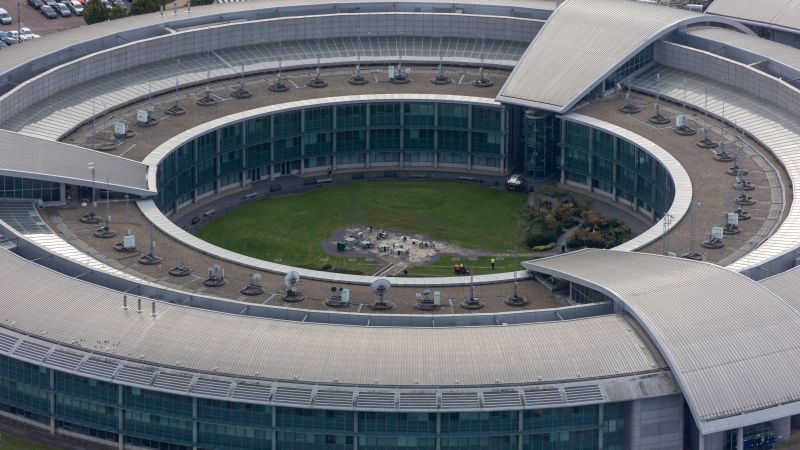
UK Cyber Intelligence Chief Warns of Escalating Hybrid Threats from Russia
UK cyberspying chief says the West – At a recent address held at the iconic Bletchley Park, the director of the UK’s Government Communications Headquarters (GCHQ) underscored the growing tension between the West and Russia, describing the current geopolitical climate as a precarious balance between peace and war. Anne Keast-Butler, who became the first female head of the agency, highlighted how Russia’s relentless hybrid campaigns have intensified, with the nation’s focus shifting toward undermining Western democracies through digital and physical means. This comes amid rising concerns about the potential for miscalculation, as the number of Russian combat casualties in Ukraine approaches half a million, according to recent intelligence assessments.
Keast-Butler’s speech, delivered at a World War II-era code-breaking center near London, emphasized the transformative role of artificial intelligence in modern warfare. She noted that AI is no longer a mere tool but a dominant force, being integrated into hybrid strategies that operate just below the threshold of traditional conflict. “The rapid pace of AI-driven innovation is reshaping how we defend our nations,” she stated, adding that the technology’s potential for both enhancement and disruption is immense. “We are witnessing an era where algorithms can be weaponized to alter the course of international disputes, often without direct military engagement.”
“I’ve spent three decades working in national security, and the risk of miscalculation is as high as I’ve ever seen it,” Keast-Butler said, addressing an audience of cybersecurity experts, diplomats, and senior officials. “The ground beneath our feet is shifting, and the window to stay ahead is narrowing.”
Russia, according to the GCHQ chief, is systematically targeting critical systems across Britain and Europe. Her remarks painted a picture of a strategy that spans from physical sabotage to cyber intrusions, aiming to erode public trust in democratic processes and destabilize key sectors. “Moscow is not just launching attacks—it’s embedding itself in the fabric of our societies,” she explained. “From infrastructure to energy networks, the focus is on creating vulnerabilities that can be exploited.”
Keast-Butler highlighted the role of AI in amplifying these efforts, warning that the technology’s dual-use capabilities could tip the scales in favor of adversaries. “The algorithms now being developed have the power to predict, influence, and disrupt with unprecedented speed,” she said. “We must act swiftly to ensure they serve our interests rather than those of our enemies.” She emphasized that GCHQ is actively deploying cutting-edge AI systems to bolster cybersecurity defenses, a move she described as essential for maintaining strategic advantage in an increasingly digitized world.
The GCHQ director also pointed to the broader implications of AI in global conflicts, suggesting that the technology could become a decisive factor in the next phase of international disputes. “The ability to automate cyber operations at machine speed means we’re facing a new kind of warfare—one that doesn’t always involve the loud noises of traditional battlefields,” she noted. “It’s a silent, persistent threat that demands immediate attention.”
Russia’s Hybrid Activities and Strategic Shifts
Keast-Butler’s analysis of Russia’s activities revealed a deliberate shift toward long-term influence rather than immediate conquest. “The nation is scaling up its hybrid efforts, stretching from the seabed to cyberspace,” she said. “This includes targeting the data and energy systems that underpin our economies and societies.” She specifically mentioned the importance of protecting critical cables and pipelines in British waters, which are vital for global connectivity and energy distribution.
The GCHQ chief also criticized the UK’s recent foreign policy direction, particularly under former President Donald Trump’s “America First” approach, which she argued has strained the transatlantic alliance. “Our relationship with the United States is fundamental to securing our shared interests,” she said. “Without strong collaboration, we risk losing the momentum needed to counter hybrid threats effectively.” This sentiment echoes growing concerns among Western intelligence agencies about the weakening of collective security frameworks in the face of rising global tensions.
Earlier this month, Richard Horne, the head of the UK’s National Cyber Security Centre, echoed similar warnings. He pointed to the escalating cyberattacks attributed to Russia, China, and Iran, which he described as a “gray zone” of conflict where traditional warfare is not always evident. “These attacks are not just isolated incidents—they are part of a coordinated strategy to weaken our defenses before a larger conflict erupts,” Horne stated. He called for a unified response to ensure cybersecurity is treated as a top priority, regardless of the scale of the threat.
Keast-Butler’s remarks come amid a series of high-profile cyber incidents attributed to Russian operatives. In recent months, countries such as Sweden, Poland, Denmark, and Norway have reported attacks on their power plants and dam systems, with evidence pointing to state-sponsored hackers. “The attacks are not random—they are calculated to disrupt essential services and create uncertainty,” she said. “This is a deliberate effort to weaken our infrastructure and public confidence.”
The GCHQ director also emphasized the need for a cultural shift in how cybersecurity is prioritized. “We must ensure that every level of society—from corporate boardrooms to households—recognizes the urgency of this issue,” she argued. “The window to act is shrinking, and the consequences of inaction could be catastrophic.” This call to action aligns with a broader push for public-private partnerships in cybersecurity, where companies and governments collaborate to shield against digital threats.
Bletchley Park, where Keast-Butler delivered her speech, holds a special place in the history of intelligence and technology. The site, a manor house 45 miles northwest of London, was the headquarters of the code-breaking operations that helped turn the tide of World War II. Its historical significance underscores the evolving nature of cybersecurity, as modern threats now mirror the strategic importance of codebreaking in the 20th century. “This building symbolizes the power of technology to shape the future of security,” Keast-Butler said. “Our mission today is to ensure that AI and digital tools continue this legacy of resilience.”
As Russia continues its hybrid strategy, the UK’s intelligence agencies are doubling down on their efforts to stay ahead. GCHQ’s new initiatives include embedding AI-driven algorithms into real-time cyber defense systems, enabling faster threat detection and response. “By integrating these tools, we can anticipate attacks before they occur and neutralize them at the source,” Keast-Butler explained. “It’s a proactive approach that leverages the very technology adversaries are using against us.”
Meanwhile, the war in Ukraine has entered a critical phase, with intelligence suggesting that over 490,000 Russian soldiers have been killed since the invasion began in February 2022. Despite these losses, Russia has maintained its focus on hybrid warfare, using cyberattacks and information campaigns to maintain momentum. “The battlefield is not just in Ukraine—it’s in the digital realm,” Keast-Butler said. “Every attack on our systems is a step toward shifting the balance of power.”
Her speech reflects a broader trend among Western intelligence leaders, who are increasingly concerned about the role of AI in escalating global conflicts. “We are at a tipping point where the line between peace and war is blurring,” she concluded. “The next phase of this struggle will be defined by how we harness technology to protect our nations.” With hybrid threats growing more sophisticated, the GCHQ director’s message serves as a stark reminder of the challenges ahead for the West.
