
Trump says Japan ‘knows about surprises’ in excruciating Pearl Harbour gaffe
Trump says Japan ‘knows about surprises’ in excruciating Pearl Harbour gaffe
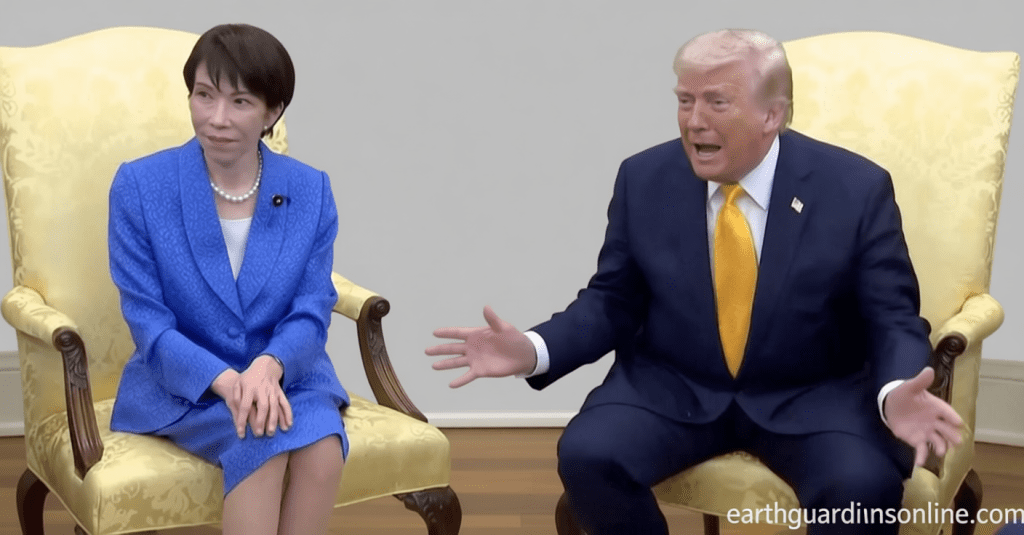
During a recent meeting with Japan’s Prime Minister, Donald Trump delivered a notably awkward remark that drew sharp reactions from onlookers. The moment occurred as he sat beside the leader, offering a lighthearted comment on historical military surprises.
Trump’s remark centered around the 1941 attack on Pearl Harbor, which he mistakenly associated with Japan’s knowledge of such tactics. “Why didn’t you tell me about Pearl Harbor?” he asked a Japanese reporter, despite being born five years after the event. The question, though seemingly innocuous, sparked a series of unintended consequences.
The President’s remark followed a discussion on the U.S. decision to launch strikes against Iran. He explained the strategy: “You don’t want to signal too much. When we go in, we went in very hard, and we didn’t tell anybody about it because we wanted… surprise.” This phrasing, however, seemed to trip him up, leading to a moment of awkwardness.
“Who knows better about surprise than Japan?”
His counterpart, Sanae Takaichi, appeared visibly uneasy as Trump’s statement took shape. The remark was met with muted laughter from the press, underscoring the cringe factor of his slip. “And we had a surprise… and because of that surprise, we probably knocked out 50% of what we did and much more than we anticipated,” he added, further complicating the moment.
Historically, the Japanese surprise attack on December 7, 1941, resulted in the destruction of 2,390 U.S. military personnel and vessels. Franklin D. Roosevelt later called it “a date which will live in infamy,” setting the stage for the four-year war that followed. Japan’s eventual surrender in August 1945 came after the atomic bombings of Hiroshima and Nagasaki.
Takaichi, who recently secured a strong electoral victory, has maintained a close rapport with Trump since her tenure began. Their collaboration was evident during Trump’s October visit to Japan, which was hailed as a sign of renewed U.S.-Japan cooperation. However, tensions have risen with the U.S. and Israeli military actions against Iran.
Trump had previously called on Japan and other nations to assist in securing the Strait of Hormuz, a critical route for oil shipments under threat from Iranian attacks. His request was met with limited enthusiasm, prompting him to assert that the U.S. “did NOT NEED THE HELP OF ANYONE!”
Japan’s recent joint statement with the UK, France, Germany, Italy, and the Netherlands acknowledged its commitment to ensuring safe passage through the strait. Takaichi praised Trump’s leadership in this effort, stating, “I firmly believe that it is only you, Donald, who can achieve peace across the world. I am ready to reach out to many of the partners in the international community to achieve our objective together.”
Meanwhile, the war with Iran has seen significant losses for the U.S. military, including 16 aircraft destroyed since its onset. Among these were 10 Reaper drones and three F-15s shot down by a Kuwaiti pilot, adding to the strain on U.S. forces. A KC-135 tanker was also lost during a refueling accident, claiming all six crew members.
Benjamin Netanyahu, in a separate news conference, devoted considerable time to refuting claims that Israel had pushed the U.S. into the conflict. “This canard that we dragged the United States into this is not just a canard, it’s ridiculous,” he declared. He highlighted Iran’s attacks over the years, emphasizing Trump’s earlier directive to secure nuclear weapons from the nation.
Netanyahu credited Trump with guiding the global effort against Iran, asserting, “The world owes a debt of deep indebtedness, deep indebtedness to President Trump for leading this effort to safeguard our future.”
This site is protected by reCAPTCHA and the Google Privacy Policy and Terms of Service apply. Your information will be used in line with our Privacy Policy
