
A visual guide to the Laos cave rescue
A Visual Guide to the Laos Cave Rescue
Rescue Operation Overview
A visual guide to the Laos – The cave rescue in Laos has become a focal point of international attention, showcasing the resilience and ingenuity of emergency teams working under extreme conditions. Located deep within a mountainous region, the cave system has presented unique challenges due to its labyrinthine structure and the depths of its submerged tunnels. Initially, the incident occurred when a group of men, likely engaged in a farming or mining activity, entered the cave and were engulfed by rising waters. As days passed, the situation escalated, with rescuers racing against time to locate and extract the survivors.
Despite the confined space and limited access points, teams have managed to recover five individuals, marking a significant milestone in the operation. However, two others remain missing, prompting ongoing searches and assessments. According to the Metta Tham Kalasin Command and Control Center, the rescue effort involves a combination of technical diving, local expertise, and coordinated logistics. The complexity of the mission has required meticulous planning, with divers navigating treacherous underwater passages to reach the trapped individuals.
“Every movement inside the cave is critical, and the team has worked tirelessly to ensure the safety of those who have been rescued,” said a spokesperson for the rescue operation, emphasizing the high-stakes nature of the task.
Inside the Cave
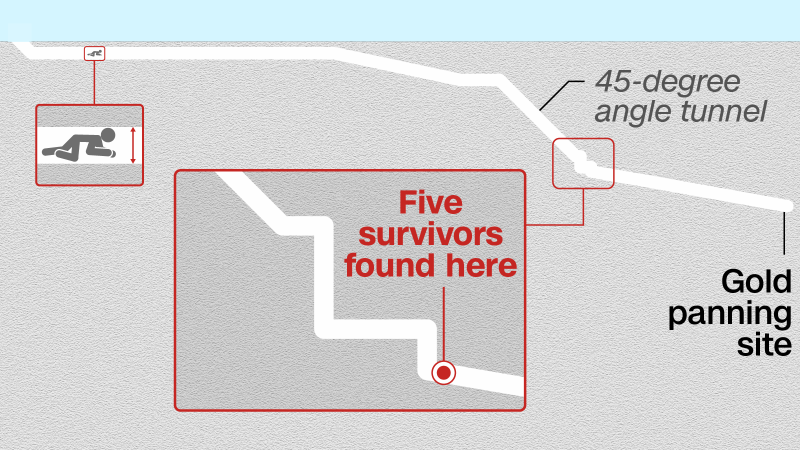
The cave’s interior is a stark contrast to its entrance, with narrow corridors and expansive chambers that have tested the limits of divers and engineers. Maps of the cave system, developed by the local team, reveal a network of passages extending over 200 meters, some of which are submerged and require specialized equipment to traverse. The water level has fluctuated throughout the operation, creating unpredictable currents and reducing visibility to just a few meters.
Rescuers have employed advanced techniques, including the use of underwater drones and reinforced pressure suits, to navigate the depths. The team has had to transport oxygen tanks and life-support systems through the cave’s tightest sections, while also setting up temporary shelters for the rescued individuals. The physical and mental toll on the divers is immense, with many working for over 24 hours without rest. Their ability to adapt to changing conditions has been crucial to the operation’s progress.
The trapped men’s survival has depended on a steady supply of air and water, as well as the resilience of their bodies in the dark, humid environment. Initial reports indicated that the group was forced into a lower chamber by rising floodwaters, where they spent several days waiting for rescue. The challenge lies in the cave’s geometry, with some tunnels requiring divers to perform high-risk maneuvers to reach the survivors. This has led to the use of specialized training, such as cave diving courses and emergency response drills, to mitigate risks.
Global Response and Collaboration
The Laos cave rescue has drawn support from multiple countries, with Thailand playing a key role in providing technical assistance. Thai divers, known for their expertise in underwater operations, have joined the effort, sharing knowledge and equipment with local teams. This collaboration has highlighted the importance of international partnerships in disaster response, as the mission’s success relies on a blend of local and global resources.
Meanwhile, volunteers and families of the missing have been kept informed through regular updates, fostering hope and public interest. The operation has also sparked discussions about the safety measures in place for cave explorers, with experts questioning whether the group had sufficient training or equipment to handle such an emergency. Nevertheless, the focus remains on the present, as rescuers continue to refine their strategies and address the remaining challenges.
One of the most remarkable aspects of the rescue is the use of real-time data and mapping technologies to monitor the cave’s conditions. Divers have created a detailed diagram of the site, which has been instrumental in guiding the search for the two missing individuals. This diagram, based on the team’s firsthand experiences, highlights the critical access points and potential hazards, ensuring that every step taken is calculated and efficient.
Visual Documentation
Photographers and videographers have captured the intensity of the rescue, offering a glimpse into the chaos and calm that define such missions. Images from the scene, including divers in full gear and the illuminated tunnels, have been shared widely, providing both a human element and a technical perspective. These visuals are not only a testament to the bravery of the rescuers but also a tool for educating the public about the risks involved in cave exploration.
The photos, credited to Norrased Palasing/Reuters, Metta Tham Kalasin Rescue/Handout/Reuters, and Thailand Rescue Diver/Facebook, depict the cave’s harsh environment and the dedication of the teams. Some images show the extraction of survivors from the water, while others highlight the infrastructure set up within the cave to sustain life. These visuals have become a critical part of the narrative, helping to convey the scale of the operation and the determination of those involved.
As the rescue continues, the teams are preparing for potential long-term operations. Rescuers have noted that the cave’s system may extend further than previously mapped, requiring additional exploration. This has led to the deployment of more advanced equipment and the involvement of geologists to assess the stability of the cave’s structure. The mission’s outcome will likely influence future cave safety protocols and emergency response strategies worldwide.
The cave rescue in Laos stands as a symbol of human perseverance in the face of natural adversity. While the five survivors have been brought to safety, the search for the two missing individuals remains a priority. The operation’s success hinges on the collective efforts of divers, engineers, and volunteers, all working in unison to overcome the cave’s challenges. As the teams push deeper into the system, the world watches closely, eager to witness the resolution of this high-stakes endeavor.
With the rescue efforts ongoing, the situation is far from settled. The cave’s depths continue to hold secrets, and the two missing men’s fate is a lingering question. However, the progress made so far demonstrates the power of human ingenuity and teamwork. The collaboration between local authorities and international experts underscores the global impact of such incidents, as they serve as reminders of the fragility of life and the importance of preparedness in extreme environments.
In the coming days, rescuers will evaluate the next phase of operations, which may involve more extensive exploration or the use of new technologies to locate the remaining individuals. The cave’s unique features, including its submerged tunnels and tight passages, will require continued innovation. The outcome of this mission could set a precedent for future cave rescues, offering valuable lessons in both strategy and execution. For now, the focus remains on the task at hand, as the teams press forward with unwavering determination.
