
Goodbye Graaff-Reinet: South African town’s name change stirs racial tensions
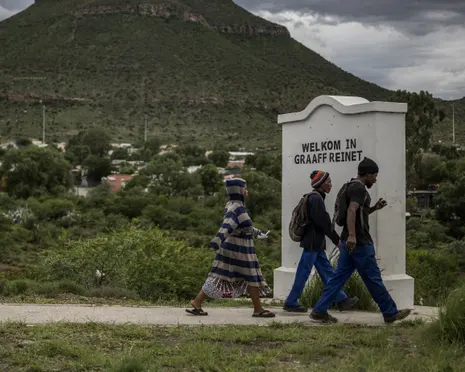
Goodbye Graaff-Reinet: South African Town’s Name Change Sparks Racial Debate
A name change for a South African town has ignited sharp disagreements, reflecting broader tensions over its colonial history. The decision to rename Graaff-Reinet after Robert Sobukwe, a prominent anti-apartheid figure, has drawn mixed reactions from residents, with many feeling their heritage is at stake.
Historical Roots and New Identity
Founded in 1786, Graaff-Reinet was originally named after Cornelis Jacob van de Graaff, the Dutch administrator of the Cape Colony, and his wife, Hester Cornelia Reynet. While some residents cling to the town’s colonial legacy, others argue that renaming it honors Sobukwe’s legacy as a symbol of post-apartheid transformation.
Public Dissent and Legal Challenges
Opposition to the change has been vocal, with petitions, demonstrations, and a formal complaint directed to Gayton McKenzie, the sports, arts, and culture minister, who endorsed the renaming in February. A December 2023 survey revealed 83.6% of locals opposed the decision, including 92.9% of Coloured residents, 98.5% of white residents, and 55% of Black residents. Yet, a third of Black residents supported the shift.
“Many residents felt that changing the name would erase part of their identity as ‘Graaff-Reinetters,’” noted Stellenbosch University geography professor Ronnie Donaldson.
Community Divides and Apartheid’s Legacy
Laughton Hoffman, a Coloured community leader, voiced worries that the name change could hurt tourism, citing the town’s historic whitewashed Cape Dutch architecture. “We are not emotional about the Dutch… Out of the grief of the past, the name became a benefit for the people and the economy,” he said, wearing a “Hands Off Graaff-Reinet” T-shirt.
Hoffman, who identifies as both Coloured and Khoi-San—ancestral groups categorized together under Coloured during apartheid—claims his community has faced marginalization since the ANC took power. “We have been sidelined for 32 years as a cultural group,” he added, highlighting long-standing resentment between Coloured and Black communities.
Legal and Political Concerns
Derek Light, a white lawyer who challenged the renaming, criticized the process as legally flawed. “It was a fake process,” he stated, lamenting the unrest it has caused. Light argued that the town once enjoyed racial harmony, contrasting it with the current divisions.
Black supporters of the name change, however, dismissed such claims. “We have always had racial problems,” said Athe Singeni, a member of the Robert Sobukwe Steering Committee. “It was very subtle.” Despite earlier vandalism of Sobukwe’s grave, she insisted the community remains resolute in its efforts to reclaim historical narratives.
A Nation of Renamed Places
South Africa has seen over 1,500 placenames altered since 2000, including 400 post offices, 144 rivers, and seven airports. The city of Port Elizabeth, for instance, was renamed Gqeberha in 2021 as part of a national push to replace colonial and apartheid-era names.
The renaming of Graaff-Reinet aligns with the government’s stated goal of transforming the country’s geographical naming system to reflect “restorative justice.” Yet, the decision has underscored how deeply such changes can stir identity conflicts in a society still grappling with its past.
