
Iran threatens Gulf energy facilities after Israeli attack on its largest gasfield
Iran threatens Gulf energy facilities after Israeli attack on its largest gasfield
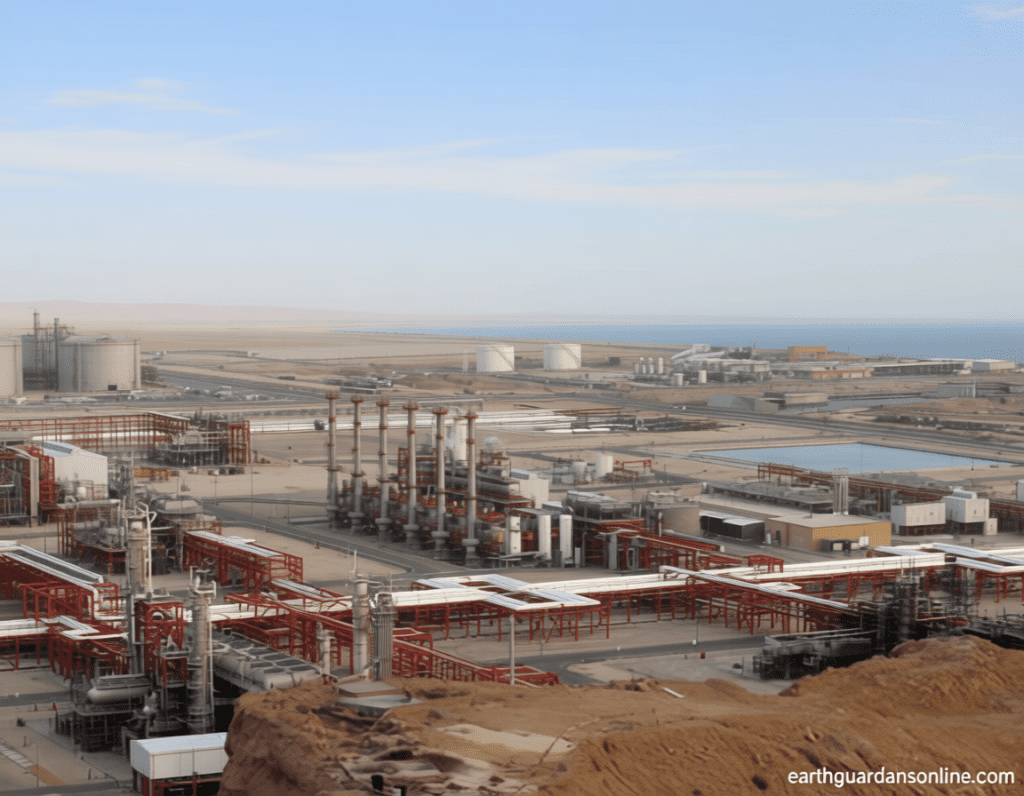
Iran has announced plans to strike energy infrastructure in the Gulf region as a response to Israeli assaults on its most significant gasfield. This marks the first instance of targeted attacks on Iran’s fossil fuel production since the conflict commenced. The Iranian Revolutionary Guards have indicated intentions to retaliate against energy sites in Saudi Arabia, the UAE, and Qatar, with state media reporting that missiles were launched at the South Pars gasfield, a global reservoir of natural gas.
The strikes on Iran’s South Pars gasfield, which is also under Qatar’s control, were reported by Israeli outlets to have received U.S. approval. This attack on Iran’s energy core represents a pivotal moment in the escalating military activities of the U.S. and Israel. Until now, these nations had focused on preserving Iran’s oil and gas sector, contributing to stability in global oil prices. However, the recent strikes have intensified fears of further disruptions to energy supplies, as the price of oil surged toward $110 per barrel on Wednesday afternoon.
Iranian state media outlined potential targets, including Saudi Arabia’s Samref refinery and Jubail petrochemical complex, the UAE’s al-Hosn gasfield, Qatar’s Mesaieed petrochemical complex and holding company, and the Ras Laffan refinery. A warning issued by the state media urged all citizens, residents, and workers to evacuate these areas immediately, stating, “These centres have become direct and legitimate targets and will be targeted in the coming hours.”
“These centres have become direct and legitimate targets and will be targeted in the coming hours. Therefore, all citizens, residents, and employees are requested to immediately leave these areas and move to a safe distance without any delay,” the warning said.
Eskandar Pasalar, the governor of Asaluyeh in southern Iran, criticized the U.S.-Israel alliance’s actions as “political suicide.” He told Iranian state media that the war’s momentum had shifted toward a “full-scale economic war.” Meanwhile, a Qatari government representative, Majid al-Ansari, emphasized that attacking energy infrastructure poses a threat to global energy security, as well as the populations and environment of the region.
The international oil benchmark rose sharply, increasing by 5% to $108.60 per barrel, while Europe’s gas benchmark soared over 7.5% to exceed €55.50 per megawatt hour. The third week of the conflict saw Iranian strikes on the UAE’s Shah natural gasfield, one of the world’s largest. Additionally, Iranian drones and missiles targeted an Iraqi oilfield, Majnoon, and the UAE’s primary port and oil storage site, Fujairah.
Regional oil exports have plummeted by at least 60% from prewar levels, attributed to drone and missile attacks alongside Iran’s control of the Hormuz Strait. This has compelled Gulf allies to reduce production as storage capacities are strained. The U.S. attack on Kharg Island, home to Iran’s oil processing center, focused on military assets without damaging its oil export facilities over the weekend.
Iran has maintained uninterrupted crude shipments through the Hormuz Strait, while menacing vessels transporting oil from neighboring Gulf nations. Earlier in the week, global oil prices exceeded $116 per barrel for the first time since May 2022, reflecting traders’ growing concerns over the war’s effect on oil and gas supplies.
