
Pope Leo XIV Fast Facts
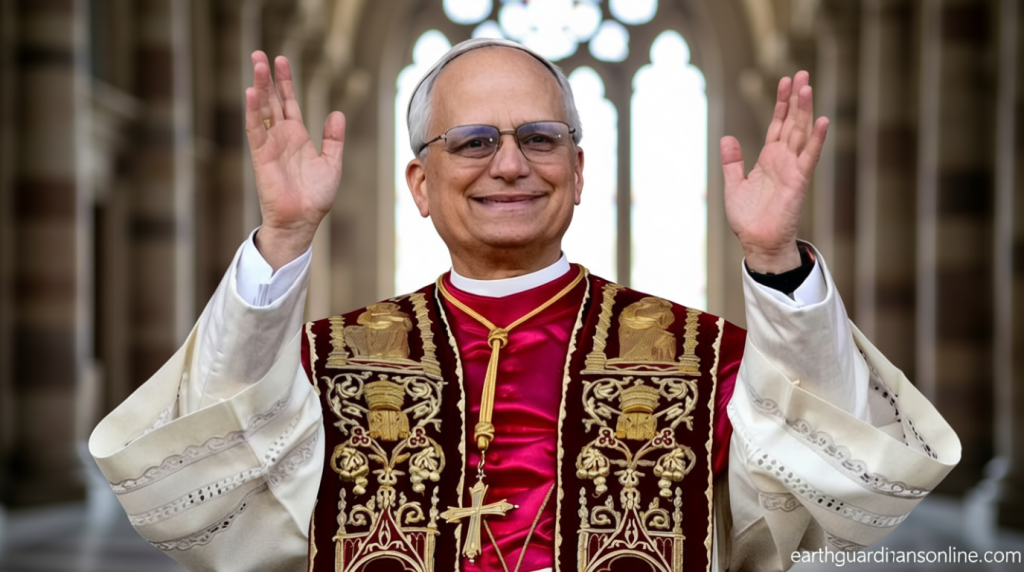
Pope Leo XIV Fast Facts
Pope Leo XIV Fast Facts reveal the remarkable journey of Robert Francis Prevost, the 267th pope in history. Born on September 14, 1955, in Chicago, Illinois, Prevost’s early life laid the foundation for his eventual leadership in the Catholic Church. As a first-generation American, his path to the papacy highlights the global reach of the Vatican. His commitment to service and education, influenced by his parents—Louis Prevost, a school superintendent, and Mildred Martínez Prevost, a librarian—shaped his vision for a Church focused on social justice and community engagement. This biographical overview provides key insights into his life, career, and the impact of his papal reign.
Early Life and Family Background
Prevost’s upbringing in Chicago, Illinois, was marked by a strong emphasis on education and civic responsibility. His father, Louis Prevost, held a prominent role in the city’s educational system, while his mother, Mildred Martínez Prevost, contributed to the cultural and intellectual life through her work in libraries. These formative experiences instilled in him a deep appreciation for knowledge and service, values that would later define his papal leadership. His early academic success, including a Bachelor of Science in mathematics from Villanova University in 1977, demonstrated his intellectual rigor and prepared him for higher theological studies.
Academic and Religious Education
Prevost pursued advanced theological education at the Catholic Theological Union in Chicago, earning a Master of Divinity degree in 1982. This academic foundation led him to Rome, where he furthered his expertise by studying at the Pontifical College of St. Thomas Aquinas. His degrees in canon law—licentiate in 1984 and doctorate in 1987—positioned him as a respected scholar within the Church. These qualifications not only deepened his understanding of ecclesiastical law but also prepared him for the leadership roles that would follow in his career.
Path to the Priesthood and Missionary Work
Prevost’s decision to join the Order of Saint Augustine in 1977 as a novice in Saint Louis, Missouri, marked a pivotal shift in his life. This move aligned him with the Midwest Augustinians, a province dedicated to contemplative and active ministry. By August 29, 1981, he had taken solemn vows, committing himself to the Order’s mission. His ordination as a priest on June 19, 1982, signified the beginning of his pastoral service. In 1985, he transitioned to missionary work in Peru, where he immersed himself in the local Church’s challenges and opportunities, laying the groundwork for his future papal role.
Papal Appointments and Leadership Roles
Pope Leo XIV’s rise through the ranks of the Catholic Church was gradual and strategic. In November 2014, he was appointed apostolic administrator of the diocese of Chiclayo in Peru, a position that tested his administrative and pastoral skills. His ordination as Bishop of Chiclayo in December 2014 further solidified his connection to the region’s faith community. By January 2023, he was elevated to cardinal, a milestone that underscored his influence. His tenure as cardinal included overseeing key Vatican initiatives, including those related to Latin America, before his election as pope in May 2025.
First Papal Statements and Vision
Pope Leo XIV’s inaugural papal address emphasized the Church’s responsibility to address global poverty and inequality. During his first Mass as pope, he called for a renewed focus on social justice, highlighting the need for the Vatican to advocate for marginalized communities. This message resonated globally, aligning his papacy with themes of compassion and equity. His early initiatives, including fostering interfaith dialogue and supporting humanitarian efforts, reflected his vision of a Church that bridges divides and serves as a unifying force.
International Engagement and Theological Contributions
Pope Leo XIV’s diplomatic and theological contributions have been central to his papacy. His first major international trip, a six-day visit to Turkey and Lebanon in November 2025, underscored his commitment to strengthening relationships between Christian and Muslim communities. This was followed by an 11-day mission to Africa, starting in Algeria on April 13, 2026, making him the first pope to visit the country. These efforts have positioned him as a leader in global religious cooperation. His theological writings, released early in his papacy, continue to shape contemporary discussions on faith and ethics within the Church.
