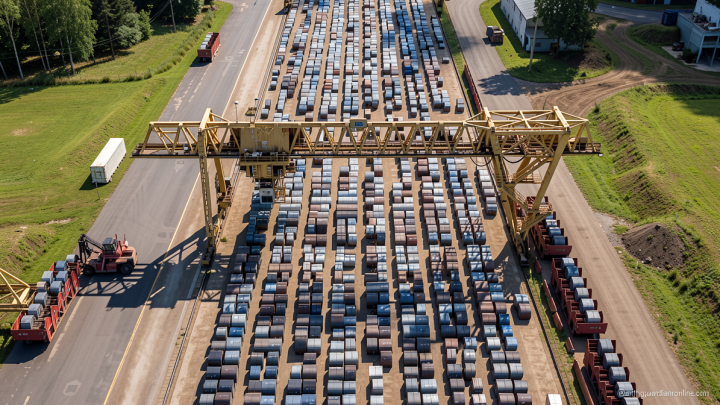
Wait… how much oil is actually leaving the Persian Gulf?

Daftar Isi
Earthguardiansonline.com –
The Numbers Don’t Add Up: Who’s Really Counting the Oil Leaving the Gulf?
Earthguardiansonline.com – The Strait of Hormuz — the narrow waterway through which roughly one-fifth of the world’s traded crude passes each day — has become the epicenter of a data war. Two sets of figures, published by actors with very different incentives, now describe radically different pictures of how much petroleum is actually clearing the chokepoint. Until recently, the consensus among commodity desks on Wall Street was straightforward: the strait is functionally shut to tanker traffic, and the shortfall is showing up in falling global stockpiles. Now that consensus is cracking, and the reason is a single number coming out of Washington.
Wright’s Claim: Nine Million Barrels a Day and Climbing
US Energy Secretary Chris Wright stepped forward last week with a figure that sent ripples through every trading room tracking Middle Eastern supply. He stated that the seven-day rolling average of crude and refined products exiting the Strait of Hormuz had climbed to nine million barrels per day. He went further, asserting that on August 8 the total volume of oil leaving the Arabian Gulf surpassed twenty million barrels per day — a level that, before the current conflict with Iran, represented the region’s normal export run-rate.
Wright’s confidence rests on a direct operational link. The US Navy is physically present in the waterway, running escort convoys, screening for threats, and logging every vessel that transits. That operational telemetry flows into the Department of Energy, which then compiles what it considers the most complete picture of Gulf outflows.
“In coordination with the US military, the US Department of Energy maintains the best available data related to oil and oil products leaving the Arabian gulf,” a DOE spokesperson said.
The Tracking-Data Counter-Narrative
Independent maritime-intelligence firms tell a far more constrained story. Services such as Kpler and Windward Intelligence, which combine AIS transponder signals, satellite imagery, and machine-learning pattern recognition, have been reporting that roughly four million barrels per day of crude are actually making it through the strait. Add the approximately seven million barrels per day that Gulf producers have rerouted overland via pipelines and alternative terminals, and the total outflow lands in the eleven-to-twelve-million-barrel range — well below the pre-war twenty-million baseline.
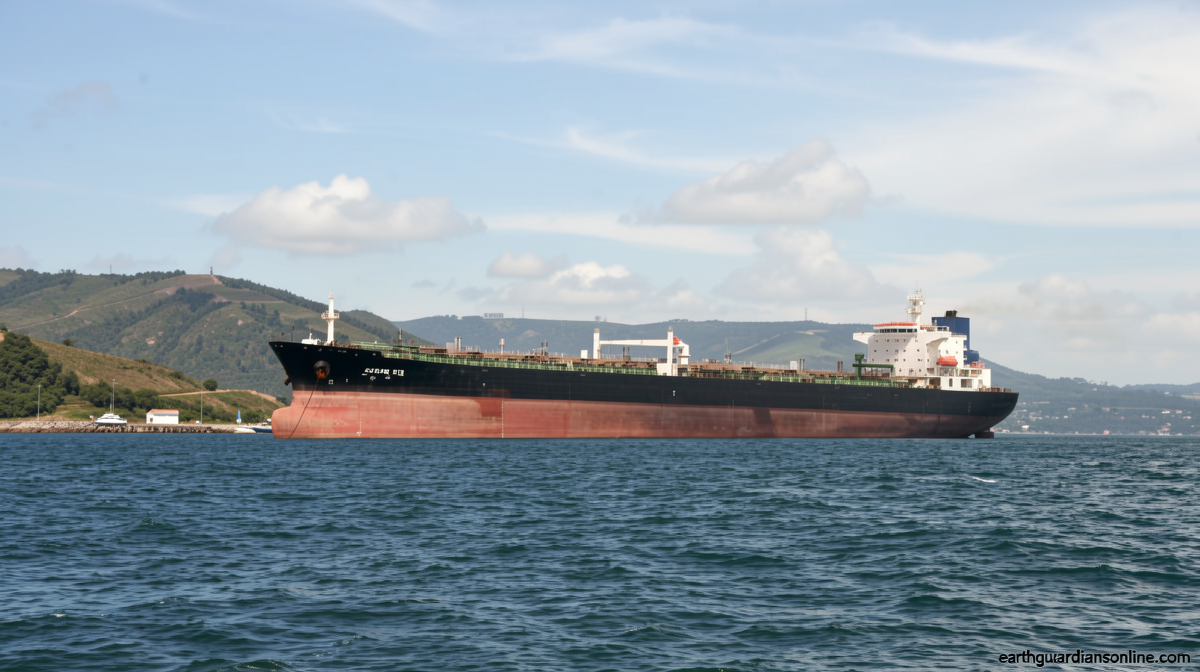
The physical arithmetic reinforces the skepticism. Before hostilities began, more than one hundred tankers transited the strait on an average day. On the very date Wright cited for his twenty-million-barrel claim, both Kpler and Windward logged approximately five vessels exiting the waterway. Five ships cannot carry twenty million barrels. The gap between the two datasets is not a rounding error; it is an order-of-magnitude discrepancy.
“It is not possible to reconcile the disparity between what we see and what he is quoting,” said Matt Smith, director of commodity research at Kpler.
Why the Discrepancy Matters to Every Refinery and Retail Pump
The stakes extend well beyond academic debate. Global commercial inventories of crude and products have been drawing down steadily since the conflict escalated, a signal that supply is genuinely tighter than demand. If the strait truly remains choked, the depletion will accelerate, pressuring spot prices and forcing consumers in Asia, Europe, and the Americas to absorb higher fuel costs. If, conversely, Wright’s figures are accurate and flow is recovering toward pre-war levels, the inventory drawdown should slow within weeks — and the premium embedded in futures contracts would compress.
For traders, the question is which dataset to trust when setting positions. For policymakers, it is whether the administration’s public messaging is calibrated to operational reality or to a political objective of keeping prices subdued.
The Political Layer
Context matters. President Donald Trump has repeatedly asserted that the United States “controls” the Strait of Hormuz and has on multiple occasions declared that a negotiated settlement with Tehran is imminent. Wright has echoed the theme, stating that Washington is ensuring adequate oil reaches the markets that need it. The administration’s incentive to present the strait as open — and the flow as robust — is transparent: a functioning chokepoint underpins the case that no emergency measures are required, and it undercuts the price spike that would otherwise follow a confirmed closure.
Wall Street desks, for their part, had been leaning almost exclusively on third-party tracking feeds, industry-reported inventory surveys, and pipeline throughput data. Yet even among those analysts, a cautious shift is visible. For the first time since hostilities began, some are conceding that the administration’s numbers might contain a kernel of operational truth — particularly if recent naval escorts have genuinely opened a corridor that satellite and transponder feeds have been undercounting because vessels are running dark to avoid Iranian fire.
The Shadow-Fleet Complication
Iran has grown markedly more aggressive in its targeting of commercial shipping over recent weeks, and its Houthi allies have intensified parallel attacks in the Red Sea near the Bab-al-Mandeb strait. The result: a growing share of vessels transiting both chokepoints now suppresses AIS transponders, sails in irregular patterns, and attempts to mask its position entirely. These so-called shadow-fleet tactics make satellite-only counting unreliable in both directions — ships may be present but invisible, or visible but counted twice.
Kpler, which operates a network of thirteen thousand ground-based receivers spanning one hundred ninety countries and tracks roughly three hundred fifty thousand vessels with position updates every five minutes, also maintains its own constellation of low-Earth-orbit satellites. Windward Intelligence layers satellite imagery and AI classification on top of transponder data specifically to catch vessels that have gone dark. Both firms estimate shadow-fleet traffic, yet both arrived at the same five-ship figure for the day in question.
“It is becoming increasingly difficult to know how much oil is leaving the Gulf,” said Hamad Hussain, senior climate and commodities economist at Capital Economics. “Contrasting claims by US and Iranian officials are muddying the waters.”
What Comes Next
Hussain conceded that the picture the market has been consuming may be incomplete — that aggressive Iranian targeting and Houthi harassment in the Red Sea are pushing more vessels into dark-running behavior, which in turn depresses the counts that tracking services report. If a meaningful share of transit traffic is genuinely invisible to satellites and transponders, the true flow could sit somewhere between the four-million-barrel tracking estimate and Wright’s nine-million figure, or even higher.
Until the fog lifts — whether through de-escalation, sustained naval escort that normalizes transponder use, or a verified ceasefire — the oil market will be forced to price in uncertainty rather than a single number. And in a market where a two-million-barrel-per-day swing can move Brent crude by several dollars, uncertainty itself becomes the most expensive commodity of all.
Related Reading
Frequently Asked Questions
What is Wait how much oil is actually?
Wait how much oil is actually is the main topic of this guide. The article explains the context, practical details, and next steps readers should understand.
Why does Wait how much oil is actually matter?
Wait how much oil is actually matters because readers are looking for a useful answer, not just a short summary. Good content should match search intent and help them decide what to do next.