Prosecutors say bullet engraving shows Charlie Kirk was targeted for his politics

Kirk Trial: Bullet Engraving Points to Political Motive
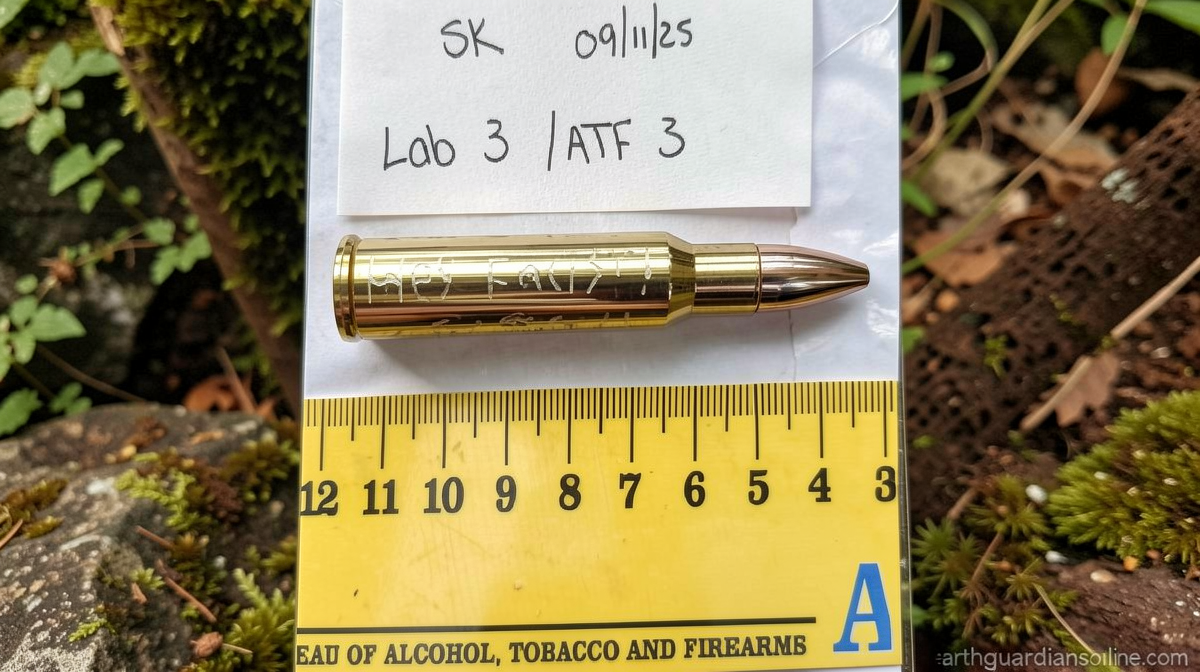
Earthguardiansonline.com – In a Utah courtroom where a possible death sentence hangs over every argument, prosecutors say bullet engraving shows a deliberate political targeting behind the September 10 killing of conservative commentator Charlie Kirk. The cartridge, recovered from what investigators identify as the murder weapon, carries a hand-carved inscription reading “Hey Facist! CATCH!” That single phrase has reshaped the case from a straightforward homicide into what the state now calls a politically motivated assassination, and it has placed 23-year-old defendant Tyler Robinson squarely in the crosshairs of capital-punishment proceedings.
Aggravating Factors and the Death-Penalty Threshold
Under Utah statute, an aggravated-murder conviction does not automatically trigger eligibility for execution. Prosecutors must prove that circumstances elevated the killing above ordinary homicide — factors that can include selecting a victim because of his beliefs or exposing large numbers of bystanders to mortal danger. Both sides have filed competing briefs aimed squarely at that threshold question, and the outcome will determine whether Robinson’s sentence can carry a lethal component.
For the defense, stripping away those aggravating factors is not a secondary sentencing tactic. It is the line between life imprisonment and a death sentence. Robinson’s attorneys have spent weeks constructing a record designed to undercut the political-motive narrative, arguing that the evidence of ideological animus remains thin and speculative. Robinson, who turned himself in roughly a day after the shooting, has not yet entered a plea.
The Engraved Cartridge, a Text Message, and a Handwritten Note
In a filing submitted late Tuesday, the prosecution laid out its central theory with unusual directness. As prosecutors say, bullet engraving shows not random vandalism on a piece of ammunition but what they term an “overt political reference” — a message aimed at Kirk and his worldview, delivered through the barrel of a rifle. They paired that physical artifact with a text message Robinson allegedly sent about the victim:
“I had enough of his hatred. Some hate can’t be negotiated out.”
Together, the two items form what the state describes as a coherent portrait of a young man who consumed Kirk’s public commentary, grew angry at his positions, and chose to act. The defense has pushed back on both artifacts, maintaining that a single text message, without corroborating evidence of sustained obsession, does not establish the kind of motive needed to prove a politically driven killing. Robinson’s team has not immediately responded to requests for comment on the prosecution’s latest filing.
Adding a deeply personal dimension to the case is testimony from Lance Twiggs, Robinson’s roommate at the time of the shooting. Prosecutors allege the two were in a romantic relationship and that Twiggs had been considering a gender transition around the period of the killing. Kirk had been a vocal opponent of same-sex marriage and of gender-affirming medical care — positions the prosecution says placed him in direct ideological opposition to the couple’s lives. Among items prosecutors say Robinson left behind is a handwritten note addressed to Twiggs:
“I had the opportunity to take out Charlie Kirk, and I took it.”
In a recorded interview played during a prior month’s hearing, Twiggs offered a more cautious account. He told investigators he had never once heard Robinson discuss Kirk before the shooting. The defendant did not talk much about gender issues or LGBTQ+ rights, Twiggs said, though he occasionally brought up politics more broadly, including commentary about Donald Trump. The tension between the prosecution’s narrative of a politically driven act and the roommate’s testimony of a quiet, unremarkable daily life is likely to shape jury deliberations if the case reaches that stage.
Forensic Links and Defense Challenges
During a July hearing, investigators walked the court through DNA analyses they said connected Robinson to two critical objects: the suspected murder weapon itself and a small tool allegedly used to carve the inscription into the bullet cartridges. If accepted, that forensic chain ties the defendant directly to both the act of shooting and the act of engraving. Robinson’s legal team has repeatedly pressed questions about the reliability of those DNA results and other physical evidence, seeking to introduce reasonable doubt about whether the defendant performed every step the prosecution attributes to him.
Frequently Asked Questions
What did prosecutors say bullet engraving shows in the Kirk case? Prosecutors say bullet engraving shows a deliberate, politically motivated targeting of Charlie Kirk, arguing the carved words constitute an “overt political reference” rather than incidental damage to a cartridge.
What charges does Tyler Robinson face? Robinson faces aggravated murder, the most serious homicide count available in Utah, along with related counts. He has not entered a plea as of the latest court filings.
Can Robinson receive the death penalty in Utah? Only if prosecutors prove aggravating factors beyond the base murder charge — such as targeting a victim because of his beliefs or placing bystanders in mortal peril. Without those factors, the maximum sentence is life imprisonment.
What role does the roommate’s testimony play? Lance Twiggs’s account, in which he says he never heard Robinson discuss Kirk before the shooting, is expected to complicate the prosecution’s political-motive narrative and may influence how a jury weighs the engraved bullet and text-message evidence.