Trump wants South Korea to defend itself. His overtures to Kim Jong Un could delay that

Daftar Isi
Halving Joint Drills Undermines the Very Goal Trump Says He Wants for Seoul
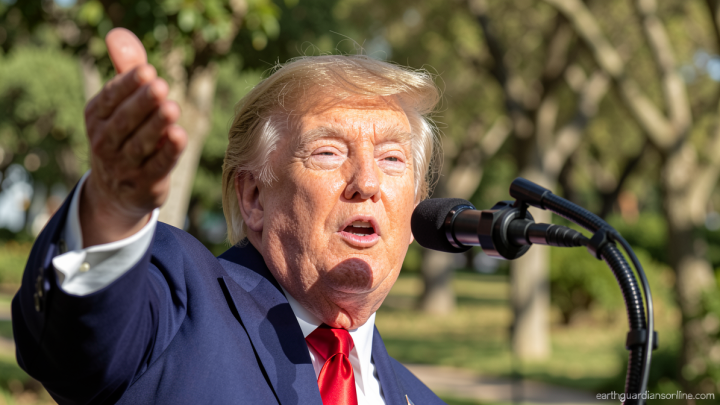
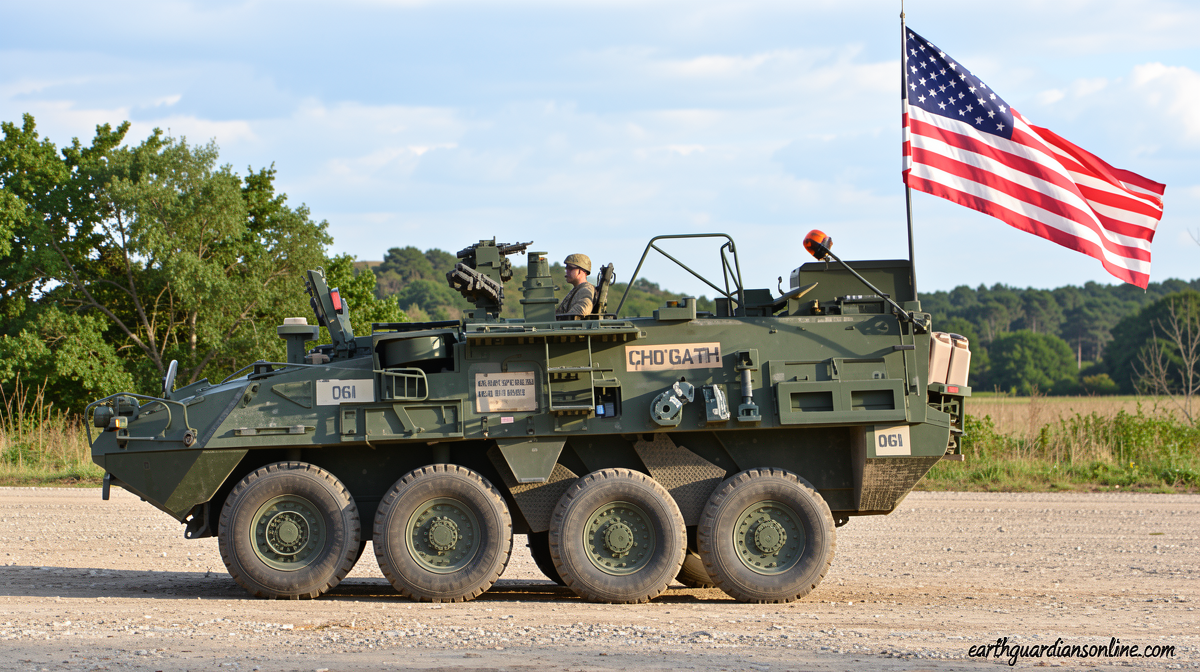
Earthguardiansonline.com – Donald Trump has made clear, in repeated public statements, that South Korea should shoulder greater responsibility for its own military defense. Yet the most consequential step he has taken so far points in the opposite direction. By ordering a dramatic reduction in the scale of the annual Ulchi Freedom Shield exercises — cutting participation roughly in half at Washington’s insistence — the president has removed the practical mechanism through which Seoul was preparing to assume wartime command of the combined forces stationed on the Korean Peninsula.
The exercises, which normally draw tens of thousands of American and South Korean troops into coordinated field operations, were scaled back after Trump declared last weekend that they irritated his counterpart in Pyongyang, Kim Jong Un, and drained American resources. On Sunday he took to Truth Social to explain the rationale.
“These exercises send a signal that is totally inappropriate and hostile.”
The characterization sits uneasily with what the drills actually accomplish. Both Washington and Seoul have consistently described the Ulchi Freedom Shield series as exercises in deterrence and collective defense — not as rehearsals for seizing territory north of the demilitarized zone that has separated the two Koreas since the 1953 armistice ended active fighting. The language Trump employed mirrors, almost word for word, the framing long favored by North Korean state broadcasters when they denounce the same drills.
The Operational-Control Question at the Heart of the Alliance
Beneath the surface-level dispute over drill size lies a far more consequential issue: who commands the combined South Korea–United States forces in wartime. Since the Korean War erupted in 1950, South Korea has ceded operational command of its own troops to Washington. The rationale at the time was straightforward — the United States possessed vastly superior equipment and decades of combat experience against a communist adversary pressing southward along the dividing line. Command passed first to United Nations Command and then, in 1978, to the Combined Forces Command, a body that has always been headed by an American general.
In 1994 the CFC handed peacetime operational control back to Seoul. Wartime control, however, remained in Washington’s hands. Decades of negotiations, proposed timelines, and political reversals have kept that arrangement intact, even as South Korea’s own military capability has grown substantially. Over the past several years the Republic of Korea has built what analysts describe as a world-class force — not yet matching the scale of the US or Chinese militaries, but undeniably capable of defending its own territory against a North Korean attack.
President Lee Jae Myung, elected on a platform that included returning wartime operational control to Seoul by 2030, used the launch of this year’s exercises on Tuesday to press that agenda.
“From the aspect of weapons systems and military strength, our capabilities to defend ourselves is already among the top few in the world. It’s not an exaggeration to say that we are more than capable.”
Seoul’s Diplomatic Response
On Wednesday Lee publicly aligned himself with Trump’s stated preference for greater South Korean self-reliance, pledging to accelerate defense spending toward 3.5 percent of gross domestic product. He framed the drill reduction in conciliatory terms.
“The decision by Trump to shorten the drills feels like a major decision filled with deep consideration for creating peace on the Korean Peninsula, beyond hostility and confrontation.”
That diplomatic language, however, masks a practical problem. The Ulchi Freedom Shield exercises are not merely symbolic posturing; they are the testing ground in which Seoul’s command systems, communications networks, and joint-operations procedures are stress-tested against realistic scenarios. Without that rehearsal environment, the transition to independent wartime command loses its verification pathway.
What Analysts See in the Last-Minute Cut
Yu Ji-hoon, a research fellow at the Korea Institute for Defense Analyses, argued in The Diplomat that the abrupt reduction strikes at more than simple readiness.
“A major last-minute change could therefore affect more than readiness; it could complicate an alliance project that Washington itself has long encouraged.”
He added that curtailing the exercises, particularly without prior consultation with Seoul, makes the burden-sharing agenda harder to implement even as Washington publicly demands more of it.
Lee Jeong-kyu, a visiting research fellow at South Korea’s Sejong Institute, noted earlier this year that momentum toward greater South Korean command authority had been building, pointing to language in the US National Defense Strategy released in January. That document, in his reading, signaled a clear intent to strengthen alliance burden-sharing and provided grounds for accelerating the conditions under which operational control could be transferred.
The Broader Calculus
The tension at play is structural. Trump’s stated objective — a South Korea that funds, commands, and bears the principal cost of its own defense — requires that Seoul demonstrate, through repeated joint exercises, that it can execute wartime command at scale. By halving those exercises to placate a reclusive leader he is eager to meet again, the president has placed a nuclear-armed adversary’s comfort above the practical needs of a treaty ally that wants to do exactly what Trump has asked of it. The result is an alliance in which the stated goal and the operational reality pull in opposite directions, and in which the very training that would make burden-sharing possible has been removed before the transition can begin.
Related Reading
Frequently Asked Questions
What is Trump wants South Korea to defend?
Trump wants South Korea to defend is the main topic of this guide. The article explains the context, practical details, and next steps readers should understand.
Why does Trump wants South Korea to defend matter?
Trump wants South Korea to defend matters because readers are looking for a useful answer, not just a short summary. Good content should match search intent and help them decide what to do next.