Spain snap election: PM Sanchez calls November election amid growing housing protests

Daftar Isi
Spain Heads Toward November Vote as Housing Anger Intensifies
Earthguardiansonline.com – Spain will hold a snap general election on November 29 after Prime Minister Pedro Sánchez moved to seek a renewed mandate amid growing public frustration over the country’s housing crisis. The decision follows days of demonstrations in Madrid and other Spanish cities, where protesters have demanded stronger action to address the housing emergency.
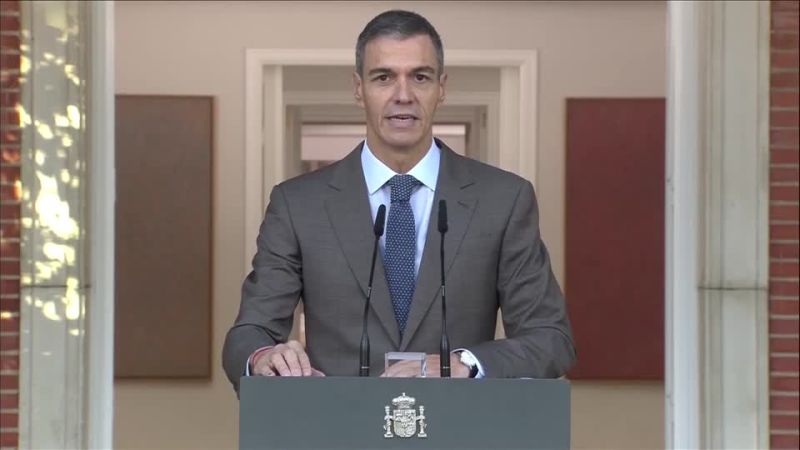
Sánchez announced the early election in a televised address from the Palace of Moncloa, the prime minister’s official residence in Madrid. His decision puts housing affordability, inequality and the government’s ability to pass reforms at the center of the coming campaign.
“The time has come for the Spanish people to decide what future they want for themselves and for their country,” Sánchez said.
The election call came fewer than 72 hours after the government was unable to win parliamentary support for two royal decree laws connected to housing. The measures had been intended to respond to the mounting pressure created by the crisis, but their failure exposed the difficulty of advancing the government’s agenda without sufficient backing in parliament.
A campaign shaped by housing concerns
Housing has become an increasingly visible political issue in Spain, with public dissatisfaction moving from private concern into sustained street protest. For several days, hundreds of people have been camping in Madrid’s Puerta del Sol, one of the capital’s best-known public squares. Their presence has turned the location into a focal point for wider demands for solutions.
The demonstrations have not been confined to the capital. During the past week, protests calling for action on housing have spread to cities around the country. That wider participation underscores how the issue has grown beyond a local dispute and become a national test for political leaders.
For many voters, the election will offer an opportunity to judge whether Spain’s political system can produce policies capable of easing pressure in the housing market. The debate is likely to focus not only on proposed measures, but also on whether parties can build enough parliamentary support to put their promises into effect.
The failed decrees have added urgency to that question. A government may identify an immediate problem and prepare a response, but parliamentary approval remains essential. Sánchez’s choice to call an election signals that he believes a new public mandate is needed to pursue the reforms his government considers necessary.
Sánchez acknowledges shortcomings
In his address, Sánchez did not present the decision solely as a response to parliamentary arithmetic. He also acknowledged that his government had fallen short in some areas and said more work was needed to confront inequality.
“[We] have made mistakes and have not managed to do everything we set out to do,” Sánchez said.
He said that many injustices still required correction and argued that broader public support was needed if the government was to carry out the changes it considers essential.
“To renew and broaden public support to undertake the necessary reforms so that citizens can reduce these levels of inequality,” Sánchez said.
Those remarks frame the November election as a referendum on both the government’s record and its capacity to act in the future. By openly recognizing mistakes, Sánchez sought to make the case that the solution is not to abandon reform efforts, but to return to voters for a clearer political mandate.
What the early election means
A snap election compresses the political timetable and raises the stakes for every party competing for public support. Candidates and parties will now have to address the anger visible in Spain’s streets while explaining how they would approach the country’s housing problems and broader economic inequality.
The immediate consequences are political, but the issue has a direct relevance for households across the country. Housing affects where people can live, how communities develop and how much financial pressure families face. As protests continue to draw attention, voters may look closely at whether campaign proposals offer realistic routes to change.
The November 29 vote will also determine the balance of power in parliament. The recent failure of the housing-related decrees showed that government plans can stall when support is insufficient. Whatever the result, the next administration will need to navigate that parliamentary reality if it intends to turn housing commitments into policy.
Spain now enters an election period defined by a clear public demand: housing must be treated as an urgent national concern. Sánchez has placed the question before voters, arguing that the country needs a renewed decision about its direction. The campaign ahead will reveal whether the electorate agrees that his government should receive that chance, or whether it wants another political path to tackle the crisis.
Related Reading
Frequently Asked Questions
What is Spain snap election?
Spain snap election is the main topic of this guide. The article explains the context, practical details, and next steps readers should understand.
Why does Spain snap election matter?
Spain snap election matters because readers are looking for a useful answer, not just a short summary. Good content should match search intent and help them decide what to do next.