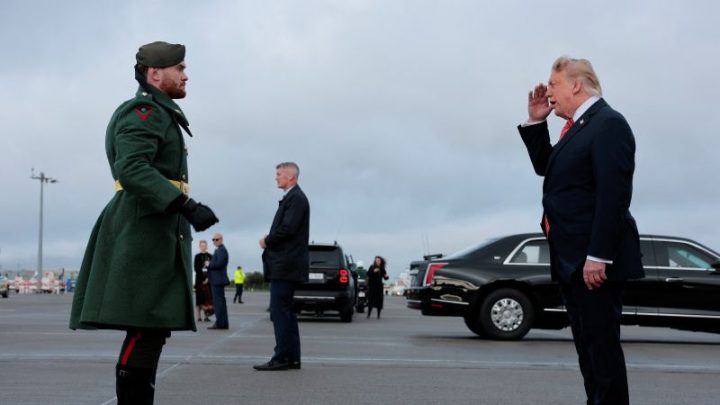
Trump admin moving to revoke visas from potentially hundreds of thousands of asylum seekers


Daftar Isi
Visa Revocations Targeting Asylum Seekers Could Reach 200,000 Under New State Department Push
Earthguardiansonline.com – The State Department has begun a sweeping effort to cancel nonimmigrant visas held by foreign nationals who entered the United States under short-term categories — tourism, business, or transit — and subsequently filed applications for asylum. Officials indicate the initiative could ultimately affect as many as 200,000 individuals, a figure that would represent one of the largest single-category visa revocation campaigns in recent decades. The move intensifies an already aggressive immigration enforcement posture that pairs entry restrictions with accelerated removal of people already inside the country.
A Rolling Process, Not a Single Sweep
While the scale of the operation is substantial, administration officials have emphasized that revocations will unfold incrementally rather than all at once. A source familiar with internal planning confirmed the 200,000 figure but stressed that the action would not be executed in a single coordinated wave.
“As the process will be ongoing, the number of revocations remains dynamic and will be done on a rolling basis,” State Department spokesperson Tommy Pigott told reporters.
Pigott explained that the State Department is working in tandem with the Department of Homeland Security to identify visa holders who arrived claiming short-term visitor status but then submitted asylum petitions to remain permanently. The interagency coordination is meant to cross-reference consular issuance records with asylum-filing data maintained by USCIS and other DHS components.
The Legal Rationale: Visa Intent and Fraud
The administration’s position rests on a straightforward reading of nonimmigrant visa law. Temporary visas — B-1, B-2, and similar categories — are granted on the premise that the holder intends to depart after a limited stay. In the State Department’s framing, using such a visa as a vehicle to reach U.S. soil and then apply for asylum constitutes a misrepresentation at the time of issuance.
“These types of visas are issued with the clear understanding that they are for those who intend to return home,” Pigott said. “Obtaining a visa in order to seek asylum is fraud — which is grounds for visa revocation.”
Under the Immigration and Nationality Act, asylum requires that an applicant be physically present in the United States (or at a port of entry) and demonstrate a well-founded fear of persecution based on race, nationality, religion, membership in a particular social group, or political opinion. The revocation campaign effectively treats the act of filing for asylum as retroactive evidence that the original visa application contained a false statement of intent.
Front-End Restrictions Tightened in April
The visa-revocation push is the back-end complement to a front-end restriction the State Department implemented earlier this year. In April, a directive was transmitted to every U.S. embassy and consulate instructing consular officers to pose two specific questions to nonimmigrant visa applicants:
“Have you experienced harm or mistreatment in your country of nationality or last habitual residence?”
“Do you fear harm or mistreatment in returning to your country of nationality or permanent residence?”
The cable made clear that applicants must answer “no” to both questions verbally before the officer could proceed with issuance. A “yes” to either question would, in practice, signal that the applicant may be a prospective asylum seeker and would likely result in a visa denial under existing statutory bars. The instruction was distributed to all posts worldwide, making it a uniform requirement across the consular network.
Scale of Revocations Already Underway
The current initiative builds on a broader revocation effort that has been expanding since President Donald Trump assumed his second term. Earlier this month, the State Department disclosed that it had already cancelled more than 175,000 visas — a sharp acceleration compared with the pace observed in December, when the cumulative total was considerably lower. The asylum-seeker campaign would add a distinct category to that tally, targeting not merely expired or unused visas but active documents held by people currently in the country or abroad awaiting travel.
Practical Implications for Affected Individuals
For the hundreds of thousands potentially within scope, the revocation carries immediate logistical consequences. A cancelled nonimmigrant visa means the holder can no longer use that document to re-enter the United States, even if the underlying asylum application remains pending. Those already inside the country are not automatically removed by a visa cancellation — their status is governed by the asylum process itself — but the revocation eliminates any fallback travel option and signals that the government views the original entry as tainted.
Immigration attorneys have noted that the distinction between a visa (a travel document) and a status (the legal right to remain) is often blurred in public discourse. A revocation does not, by itself, place someone in removal proceedings; however, it removes the visa-based pathway that would allow voluntary departure and re-entry, effectively narrowing the options available to applicants whose cases are still being adjudicated.
The rolling nature of the process means that affected individuals may receive notice at different times over coming months. The State Department has not published a fixed timeline or a final count, and Pigott’s characterization of the number as “dynamic” suggests the total could shift upward or downward as DHS completes its cross-referencing work. For now, the administration’s stated objective is clear: close what it views as a loophole in which temporary visitor visas function as de facto asylum entry points.
Related Reading
Frequently Asked Questions
What is Trump admin moving to revoke visas?
Trump admin moving to revoke visas is the main topic of this guide. The article explains the context, practical details, and next steps readers should understand.
Why does Trump admin moving to revoke visas matter?
Trump admin moving to revoke visas matters because readers are looking for a useful answer, not just a short summary. Good content should match search intent and help them decide what to do next.