Tornado and hail hits northern Italian city, injuring dozens of people

Daftar Isi
Storm Devastates Cremona’s Historic Heart as Festival Crowds Face Tornado and Hail
Earthguardiansonline.com – A violent tornado paired with a severe hailstorm tore through the northern Italian city of Cremona, leaving dozens injured, thousands of vehicles battered, and some of the region’s most treasured medieval architecture scarred beyond easy repair. The city, world-renowned for centuries of Stradivari violin craftsmanship, was in the midst of a local festival when the storm struck, amplifying both the human toll and the symbolic blow to a community whose identity is woven into the wood of its instrument-making forests.
Cathedral Spire Falls; Ten Churches Wounded
The most visually striking consequence of the event was the collapse of a spire from one of the towers of Cremona’s main cathedral, permanently altering the silhouette that has defined the city’s skyline for centuries. Italy’s fire brigade confirmed damage to ten churches in total, including that cathedral. Historic windows and skylights across several of those buildings sustained extensive structural harm, exposing interiors to the elements and raising questions about the long-term cost of restoring centuries-old masonry and glazing.
Residential and Vehicular Toll
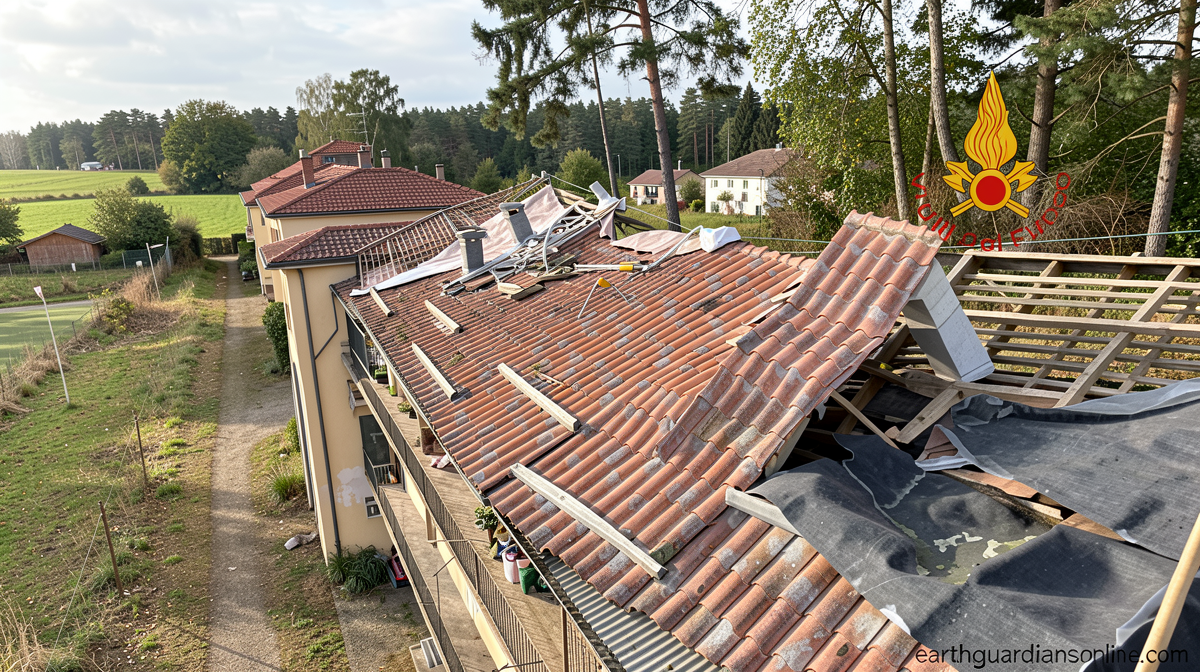
Well beyond the ecclesiastical landmarks, the storm’s physical reach was broad. Twelve families were evacuated from homes where flying debris or complete roof loss made the structures uninhabitable. Hundreds of trees came down across the urban and peri-urban landscape, and the resulting cascade of falling limbs and branches compounded the damage already inflicted by the hail itself. The fire brigade tallied approximately 10,000 vehicles damaged by the combined effects of the hailstorm and the toppled trees. Several agricultural barns in the surrounding area took heavy structural hits, and numerous low-lying roadways were inundated with floodwater, cutting off access routes for both residents and emergency crews.
Festival Injuries and Emergency Response
Because the storm arrived while a civic festival was underway, the pavilions and temporary structures set up for the event were among the hardest-hit installations, producing a concentrated cluster of injuries in a short window. Francesca Co, director of the city’s emergency services, described the operational challenge of managing that sudden influx of casualties.
“Most (of the injured) have been discharged, one remains under observation, while four trauma patients require hospitalization,” she said. “We found ourselves managing the arrival of over forty people almost simultaneously, and the emergency system responded promptly.”
Within hours of the event, the fire brigade had answered more than 500 emergency calls, a volume that strained local resources but was met, by Co’s account, with a rapid and coordinated response.
A Rare Event Without Warning
Tornadoes are comparatively uncommon in Italy, and the civil protection agency confirmed that no watches or advance warnings had been issued for the possibility of such a convective event. Residents and festival-goers therefore had little or no time to seek shelter before the wind and hail arrived. The absence of a forecast signal underscores how difficult it remains to predict short-lived, localized severe-convective events in a Mediterranean climate regime that is nonetheless shifting.
Aftermath Inspections and the “Violin Forests”
By Saturday following the storm, joint teams from the fire brigade and civil defense were conducting building-by-building structural inspections across the affected zones. Roads remained closed while crews assessed load-bearing integrity. A separate forestry inspection was directed at the so-called “violin forests,” the managed stands of spruce, maple, and other hardwoods from which Cremona’s luthiers source their tonewood. Any storm-related damage to those stands would carry implications not only for local timber supply but for the continuity of a craft tradition stretching back to the sixteenth century.
Broader Climate Context and Economic Exposure
The Cremona event did not occur in isolation. Italy, like much of continental Europe, had been enduring a relentless stretch of extreme weather through the summer, with the country sweltering under what was described as its fifth heatwave of the season. Prolonged thermal stress dries soils and vegetation, alters atmospheric stability, and can increase the frequency of intense convective bursts even in regions historically considered low-risk for tornadoes. The convergence of heat, moisture, and wind shear that produced the Cremona event fits within that broader pattern of intensifying and geographically expanding severe-weather episodes.
The city government estimated that total repair and reconstruction costs would reach millions of euros. For a municipality whose economic base includes artisan instrument-making, tourism tied to its musical heritage, and a dense historic core, the financial burden of restoring both civic infrastructure and cultural landmarks will be felt for years. The loss of the cathedral spire, in particular, carries a symbolic weight that no insurance payout can offset: it marks a visible, permanent change to the city’s most recognized architectural feature, and its eventual replacement will require decisions about historical fidelity, engineering safety, and public funding that will occupy Cremona’s planners well into the coming years.
Related Reading
Frequently Asked Questions
What is Tornado and hail hits northern Italian?
Tornado and hail hits northern Italian is the main topic of this guide. The article explains the context, practical details, and next steps readers should understand.
Why does Tornado and hail hits northern Italian matter?
Tornado and hail hits northern Italian matters because readers are looking for a useful answer, not just a short summary. Good content should match search intent and help them decide what to do next.