Students in Asia extend lead over a flagging US as AI reshapes education

Daftar Isi
Asian students maintain a strong edge as global learning standards fall
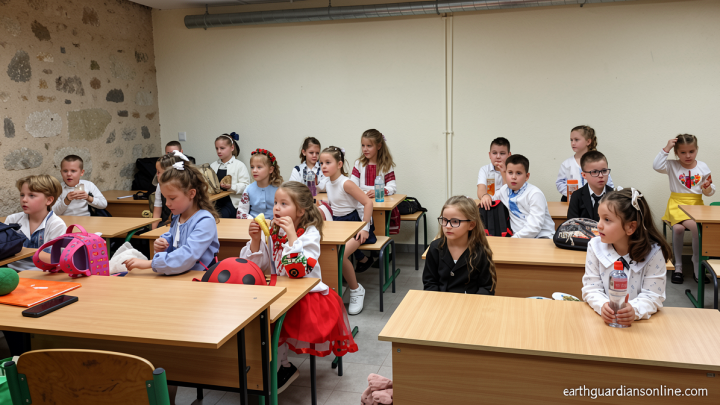
Earthguardiansonline.com – Fifteen-year-old students in several Asian education systems continue to outperform many peers in the West, even as results in reading, mathematics and science weaken across much of the world. The latest Programme for International Student Assessment, known as PISA, highlights a widening concern for policymakers: the skills needed to navigate a fast-changing, AI-driven economy are slipping at the same time digital technology is becoming more central to daily life.
The 2025 assessment, released by the Organisation for Economic Co-operation and Development, found that average performance across OECD countries had fallen to new lows in all three tested subjects. The results arrive as governments and companies place increasing emphasis on advanced technology, scientific research and the workforce needed to support them.
Asia dominates the highest-performing group
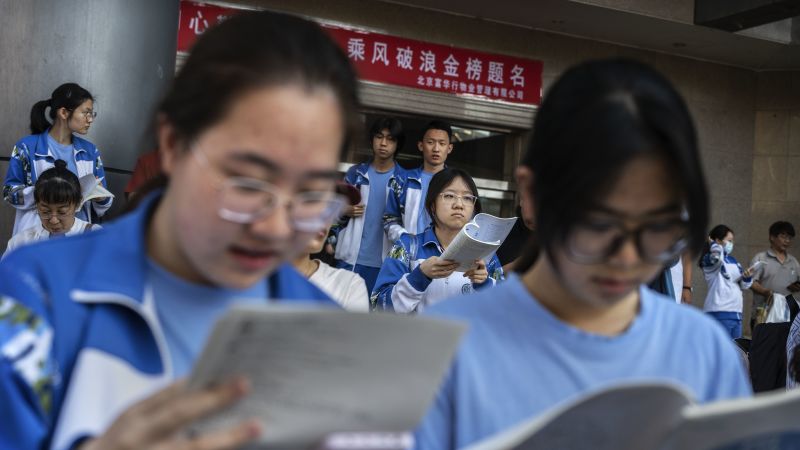
Students in Beijing and Shanghai, along with China’s Jiangsu and Zhejiang provinces, ranked among the strongest performers in the assessment. Singapore also remained near the top. Japan, South Korea, Macao and Taiwan were part of an Asia-heavy top 10 across reading, mathematics and science.
The outcome reinforces a pattern visible in previous PISA cycles: several East Asian systems have established exceptionally high academic performance, particularly in quantitative subjects. Yet comparisons involving China continue to draw scrutiny because the participating jurisdictions—Beijing, Shanghai, Jiangsu and Zhejiang—are among the country’s more affluent eastern coastal regions and do not represent every part of the nation.
Even with that limitation, the results underline a sustained gap between the participating Chinese jurisdictions and the United States. American secondary-school students recorded reading results close to their lowest level in roughly a quarter-century, while scores across the country have declined over the past decade.
Critical reading skills face renewed pressure
The decline is especially troubling because artificial intelligence is changing how students find, process and evaluate information. Easy access to automated tools can offer new educational opportunities, but it also increases the importance of close reading, careful judgment and the ability to distinguish reliable material from distractions or errors.
“Most troubling is the decline in the very skills that matter most in the AI age: evaluating information, making connections across multiple sources, and thinking critically about what we read,” Andreas Schleicher, OECD director for education and skills, wrote in the report.
“In a world increasingly flooded with information, our students are less likely to think deeply and separate signal from noise.”
That warning extends beyond test preparation. Students who can read patiently, compare evidence and identify weak claims may be better equipped to use AI tools productively rather than treating their output as unquestionable. Schools now face the challenge of introducing technology without allowing it to replace the habits of attention and analysis that underpin learning in every subject.
Distraction remains a classroom concern
The assessment does not establish a single direct cause for weaker performance. Digital devices, changes in classroom practice and wider social pressures can all affect how students learn. Still, it identified classroom distraction as a significant concern.
In China, Japan and South Korea, fewer than 10% of students said their classmates were distracted by digital devices during science lessons. Globally, the figure was 28%. The contrast suggests that the presence of technology is not the only issue; the way it is managed in classrooms may matter just as much.
Singapore offers one example of that balance. Its schools have incorporated technology while also maintaining an early emphasis on reading comprehension. That combination is notable as the share of “hasty readers”—students who moved too quickly through passages and then answered incorrectly—almost doubled between 2018 and 2025.
For families, the findings offer a practical reminder that stronger learning habits are not limited to formal instruction. Regular reading, sustained attention and discussion of what a text means can help young people develop skills that are increasingly valuable when information is abundant and instant answers are readily available.
Economic stakes extend beyond the classroom
The consequences of weaker student achievement may reach far beyond schools. The United States and China are intensifying their competition in technological development and innovation, with both countries spending more than $1 trillion on research in 2024. China has also moved ahead of the United States in published scientific reports.
Education systems play a long-term role in that competition because future researchers, engineers, entrepreneurs and skilled workers are shaped well before they enter universities or workplaces. A Stanford University study cited in the 2025 PISA report estimated that bringing every 15-year-old American to a basic PISA proficiency level could add more than $40 trillion to the US economy over their working lives.
At the same time, the share of OECD students performing below that basic benchmark rose from 16% in 2022 to 20% in 2025. This shift raises concerns not only about elite academic achievement, but also about whether a growing number of students are leaving school without essential foundations in reading, science and mathematics.
The PISA results also indicate that student outcomes are becoming less closely tied to national wealth or family income as technology advances. That does not remove the importance of resources, but it suggests that instructional quality, classroom culture and effective use of digital tools can make a meaningful difference.
As AI becomes more common in education, the central question is unlikely to be whether schools use it. The more urgent issue is whether students continue to develop the patience, knowledge and critical judgment required to question information, understand complex material and learn independently. The strongest-performing systems show that technology and rigorous foundational learning can coexist—but only when schools deliberately protect both.
Related Reading
Frequently Asked Questions
What is Students in Asia extend lead over?
Students in Asia extend lead over is the main topic of this guide. The article explains the context, practical details, and next steps readers should understand.
Why does Students in Asia extend lead over matter?
Students in Asia extend lead over matters because readers are looking for a useful answer, not just a short summary. Good content should match search intent and help them decide what to do next.