Why even resilient forests are struggling to regrow after wildfires

Daftar Isi
After Fire, Yellowstone’s Forests Face a More Uncertain Future
Earthguardiansonline.com – In parts of Yellowstone National Park, a landscape that once felt enclosed by dense trees has opened into sunbaked clearings, grasses and thin young shoots rising from blackened soil. The transformation has become a stark illustration of a growing concern across the United States: forests that evolved with fire are not always recovering in the way they once did.
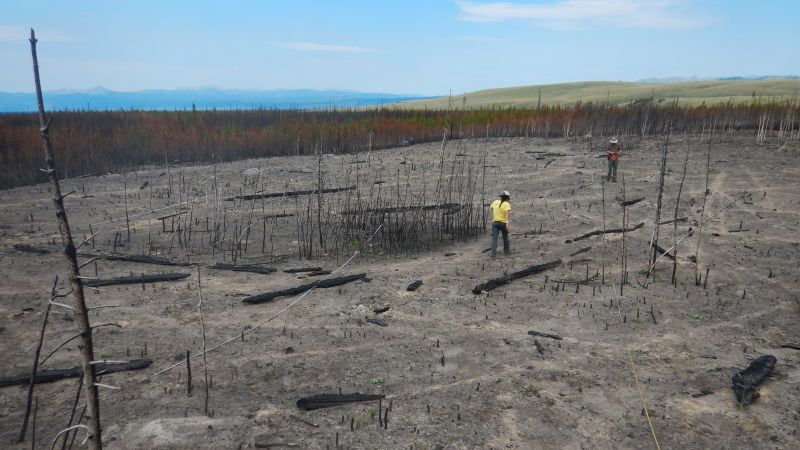
Ecologist Monica Turner has watched Yellowstone change over decades of fieldwork. During a rainy July trip through the park’s western hills in 2013, she pushed through thick branches in cool, wet conditions. When she returned to the same area four years later, the scene had been remade by the 2016 Maple Fire. Rather than a compact forest, she found a broad exposed area beneath intense summer heat, with only scattered mature trees still standing.
The remaining vegetation included sparse seedlings and slender stems emerging from burned ground. Turner’s experience studying the aftermath of Yellowstone’s landmark 1988 fires had prepared her to expect regeneration. Those fires severely scorched one of the country’s most celebrated national parks, yet the prevailing understanding for years was that its forests would return, often with dense growth.
The destruction visible after the Maple Fire challenged that expectation. The location had burned in the past, but not with the same apparent level of loss. Turner said the scale of the change showed how rapidly environmental conditions can shift.
“We could see what we call ghost logs, which is where there had been large logs on the ground, and they were completely combusted,” she said. “And then you can see their shadows where the white ash is left behind from the hot temperatures.”
When fire becomes harder for forests to absorb
Fire itself is not necessarily the enemy of a forest. Researchers who study these ecosystems emphasize that many landscapes need periodic burning. Fire can clear accumulated vegetation, influence which plants grow and help sustain ecological processes that developed alongside natural flames.
But the character of wildfire is changing. Hotter, faster-moving blazes are becoming more common as the climate warms, placing added pressure on forests that may have been able to withstand or rebound from lower-intensity fires. At the same time, the long-term absence of prescribed burning has allowed dead plants and other fuels to build up in many places.
Prescribed fire has long been used by Indigenous communities to remove excess vegetation and maintain healthier landscapes. When this kind of lower-intensity burning is limited, forests can be left more exposed when severe wildfires arrive. The result is an uncertain future for tree cover in regions where fire historically played a regular role.
In Yellowstone’s burned areas, only about 5% of the tree seedlings have so far returned compared with what was lost in the 2016 fire. Grasses now move across open meadow-like ground, joined by wildflowers that often appear after a burn. Such regrowth is not simply an empty landscape waiting to become forest again; it may signal that the ecosystem is taking a different path.
Turner has observed a gradual but measurable move toward vegetation better suited to warmer and drier conditions. These plants may also be more capable of returning after future fires. That does not mean change happens all at once. Instead of a single dramatic threshold, researchers expect many landscapes to shift over time, with forests giving way to shrublands or grasslands.
Heat, water and the loss of shade
Conditions during Turner’s 2017 field visit underscored the pressure facing the park. Yellowstone summers had often been cool and rainy during her earlier research, but that trip was marked by punishing heat. A field assistant was hospitalized with dehydration. The ash on the ground recalled the ash Turner encountered during the 1988 fires, when it coated her face and filled her socks.
For visitors, a reduced tree canopy could alter more than the scenery. Trees provide shade on trails, a practical benefit during hot weather as well as a defining part of the experience many people seek in national parks. Changes in the amount and location of tree cover could affect how people move through Yellowstone and when they choose to visit.
The ecological consequences can also reach beyond the forest floor. Turner noted that the park temporarily prohibited fishing, including catch-and-release fishing, when fish were already under strain from low water and unusually warm water temperatures. Less shade can contribute to higher stream temperatures, adding another stressor for aquatic life during hot, dry periods.
These linked effects show why post-fire recovery matters far beyond the fate of individual trees. Forests influence shade, water conditions, wildlife habitat and the character of the places people know and value. When tree regeneration slows, the change can ripple through an entire landscape.
A changing definition of recovery
Yellowstone’s history demonstrates that fire and renewal have long been intertwined. The 1988 fires became a powerful example of resilience, with extensive research documenting regrowth after widespread burning. Yet Turner’s later observations suggest that past outcomes cannot automatically be used as a guide to the future.
“For a long time, Turner thought the wildfires from that summer 38 years ago represented how forests could and would recover.”
The question is no longer only whether vegetation will return after a blaze. In many areas, plants will come back, but they may not be the same species, create the same habitat or rebuild the same forest structure. A once-wooded slope may become a durable grassland or scrubland instead.
That possibility does not make every post-fire landscape a failure. It does, however, make forest recovery more complex in an era of hotter conditions and repeated severe fires. Yellowstone’s open burned areas offer a visible reminder that resilience is not fixed. As climate and fire patterns change, the landscapes that recover may look profoundly different from the forests that stood there before.
Related Reading
Frequently Asked Questions
What is Why even resilient forests are struggling?
Why even resilient forests are struggling is the main topic of this guide. The article explains the context, practical details, and next steps readers should understand.
Why does Why even resilient forests are struggling matter?
Why even resilient forests are struggling matters because readers are looking for a useful answer, not just a short summary. Good content should match search intent and help them decide what to do next.