Rent control doomed this mayor’s re-election campaign. He has no regrets

Daftar Isi
Providence Voters Choose a New Direction in Debate Over Rent Control
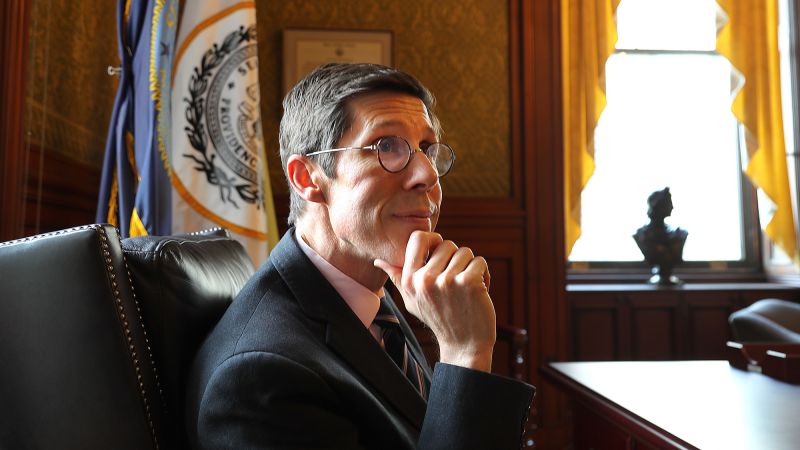
Earthguardiansonline.com – Providence Mayor Brett Smiley’s decision to block a rent-control measure became a defining issue in his failed re-election bid, underscoring the political urgency surrounding housing costs in Rhode Island’s capital.
Smiley, first elected in 2022, had centered his administration on expanding the city’s housing supply. He backed changes to zoning rules and worked with municipal and state officials to reduce barriers that can delay construction. The approach reflected a YIMBY, or “Yes in My Backyard,” view that more homes are essential to easing a shortage that has made renting increasingly difficult.
Development accelerated during his tenure. Providence added more apartments in its most recent fiscal year than it had in any single year over the previous two decades, with affordable units making up 40% of those additions.
Yet Smiley drew a firm line at rent control. In April, he vetoed legislation approved by the Providence City Council that would have limited yearly rent increases to 4%, while providing exceptions for many property owners and newer developments.
“I believe it is a false promise,” Smiley said in a phone interview earlier this month. “But it’s good, cheap, easy politics.”
That stance proved costly. In September, Smiley lost the Democratic primary to David Morales, a 27-year-old state legislator affiliated with the Democratic Socialists of America. It was not a narrow defeat: Smiley became the first Providence mayor to lose a primary election. Morales is strongly favored to win the general election next month.
Morales had denounced the veto as “absolutely shameful” and promised to enact rent control within his first 100 days in office. His campaign framed the issue as a question of whether City Hall would prioritize tenants confronting rising bills or the interests of major real-estate donors.
“I’ve been unapologetically supportive of capping rent hikes at 4% a year because I believe our neighbors deserve that basic stability,” Morales said in an interview.
He said Providence residents want a mayor focused on their needs rather than “those of corporate donors.” Morales also argued that the bill’s exemptions would preserve incentives for developers to keep building.
A City Under Pressure
The argument over rent policy has unfolded against a difficult local housing backdrop. Providence was ranked last year as the least affordable metro area for renters, and median rents have climbed 40% since 2020.
Housing demand has intensified as college students and higher-income residents from Boston, Connecticut and New York move into the city. At the same time, Providence has one of the nation’s oldest housing stocks. Apartments that have deteriorated beyond use further restrict the number of homes available to tenants.
Rhode Island’s construction record has also left little margin for error. The state has built housing at a slower pace than many other places since its 1980s peak. Between 2008 and 2015, builders obtained fewer than 1,000 permits annually across the state.
For renters living with sudden lease increases, a cap can appear to offer immediate protection. That urgency has helped make rent control a powerful campaign issue in cities large and small, including New York, Los Angeles, Portland, Maine, and St. Paul, Minnesota. Leaders such as Morales and New York City’s Zohran Mamdani have embraced it as a direct response to an affordability crisis.
Smiley’s position was that an increase in supply, although slower to deliver visible relief, offered a more durable answer. He declined to negotiate with the City Council on the proposed ordinance, warning that Providence could lose projects to nearby Rhode Island communities that did not impose comparable restrictions.
Had the measure become law, Providence would have stood alone as Rhode Island’s only municipality with rent control. Smiley argued that the policy could undermine the construction activity the city needed most.
What the Proposed Rules Would Have Done
The council’s plan was not a blanket cap covering every property immediately. It would have restricted annual rent increases to 4%, but included provisions intended to account for newer housing and smaller landlords.
Landlords who live in one of the homes they own would have received a partial exemption. Newly constructed apartments could have remained outside the rules for as long as 20 years. Other existing apartments would not have entered the rent-control system until five years after construction.
Those details were central to Morales’ argument that Providence could protect tenants without shutting down development. Supporters viewed the measure as a way to give households more predictability while the city pursued longer-term construction goals.
Critics of rent control generally point to competing effects. Limits can lower or stabilize rents for tenants in regulated apartments, but may raise costs for people seeking unregulated homes and discourage new construction. The outcome can also depend on how broadly a law applies and how its exemptions are designed.
Lessons From Other Cities
Providence’s proposal drew attention partly because officials looked to Portland and St. Paul as examples. Portland voters approved limits in 2020 that tie annual rent increases to inflation. Construction there has continued to rise since the rules took effect, though the city’s mayor has raised concerns that landlords may have more difficulty maintaining older apartments under rent regulation.
St. Paul has offered a different and more cautionary case in the national debate. Its experience has become part of the broader argument over whether rent caps can provide meaningful stability without weakening investment in housing.
For Providence, the election signals that many voters were unwilling to wait for new supply alone to improve their circumstances. Smiley’s defeat does not erase the apartment-building gains made during his administration, but it shifts the city’s political center toward policies aimed at restraining rent increases now.
Morales will inherit a city where the need for more homes remains acute and where tenants are demanding faster relief. His promised first-100-days action will test whether Providence can combine new construction with protections for renters—or whether the conflict between those goals will become even sharper.
Related Reading
Frequently Asked Questions
What is Rent control doomed this mayor s re?
Rent control doomed this mayor s re is the main topic of this guide. The article explains the context, practical details, and next steps readers should understand.
Why does Rent control doomed this mayor s re matter?
Rent control doomed this mayor s re matters because readers are looking for a useful answer, not just a short summary. Good content should match search intent and help them decide what to do next.