Judge puts new limits on Trump’s golf course renovation, blocks removal of more trees

Judge Puts New Limits on Trump Golf Course Renovation
Earthguardiansonline.com – A federal judge has put new limits on Trump administration plans at East Potomac Golf Course in Washington, DC, barring additional tree removal and requiring notice before significant work moves forward. The order adds court oversight to a proposed overhaul of the public golf course.
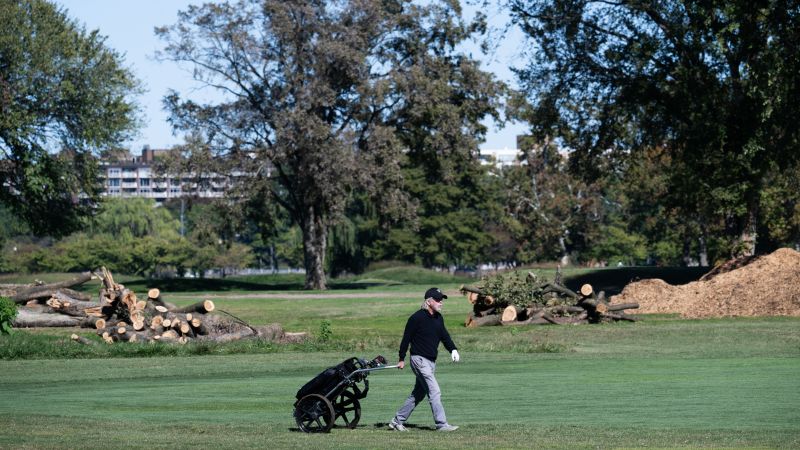
US District Judge Ana Reyes issued the 70-page ruling after more than 400 trees were removed from the course on October 10. The administration has described the renovation as part of an effort to create a championship-caliber course.
Reyes found that court action was needed after the government’s conduct appeared inconsistent with assurances previously given during the legal dispute. She said the timing and pace of the tree removal raised questions about whether opponents had a fair chance to seek emergency relief.
“The events surrounding this case have become extraordinary,” Reyes wrote Monday.
New restrictions on East Potomac work
The judge’s order prevents the government from cutting, altering, or damaging more trees at East Potomac Golf Course. An exception is available only for a public-safety concern, and the government must give the court detailed notice before taking that action.
The ruling also requires 10 days’ notice before the course can be closed or permanent, irreversible changes can be made to its design. Those requirements replace an earlier temporary restraining order that blocked tree removal and required three days’ notice for other major actions.
Judge puts new limits on Trump’s golf course plans as the earlier order was due to expire Monday. The updated restrictions keep the court involved while the challenge to the redevelopment proceeds.
Dispute over the tree removal
Administration officials have argued that the October tree removal was separate from Trump’s broader renovation proposal. They said it was connected to a 2019 plan intended to restore elements of the course’s original appearance. Reyes expressed substantial doubt about that explanation.
Before the removal effort, officials had described redevelopment concepts as preliminary and said major changes were not imminent. Trump later said publicly that construction would begin “immediately.” Reyes wrote that the court would give greater weight to those public comments than to the government’s characterization of the project in court.
“The Justice Department,” Reyes wrote, “asks the Court to disbelieve repeated public comments made by the President, who has stated in no uncertain terms that DOI and Secretary Burgum have a plan to redesign the Course.”
Why the public course is at the center of the case
Historic preservation advocates and individual golfers filed the lawsuit, arguing that the planned work violates environmental law. Their case centers on East Potomac Golf Course, which has long provided relatively affordable golf access for Washington residents.
Opponents contend that the proposed changes could reshape the property, reduce parkland, and make the course less accessible or more expensive for current users. Judge puts new limits on Trump administration action while the court considers those broader concerns about public recreational land.
The dispute has also become a test of how far the executive branch may go in changing federal property while legal challenges are unresolved. Reyes defended the judiciary’s authority to review executive action, rejecting the government’s separation-of-powers arguments.
“One branch may not shield itself from accountability merely by invoking separation of powers principles without any reasoning,” Reyes wrote.
FAQ: East Potomac Golf Course renovation
What work is currently prohibited? The government cannot remove, modify, or damage additional trees at the course unless there is a public-safety issue and the court receives detailed notice.
How much notice is required for major changes? The order requires 10 days’ notice before a course closure or a permanent, irreversible design change.
Has the court decided the entire lawsuit? No. The ruling imposes interim limits and oversight; the underlying legal challenge to the redevelopment remains unresolved.