
BBC finally reveals why Baftas N-word slur wasn’t edited out of broadcast
BBC finally reveals why Baftas N-word slur wasn’t edited out of broadcast
Tim Davie, the BBC’s director general, has outlined the reasons behind the broadcast of a racial slur during the 2026 Baftas ceremony. The incident occurred when John Davidson, a campaigner with Tourette’s syndrome, inadvertently used the N-word while presenting at the event.
Davidson’s outburst, which was not intentional, sparked significant criticism. The BBC One broadcast aired the slur on February 22, and the ceremony remained accessible on BBC iPlayer for several hours before being pulled down in the afternoon.
Following the controversy, Davie addressed concerns raised by Dame Caroline Dinenage, chair of the Culture, Media and Sport (CMS) Committee, who had sought clarification on how the slur appeared on air despite a two-hour delay. According to a statement from PA, Davie wrote: “I’d like to make clear: although the racial slur was symptomatic of a disability and an involuntary tic, it should never have been broadcast. It was a genuine mistake, and we take full responsibility for our error.”
The corporation’s internal review found that no one in the on-site broadcast truck noticed the first instance of the slur when it was live. “Because no one in the broadcast truck was aware it was on the live feed, there was therefore no editorial decision made to leave the language in,” Davie added.
Later, during the same ceremony, the N-word was also used by Wunmi Mosaku while accepting her best supporting actress award. However, this second occurrence did not air, as the edit team promptly removed it from the recorded version. The two incidents, separated by just 10 minutes, led to confusion.
Davie explained that the team had initially believed they had already edited the first instance, based on their assumption that the slur had been caught and addressed. “Our understanding at this point is that the team editing the show in the truck mistakenly believed they had edited out the incident that was being referenced, on the basis that they had heard and edited out the slur shouted out during the best supporting actress award,” he said.
The BBC had a prior agreement with Bafta to reduce the risk of Davidson’s Tourette’s syndrome affecting the broadcast. This included informing the audience about potential verbal tics and providing a disclaimer for host Alan Cumming to read if offensive language was used. Davie confirmed: “If there were any involuntary racial tics or hate speech, this would be edited out.”
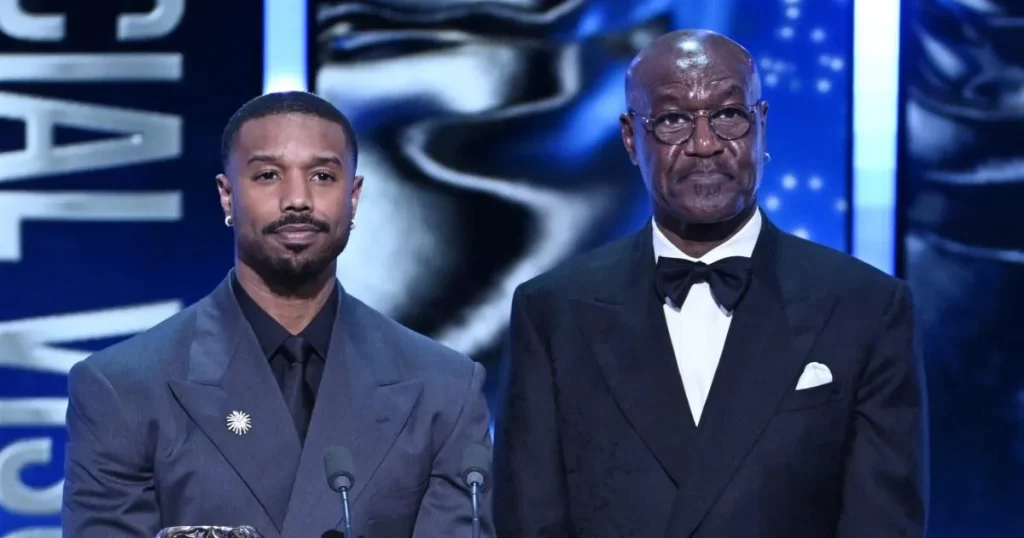
After the ceremony, Delroy Lindo, 73, expressed frustration, stating he wished someone from Bafta or the BBC had spoken to him and Michael B Jordan, 39, about the incident. Mosaku, 39, shared her emotional reaction, saying the event was “painful to have that celebration kind of really tainted for me.”
“I was there and it was painful to have that celebration kind of really tainted for me,” she told Entertainment Tonight. “I have no hard feelings towards John Davidson at all. He has a condition. I feel like Bafta has a lot of lessons to learn.”
Mosaku also criticized the BBC, adding: “That’s one thing, and then the BBC is a whole other thing. That’s the bit that really kind of kept me awake at night and brought tears to my eyes. I was like, you really chose to keep that in? I can’t understand it, and I’m not sure if I can forgive it.”
Bafta apologized for the incident, taking full responsibility for placing its guests in a “difficult situation.” The organization’s actions were contrasted with the BBC’s handling of the issue, as both parties faced scrutiny over their responses.
