
A free Iran is their shared dream. But the diaspora remains torn on the best path forward.
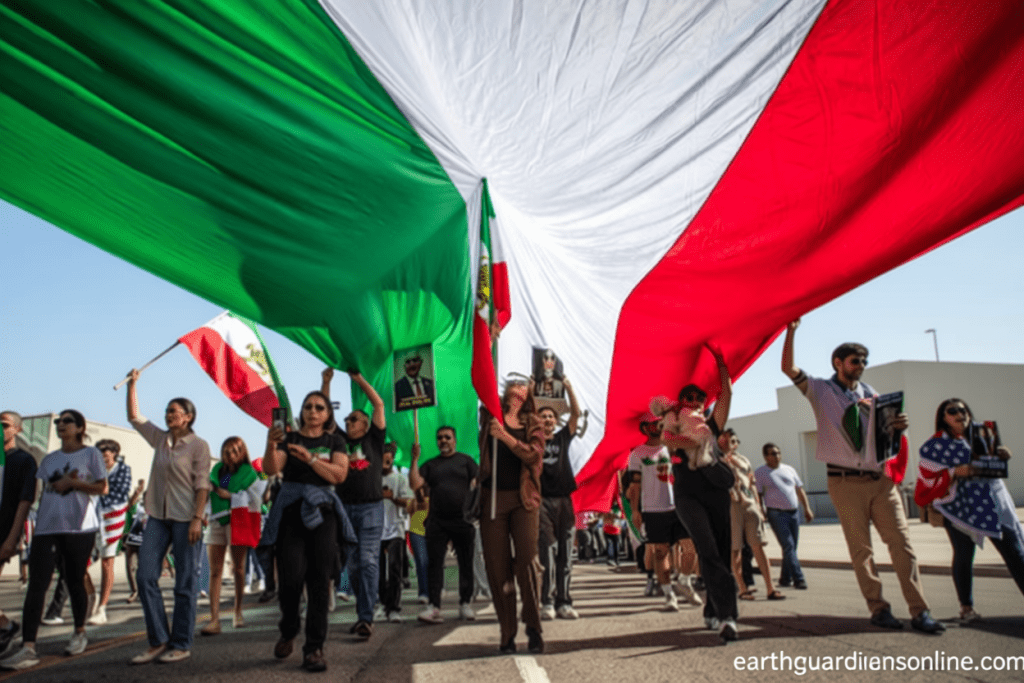
A Free Iran is Their Shared Dream. But the Diaspora Remains Torn on the Best Path Forward
Los Angeles has become a stage for divergent expressions of Iranian identity. Last Saturday, thousands of Iranian Americans gathered near City Hall to voice opposition to an unsanctioned war. Their chants, such as “Stop the war in Iran” and “We the people don’t want war,” contrasted sharply with celebrations in Tehrangeles, a Westside neighborhood. There, supporters of regime change cheered the news that Ayatollah Ali Khamenei had been eliminated in a U.S.-Israeli strike, waving flags from both nations and dancing to vibrant music.
The Iranian diaspora’s mixed emotions reflect growing tensions as violence intensifies in the Middle East. Families who fled theocratic rule after the 1979 Islamic Revolution now face a critical choice: support military action to topple the government or advocate for a less destructive path. Abbas Milani, Stanford University’s Iranian studies director, noted the divide: “Some people are so aggrieved that they say, ‘At any cost, come and destroy this regime even if it means destroying parts of the country,’” he explained. “Others want to get rid of the regime but not at the expense of war.”
Previously, the diaspora showed unity in backing protesters against the government’s harsh tactics. Now, the conflict has sparked deeper ideological splits. Online discussions have flared, with those endorsing military strikes branded as “Zionists” — a term increasingly used as a Jewish slur since Hamas’s October 7, 2023, attacks on Israel. Meanwhile, anti-war voices face accusations of aligning with the regime.
Leadership debates also dominate. Reza Pahlavi, the son of Iran’s last shah, garners support from some, while others remain cautious about a return to monarchical ties. As the death toll climbs and the government’s internet blackout disrupts communication, the prospect of Nowruz — the Persian New Year — looms. Rumors suggest Mojtaba Khamenei, Khamenei’s son, may take over, potentially strengthening the Islamic Revolutionary Guard Corps’ influence.
President Donald Trump has signaled a desire to dismantle Iran’s leadership, offering potential candidates for a “good leader.” Yet, a recent NBC News poll reveals 54% of Americans disapprove of his handling of the situation, echoing the diaspora’s internal conflict. Last year, the National Iranian American Council and YouGov found 53% of Iranian Americans opposed U.S. military action, with a new poll set to release updated figures next week.
“We are not a monolith,” stated the Iranian Diaspora Collective, an Instagram account with over 81,000 followers. “Millions will never share the same ideology or identity, and that diversity is the strength of any free society.” This sentiment resonates with individuals like Ara Torosian, a Los Angeles pastor who fled Iran in 2010. He expressed heartbreak over the destruction of historical sites and civilian casualties, particularly children. “This pain rivals generations of suffering from dissenters,” he said, recalling his imprisonment and beatings for possessing Christian items in Tehran.
Torosian, like many, celebrated the fall of Khamenei. However, his perspective highlights the complexity of the diaspora’s stance. While some see the war as a necessary step toward freedom, others fear it could deepen divisions. As Nowruz approaches, the path to a free Iran remains uncertain, with the fate of the country hinging on perspectives that are as varied as the communities spread across the globe.
