
Male shoe anxiety hits the Oval Office
Male Shoe Anxiety Hits the Oval Office
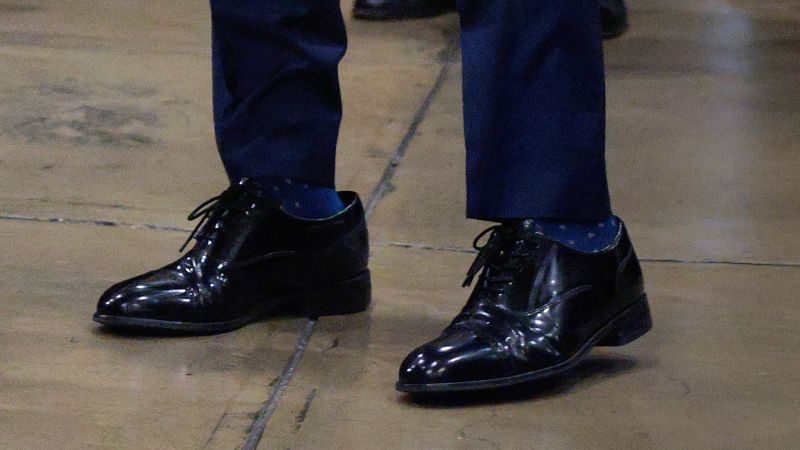
Recent images from the White House have sparked discussions about footwear choices among senior officials, highlighting a peculiar trend in male shoe sizing. Secretary of State Marco Rubio and Vice President JD Vance were photographed in black dress shoes featuring noticeable gaps between the collar and their ankles, creating an effect akin to loose, dangling socks. This phenomenon has drawn attention to the broader issue of shoe size discrepancies, a topic President Donald Trump has taken an active interest in.
According to the Wall Street Journal, Trump has been distributing mid-range Florsheim oxfords to his aides, selecting them on the fly. Despite the shoes’ standard sizing, Rubio and Vance, along with an unnamed colleague, reported sizes of 13, 11.5, and 7, respectively. “You can tell a lot about a man by his shoe size,” Trump reportedly said, echoing a common belief that larger feet reflect greater stature. However, this doesn’t always align with reality, as shoe sizes can vary significantly across brands and styles.
Historical and Modern Paradoxes
Centuries ago, medieval aristocrats influenced fashion through poulaines—shoes with exaggerated pointed toes that extended beyond natural foot length. Today, the Oval Office mirrors this trend, with oversized shoes becoming a symbol of power and presence. Yet, the modern dilemma lies in the inconsistency of sizing, where a brand’s size 9 might equate to another’s 10 or even larger. This variability is compounded by the fact that no universal standard governs men’s shoe sizes.
Historically, shoemakers tailored each pair to individual customers, allowing for precise fits. The industrial era, however, introduced mass production, which often prioritized efficiency over exactness. As a result, variations in sizing persist, even within the same brand. “Styles are manufactured in different locations, leading to size discrepancies,” explained Elizabeth Semmelhack, director of the Bata Shoe Museum in Toronto. This lack of uniformity means men may misinterpret their sizes, especially when relying on declared measurements.
Shoe Fit and Comfort Dynamics
Dress shoes, like those from Florsheim, are designed to stretch over time, initially feeling snug before loosening with wear. “They might feel restrictive at first, but they’ll soften up,” said Justin FitzPatrick, a footwear expert. This evolution in fit contrasts with athletic sneakers, which often require a larger footbed for comfort. The Converse Chuck Taylor All Star, for example, runs a half-size looser than other Converse models, adding to the confusion.
Florsheim’s website advises customers to choose the larger size when between options, noting that athletic shoes typically accommodate a half-size more than formal styles. However, FitzPatrick suggested that Florsheim’s current production methods, now outsourced to Cambodia, China, India, Mexico, and the Dominican Republic, have altered the brand’s fit consistency. Despite these changes, the shoes generally maintain accurate sizing, according to Peskowitz. Yet, the gaps observed on Rubio and Vance remain puzzling, as the style Trump favors is “typically more narrow.”
Size as a Symbol of Masculinity
While shoe sizes do not correlate with penile length, they often serve as proxies for masculinity. As seen in the 2016 presidential race, Rubio and Trump publicly compared hand sizes, reinforcing the idea that physical measurements reflect character. This cultural association persists, even when the facts don’t align. “Men can be aspirational or vague about their shoe size,” Peskowitz noted, explaining how personal preferences and comfort expectations further complicate the issue.
“There is a belief that larger shoe sizes equate to greater masculinity.”
