
How Does Climate Change Affect the Ocean? Exploring the Impacts
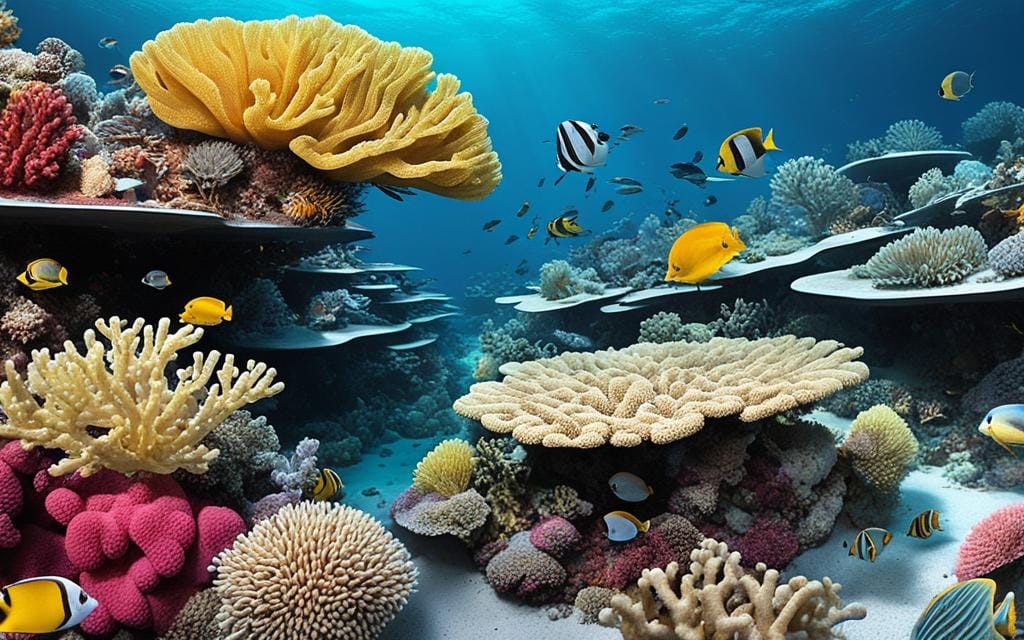
How Does Climate Change Affect the Ocean? Climate change is hitting our oceans hard. They help control the Earth’s climate by soaking up heat and CO2. They are also the home of many life forms1. But, these seas and creatures are in trouble. Knowing how climate change hurts them is key to protecting our planet1.
We will look closely at three big problems: ocean acidification, warmer seas, and less oxygen. These issues are messing up sea life’s delicate balance1. We will check out how Europe’s seas are doing, showing us the risks faced by seas near land because of climate change1.
Our journey will also take us to the Blue Economy plan by the World Bank2. It aims to use our oceans wisely while making sure they are healthy for the future. Come with us. Let’s see how climate change affects our oceans. And what we all can do to ensure the sea’s life remains vibrant.
The “Deadly Trio” of Climate Change and Its Impact on Marine Life
Climate change is really messing with our oceans. It threatens marine life in three big ways: ocean acidification, sea warming, and deoxygenation3. These three factors are damaging marine life and ecosystems globally3. To really get it, let’s look at how each threat affects our oceans.
Ocean Acidification: A Threat to Shell-Building Organisms
Oceans are getting more acidic as they soak up extra carbon dioxide from the air4. This change harms animals that need calcium to make their shells, like corals. It’s happening much faster now than in any time over the past 300 million years4. This is bad news since these organisms help form the basis of marine life3.
Rising Sea Temperatures: Altering Marine Ecosystems
Sea temperatures are going up due to climate change. This is forcing marine life to move and change how they act5. Around two-thirds of the species in the North Sea have already moved to cooler waters or deeper down in just 25 years5. This major shift is messing up food chains, putting many species at risk, and causing some to vanish locally5.
The effects of climate change on our seas are huge. By focusing on ocean acidification, sea warming, and deoxygenation, we see the crucial need to act. There’s a real urgency to save our oceans for the future345.
Ocean Deoxygenation: A Looming Crisis for Marine Species
Climate change is causing a big worry for our oceans. It’s making the waters lose oxygen. This is a huge problem for marine life everywhere6.
When the sea loses oxygen, it can harm many creatures. This is especially true for those that can’t move. They get trapped in areas without enough oxygen6.
Coastal Hypoxia: A Growing Concern
Coastal waters are getting less oxygen, and the problem is getting worse. The number of areas with very low oxygen has gone up four times since the 1950s6. This is very bad news for the ocean’s health. If we don’t act, things will only get worse6.
There’s an interesting twist, though. In some past events, ocean oxygen in some areas actually went up when the world got warmer. This shows us that nature’s reactions are very complex and hard to predict7.
But, at the same time, these big changes meant a lot of sea creatures died out. This shows how dangerous low oxygen can be for life in the deep sea7. The sad part is, we are seeing the same dangerous drop in oxygen levels now. This could lead to major losses in marine life7.
If we don’t change things, many sea animals might disappear in just a few hundred years. There is a way out, though. We can save a lot of marine life by using less fossil fuel and fixing damaged nature areas8.
It’s clear we need to take better care of our oceans. The problem of ocean oxygen loss is very serious and needs our quick action. Saving the ocean’s health means saving ourselves8.
Marine life is telling us that big trouble is ahead. They are like a warning sign in a dangerous place. It’s vital we put the ocean’s well-being first in our fight for a better future678.
Europe’s Degraded Marine Biodiversity: A Wake-Up Call
Europe’s marine life is facing big problems. The recent studies show climate change is a major issue, affecting up to half of Europe’s sea life9. The Baltic Sea, Adriatic Sea, and close-to-shore areas are hit harder by climate change. This is more than open sea areas9. Even though some bony fish are doing okay, most other sea creatures are struggling9.
The effects of climate change on Europe’s seas are huge. Fish that live on the ocean bottom and fish are at major risk. The whole marine food chain and fishing industries may be affected9. In the last decade, ocean temperatures in Europe rose by 0.88°C. Also, by 2100, there might be 3-4% less oxygen in the seas9. Due to climate, the ocean is getting more acidic, harming corals, mollusks, and plankton9.
Areas with low oxygen have grown four times since the 1950s9. It’s predicted that by 2100, the oceans will have 3-4% less oxygen9. This shows we have to act now. Climate change is hurting Europe’s oceans, and we need to help them.
It’s important to know which parts of the ocean are most at risk from climate change. This helps us protect them better9. Europe’s ocean life is in real danger. We must act quickly to save it9.
Key Insights from Leading Authorities
Many top sources have talked about Europe’s ocean troubles due to climate change. The European Environment Agency found that fish are moving because of this10. In 2013, the UK’s Marine Climate Change Impacts Partnership discussed climate change effects on marine life10. The US National Climate Assessment in 2019 also tackled climate change risks10.
The IPCC talked about how climate change affects snow, ice, and permafrost10. The OSPAR Commission made a strategy for the North-East Atlantic on adapting to and fighting climate change10. Reports from HELCOM, OSPAR, and the Black Sea Commission show these areas suffering also10.
The Mediterranean is hit too, as the United Nations report shows10. These reports highlight the big climate change challenges facing Europe’s oceans. They show we must do something now.
The ocean does a lot for us, like soak up most of our CO2 and heat. However, rising sea levels and more acidic water show its stress11. Since 1880, the sea has risen over 23 cm, and now, it goes up by 2.5 cm every 10 years11.
Sea water is now 25% more acidic than 200 years ago11. The IPCC warns that with a 1.5 to 2 degrees rising in temp, most coral will die11. This endangers places near the sea with floods, high tides, and storms11.
Europe needs to act fast to save its ocean life from climate change. By learning more and doing specific actions, we can make the future better for our oceans and the creatures living in them91011.
How Does Climate Change Affect the Ocean and Marine Ecosystems?
Semi-Enclosed Seas and Coastal Areas: Hotspots of Vulnerability
The effects of climate change aren’t the same everywhere in the ocean. Semi-enclosed seas, like the Baltic and Adriatic Seas, and shallow coastal areas feel it more12. This is due to ocean acidification, warming, and reduced oxygen levels. Such areas are critical for marine life and the people who rely on them.
Oceans span about 70 percent of the Earth’s surface. Human activities, including our greenhouse gas emissions, are leading to significant climate change13. This impacts ecosystems that are already stressed from human activities and pollution. Coastal areas and marine life face new, difficult challenges because of this13.
Places like semi-enclosed seas are hit hard by climate change because of their unique features12. For instance, as temperatures change, it can affect how organisms work. Then, there’s the risk of some species not being able to find enough resources and surviving. Coastal places such as wetlands and coral reefs are also under big threat13.
The impact on coastal and semi-enclosed areas from climate change can be huge. For example, over 680 million people might have to move from low-lying coastal places. Big cities like Ho Chi Minh City, Shanghai, and Mumbai might face flooding14. This could also damage critical habitats like coral reefs and mangroves, putting food supplies and people’s livings at risk14.
| Key Climate Change Impacts | Consequences for Marine Ecosystems |
|---|---|
| Ocean Warming | |
| Ocean Acidification | |
| Ocean Deoxygenation |
The situation with climate change in oceans is complex. We need strong strategies based on science to fight and adapt to this121314. Understanding the unique risks of places like semi-enclosed seas is key. It helps us find specific ways to protect marine life and communities depending on them121314.
Climate Change Impacts on Marine Food Webs and Fisheries
Climate change is impacting marine ecosystems greatly, leading to serious effects on the world’s fisheries. The “deadly trio” of ocean acidification, higher sea temperatures, and deoxygenation is changing marine food webs and species distributions. It’s also affecting the output and strength of fisheries worldwide15.
In Alaska, for instance, the numbers of Pacific cod and snow crab have dropped in the Gulf of Alaska and the Bering Sea. These drops are due to sudden climate shifts15. The fishing industry in Alaska is grappling with changes in fish amount and sizes, posing big challenges15.
Climate change is deeply altering marine food webs. Worldwide, the biomass of sea life that gets eaten is forecasted to drop more than the NPP by about 16.7%16. This means less sea life to support animals higher up in the food chain16.
Not only fish populations are affected. A lot of marine birds and whales died during the 2014-2016 Pacific heatwave15. Key prey species like herring and krill have also declined due to these heatwaves. This caused a ripple effect on the abundance of fish, birds, and mammals due to changes in their food sources15.
Climate change is making fish change what they eat and how they feed15. It’s also affecting their size. As water temperatures shift, fish survival and growth can decrease15.
The effects on marine food webs and fisheries are vast. We urgently need strategies to tackle this global issue. Policymakers, scientists, and coastal communities must team up to lessen the impact of climate change on our oceans. This is crucial for a sustainable marine future, supporting both marine life and the people who rely on it15.
The Role of Oceans in Climate Change Adaptation
The world is fighting against the severe impacts of climate change. Now, our oceans are becoming very important in our battle for climate adaptation. They offer help through their huge resources and natural protection systems. This help is crucial for keeping our coastal areas safe and reducing the effects of a changing climate.
Green Infrastructure: Harnessing Nature’s Defenses
Using nature to fight climate change is a key tactic. This approach, also known as “green infrastructure,” relies on natural coastlines. Places like mangroves and coral reefs act as strong barriers against threats like rising sea levels and harsh weather17. For example, mangroves are very good at absorbing carbon dioxide. They do this even better than regular forests on land17. Meanwhile, they hold a lot of carbon, up to 1,000 tonnes per hectare17. Coral reefs are homes to a huge variety of ocean life, even though they cover a very small part of the sea17.
Studies show that sometimes, these natural barriers work better than man-made ones like seawalls do in protecting us from storms and floods17. So, saving and growing these natural areas is key to getting ready for climate change. Moreover18, the ocean helps by taking in a lot of the carbon dioxide we put in the air18. This role is very important in the fight to stop our planet from getting too warm.
Using nature’s own defenses can make our coastal communities safer. This method not only helps protect our people but also the many animals and plants that live in the oceans.
Facing the hard truths of climate change, the oceans show us a hopeful way forward. By supporting the restoration of these natural barriers, we can make our future better prepared. These efforts allow us to use the oceans to shield our communities and our Earth171819.
The World Bank’s Blue Economy Approach
The World Bank is a big advocate for the “blue economy.” This approach looks at how we can manage coastal and marine areas in a sustainable way. It helps governments get better with fisheries, deal with marine pollution, and manage coastal areas. It also focuses on making sure key industries don’t hurt the health of the oceans20.
Protecting Marine Areas and Sustainable Ocean Management
The World Bank puts a lot of effort into creating more marine protected areas. These areas help keep marine life safe, fix habitats, and make sure we can use ocean resources for a long time. The Bank also helps countries make new job options for people who feel the effects of climate change in the oceans21.
The Bank has a special program called PROBLUE. It’s a fund that gives money and help to countries wanting to work on their blue economies. Since 2018, PROBLUE has supported more than 181 projects in 80 places. This help adds up to over $200 million from partners22.
The blue economy model knows that healthy oceans help us in many ways. They give jobs, boost the economy, and help fight climate change. By supporting things like marine conservation, sustainable fishing, and cleaner ship activities, the World Bank is working for a future where oceans keep being good for everyone and the planet21.
Decarbonizing Maritime Activities and Tackling Plastic Pollution
The world is fighting climate change and environmental damage. The shipping industry is a key player. It makes about 3% of the world’s CO2 emissions23. But, it’s possible to cut these emissions by up to 75% with new tech and methods23.
The World Bank is leading this change. It aims to make shipping greener and cleaner. A big task is cutting the use of bunker fuel, the dirtiest fossil fuel. It supports using cleaner fuels and energy-saving tech23. This helps reduce pollution from ships.
Plastic waste is another big issue. Every year, 8 million tons of it end up in the sea. This harms sea life, natural areas, and communities that rely on the sea23. The World Bank works with many to stop plastic before it reaches the ocean.
The International Maritime Organization (IMO) is also key in cleaning up the seas. It influences 90% of global sea trade. The IMO wants to cut greenhouse gas emissions from ships by half before 205023. By cooperating with the IMO, the World Bank pushes for a greener, cleaner, and plastic-free future for our seas.
Today, more than half of the world’s money managers are on board with the Paris Climate Agreement24. Countries are also discussing a global law to fight plastic pollution strongly24. This shows how everyone is serious about saving our planet.
The World Bank’s work is vital for our oceans’ future. By teaming with various groups, it’s making the sea a cleaner, safer place. This not only helps the environment but also boosts the world’s economy242523.
Ensuring a Healthy Ocean for a Sustainable Future
Climate change presents critical issues, and our oceans are key to mitigating its effects26. We need to focus on restoring marine health and making our activities at sea more sustainable. Nature-based solutions also offer great potential for a better tomorrow.
The ocean is essential for keeping our climate in check, soaking up nearly a quarter of our CO2 emissions yearly27. But, rising ocean temperatures and more acidic seawater are threatening sea life and its environments27. We must act now to protect our oceans’ future.
We have to stop the immense marine pollution that’s polluting our seas26. Over 17 million tons of it found its way to the ocean in 2021, and this number might double or triple by 204026. To turn the tide, we need to set up strong waste management and cut down on single-use plastic.
Besides pollution, we also need to protect and rehabilitate our coastal and marine areas27. These environments help reduce emissions by up to 35%. By expanding green energy at sea, making shipping greener, and saving blue carbon zones, we can make a real difference27.
Collaboration between governments, groups, and communities is vital for ocean health26. The tourism related to oceans grows about $134 billion a year and employs a big part of the workforce in many places26. Also, ocean fishing gives jobs to 57 million people and produces over half the needed protein in poor areas26.
To reach a sustainable future, focusing on ocean health is crucial26. Investing in natural approaches and using the sea more sustainably is part of the solution. This way, we can have a resilient ocean that continues to support life for years ahead262728.
Conclusion
The ocean faces many problems due to climate change. It’s dealing with ocean acidification, warming, and less oxygen. Marine life is disappearing, and coasts are in danger. The situation is critical.
But, there is hope. We can protect our oceans by acting now. Improving how we use the sea and choosing green solutions help a lot. Everyone, including governments and local people, must work together.
It’s key to keep learning about climate change’s effects on the ocean29. Researching how it affects life in the sea and sea levels is vital. This knowledge helps us make better plans to save our oceans. Together, we can make a difference and keep the ocean healthy.
Source Links
- https://climatekids.nasa.gov/ocean/
- https://www.worldbank.org/en/news/feature/2022/02/08/what-you-need-to-know-about-oceans-and-climate-change
- https://www.awi.de/en/focus/ocean-acidification/we-are-talking-about-a-deadly-trio.html
- https://www.iucn.org/resources/issues-brief/ocean-acidification
- https://ijrpr.com/uploads/V5ISSUE1/IJRPR22077.pdf
- https://www.oceancare.org/wp-content/uploads/2023/07/UNDER-PRESSURE_Chapter11_climatechange_low-res_web.pdf
- https://scitechdaily.com/oceans-sos-the-looming-threat-of-deoxygenation-on-marine-life/
- https://www.washingtonpost.com/climate-environment/2022/04/28/mass-marine-extinction-event-science/
- https://www.eea.europa.eu/publications/how-climate-change-impacts
- https://water.europa.eu/marine/state-of-europe-seas/pressures-impacts/climate-change
- https://www.ifaw.org/journal/climate-change-impact-ocean
- https://www.ipcc.ch/srocc/about/faq/final-faq-chapter-5/
- https://www.c2es.org/document/coastal-and-marine-ecosystems-global-climate-change-potential-effects-on-u-s-resources/
- https://www.conservation.org/blog/5-ways-that-climate-change-affects-the-ocean
- https://www.openaccessgovernment.org/article/food-webs-and-fish-ocean-climate-change-in-alaska-gulfwatch/162947/
- https://oceans.ubc.ca/2023/09/14/climate-change-will-have-an-adverse-impact-on-trophic-amplification-in-marine-food-webs/
- https://www.un.org/en/climatechange/science/climate-issues/ocean
- https://oceanfdn.org/ocean-and-climate-change/
- https://www.iucn.org/resources/issues-brief/ocean-and-climate-change
- https://www.gmfus.org/news/sustainable-blue-economy
- https://unric.org/en/blue-economy-oceans-as-the-next-great-economic-frontier/
- https://www.worldbank.org/en/topic/environment/brief/the-world-banks-blue-economy-program-and-problue-frequently-asked-questions
- https://oceana.org/press-releases/ocean-based-climate-solutions-can-deliver-nearly-half-the-emissions-reductions-needed-to-prevent-climate-catastrophe-finds-new-report/
- https://oceanconservancy.org/climate/plastics-climate/
- https://www.whitehouse.gov/wp-content/uploads/2023/03/Ocean-Climate-Action-Plan_Final.pdf
- https://www.un.org/sustainabledevelopment/oceans/
- https://oceanpanel.org/publication/ocean-solutions-to-climate-change/
- https://www.fisheries.noaa.gov/topic/climate-change
- https://academic.oup.com/icesjms/article/66/7/1435/658820
