
Trump’s Strait of Hormuz blockade threat raises risks and leaves predicaments unchanged
Trump’s Strait of Hormuz Blockade Threat Raises Risks and Leaves Predicaments Unchanged
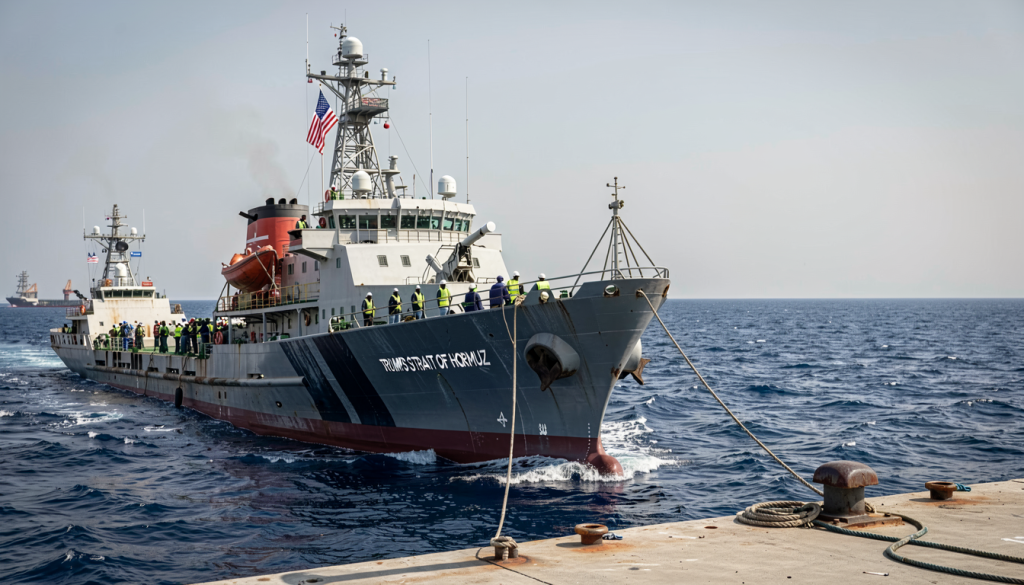
Following a diplomatic effort spearheaded by Vice President JD Vance, which ended without success in ending the US-Iran conflict, President Donald Trump faced a critical decision. This came on Sunday morning, as he shared a series of statements on Truth Social. The US plans to establish a naval blockade of Iran, he declared. “No one who pays an illegal toll will have safe passage on the high seas,” he asserted. Additionally, the US will persist in removing mines from the Strait of Hormuz to guarantee the movement of allied vessels. The military, he emphasized, is “locked and loaded” and ready to recommence strikes against Iran at a “timely opportunity.”
While Trump’s latest announcements lack the apocalyptic tone of his earlier threats to erase Iranian civilization, they introduce fresh complications. Will the mine-clearing operations elevate the danger to American ships from Iranian assaults? How will the US identify those who have transacted with Iran? Could the administration deploy force on vessels bearing foreign flags that defy the blockade? What will be the reaction of countries reliant on Iranian oil, such as China? And will this measure, aimed at disrupting Iran’s main revenue source, further inflate oil prices? These questions remain unanswered.
“I don’t understand how blockading the strait is going to somehow push the Iranians into opening it,” said Senator Mark Warner of Virginia, the top Democrat on the Senate Intelligence Committee, during an interview with CNN.
On the CBS show Face the Nation, Republican Congressman Mike Turner of Ohio, who previously led the House Intelligence Committee, framed the blockade as a tool to compel resolution in Hormuz. “The president, by stating we’re not just letting them decide who moves through, is definitely inviting all allies and everyone to the table,” he explained. “This needs to be addressed.”
Earlier in the week, before Iran and the US agreed to a two-week ceasefire and direct talks, Trump found himself in a tough position. He could escalate US attacks on Iran, risking long-term harm to civilian infrastructure and worsening the humanitarian crisis, or retreat from a war that has consistently lacked public support. A recent CBS poll indicates that 59% of Americans believe the war is going poorly or very poorly for the US. Many feel that core objectives—like maintaining access to the Strait of Hormuz, granting more freedom to the Iranian people, and ending their nuclear program—remain unfulfilled. Cross-party majorities agree that these goals are essential.
Despite claims of progress, the challenges confronting the president have persisted. During a Sunday appearance on Fox News, Trump expressed confidence that Iran would eventually concede all US demands. He noted that while oil prices might stay steady or rise, he believes the US economy will withstand the strain. This stance, at the very least, is a calculated risk. With the November midterms approaching, the Republican Party could face significant losses if his assumptions prove incorrect.
On Saturday night, as his vice-president negotiated with Iran in Pakistan, Trump traveled to Miami to watch combat in UFC matches. The scene, as described by journalists present, was an unusual display. The president observed intense fights in a bloodstained arena, conversed with celebrities, and occasionally engaged in deep discussions with his Secretary of State, Marco Rubio, and other advisors, visible to thousands of spectators. Although ultimate fighting matches follow structured rules and time limits, they still end with a definitive victor.
