
As former Nato chief warns about defence spending, how much has the military shrunk?
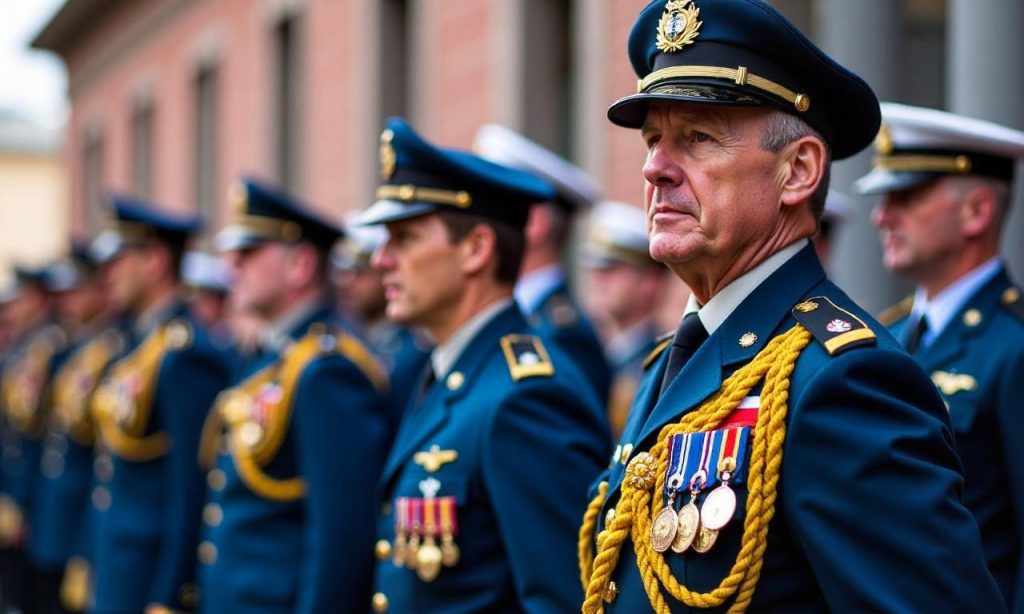
As Former Nato Chief Warnings Emerge, UK Military Faces Shrinking Numbers
Lord Robertson, the former NATO secretary general and Labour defence secretary, has criticized the UK’s recent Strategic Defence Review (SDR) for jeopardizing national security. He argues that the government’s reluctance to boost defence investment poses a significant risk. “We cannot defend Britain with an ever-expanding welfare budget,” he warned, highlighting the mismatch between spending priorities.
Decline in Military Personnel
Since the end of the Cold War in 1990, the UK military has undergone substantial reductions. The army’s regular force, once numbering 153,000 troops, now stands at 73,790. While the 2025 SDR aimed to stabilize the British Army at 73,000, the Ministry of Defence (MoD) reported a 40% drop in enlistment applications in 2025 compared to 2024. Similarly, the reserve forces have plummeted from 76,000 to 25,770 since then.
Naval and Air Force Adjustments
The Royal Navy’s fleet has shrunk from 48 major combat ships in 1990—13 destroyers and 35 frigates—to just 11 frigates and 6 destroyers. The RAF, which once fielded over 300 combat jets, now operates 137 Eurofighter Typhoons and 37 F-35 Lightning II aircraft, which are more advanced but fewer in number. Uncrewed aircraft systems, or drones, have emerged as a key component of the UK’s air capabilities, a technology absent in 1990.
Analysts note that drones have become a critical force in modern warfare, with their impact in the Ukraine conflict surpassing traditional artillery in casualties.
Defense Spending and Fiscal Priorities
Despite the government’s claim of planning the “largest sustained increase in defence spending since the Cold War,” critics argue this is a modest goal given the decades-long decline in defence budgets. Current plans aim to allocate 2.5% of GDP to NATO-qualifying defence by April 2027, with an aspiration to reach 3% in the next Parliament. However, welfare spending now exceeds defence costs, and is forecast to rise to 4.3% of GDP by the end of the decade, driven by programmes like Personal Independence Payments (PIP).
Procurement Challenges and Delays
The MoD manages 47 of the 213 Government Major Projects Portfolio (GMPP) in 2024-25, yet its performance has drawn scrutiny. The National Audit Office (NAO) found that 12 projects were rated ‘Red’ in December, indicating their completion seems unlikely. The report also noted that the average time to award contracts for projects over £20 million has stretched to six and a half years. The 2025 SDR proposed a “segmented approach” to expedite procurement, but progress remains sluggish.
Lord Robertson specifically pointed to the disparity between defence and welfare spending, emphasizing the need for a strategic reallocation of resources.
Global Context and Future Goals
The UK’s 2.3% GDP defence spending in 2025 places it near the middle of NATO members’ allocations, though its target of 5% by 2035 includes both “core defence” and additional measures like critical infrastructure protection. Only Poland, Lithuania, and Latvia surpassed the 3.5% threshold in 2025, with Estonia and Norway trailing closely. The government attributes its current spending levels to evolving threats, including Russia’s resurgence and uncertainties about US NATO commitments.
