
In the Kristin Smart case, key questions remain after 3 decades
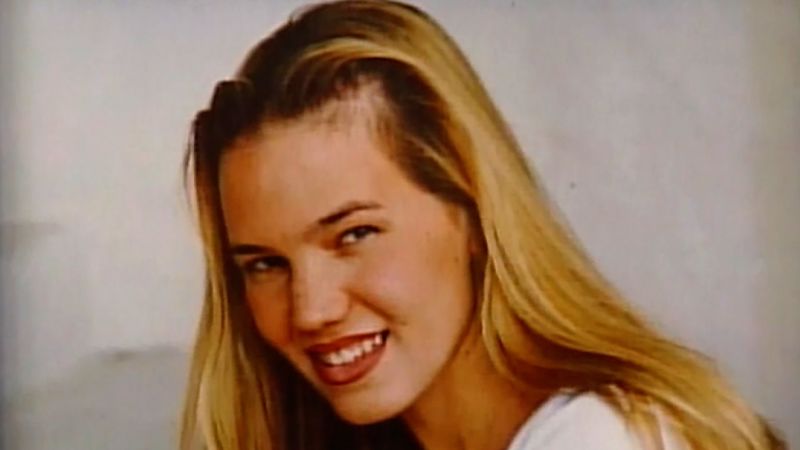
In the Kristin Smart Case, Key Questions Remain After 3 Decades
In the Kristin Smart case key questions – Three decades after Kristin Smart vanished from the California Polytechnic State University campus, the search for her remains continues to fuel public intrigue. Despite the conviction of Paul Flores for her murder in 2022, authorities have yet to confirm the exact location of her body, prompting fresh inquiries into the case. Recent soil testing at the residence of Flores’ mother, Susan Flores, has revealed potential traces of human remains, but the latest investigation has not yielded definitive results. This has reignited debates about whether new techniques or overlooked locations might yet uncover the truth.
A Renewed Push for Answers
The latest search at Susan Flores’ Arroyo Grande home, conducted last week, marked a renewed effort to resolve the long-standing mystery. While investigators combed through the property’s cluttered garage and deck, they concluded their work without recovering Smart’s remains. Sheriff Ian Parkinson emphasized the importance of the search, stating that “until we have Kristin, everything is still wide-open.” This sentiment underscores the persistent uncertainty surrounding her case, even after the conviction of her killer.
“Kristin has been moved, and we don’t know how many times she’s been moved and to where she’s moved,” Parkinson explained, highlighting the possibility that her remains might have been relocated to a seemingly safe spot. “Just because somebody’s house was searched doesn’t mean we’re not going back there.”
Though the search concluded Saturday, authorities have not ruled out revisiting the site with updated methods. A search warrant, based on “investigative leads and evidence,” allowed them to return to the home, though the specific information that led to the warrant remains confidential. The sheriff’s office noted that any findings would be sent for further evaluation, “aiding in the investigation” as they continue to seek closure.
From Disappearance to Conviction
Kristin Smart, a college freshman, disappeared over Memorial Day weekend in 1996, leaving her family and community in shock. Her case became a landmark in California’s criminal justice system, with a decadeslong investigation culminating in the 2022 trial and conviction of Paul Flores. Despite the resolution of the trial, the absence of her remains has kept the family’s quest for closure unresolved. They hope to “finally lay her to rest in the presence of those who love her,” a goal that remains elusive as new questions emerge.
The search at Susan Flores’ home was part of an ongoing effort to re-examine the evidence. While the sheriff had previously mentioned that soil tests indicated human remains “were there at one time or still there,” he could not confirm whether they belonged to Smart. The property, which has been scoured multiple times over the past three decades, remains a focal point for investigators, with its small yard and dense vegetation complicating efforts to locate the body.
Scientific Advances and New Techniques
Advancements in forensic science have played a critical role in the latest search. Soil vapor testing, a method that analyzes compounds released by decomposing bodies, was employed to detect traces of human remains. These samples were sent to a local lab for DNA analysis, according to Parkinson. “We’re also conducting soil tests,” he added, “which involve mapping the chemical signatures left behind by a human body.”
Ground-penetrating radar, a technology that uses sound waves to visualize subsurface structures, was another tool deployed during the investigation. This method, which has become more refined over the years, allowed teams to scan the property with greater precision. However, the crowded nature of the yard—filled with debris and personal belongings—made it challenging to pinpoint exact locations. “It’s a very small area back there to search,” Parkinson noted, “but it’s also quite crowded with stuff.”
Tim Nelligan, an expert in soil vapor testing, was present during the search, collecting samples from both Susan Flores’ yard and a neighboring property. His involvement highlights the collaboration between law enforcement and forensic specialists in modernizing the search process. “The techniques we use now are more sensitive than they were 30 years ago,” he told The Associated Press, suggesting that the absence of remains might be due to earlier limitations in detection rather than a lack of effort.
Family’s Legal Action and Ongoing Doubts
Meanwhile, Kristin Smart’s family has taken legal action against California Polytechnic State University, alleging negligence and wrongful death. The lawsuit claims the institution failed to act promptly after Smart’s disappearance, potentially compromising the investigation. This legal front adds another layer of complexity to the case, as the family seeks both justice and a sense of finality.
Despite the conviction of Paul Flores, the family’s attorneys argue that the absence of her remains raises questions about the thoroughness of the evidence. “The conviction was based on strong testimony, but without the physical remains, there’s always room for doubt,” one legal expert stated in an interview. The case has become a symbol of the challenges in solving cold cases, particularly when new scientific methods and evidence can alter the course of an investigation.
Authorities have maintained that the search at Susan Flores’ home was guided by “investigative leads and evidence,” including witness statements. However, the sealed nature of the search warrant means the underlying details are still private. This secrecy has fueled speculation about the potential for new discoveries or the possibility of a breakthrough in the case.
A Case That Captivates the Public
Since Kristin Smart’s disappearance, the case has captured the public’s imagination, with media coverage and community interest persisting through the years. The conviction of Flores in 2022 brought a measure of resolution, yet the question of her remains remains unanswered. “The Sheriff’s Office remains fully committed to finding Kristin and bringing her home to her family,” Parkinson stated, reinforcing the agency’s dedication to the case.
As the search for Smart’s remains continues, the case serves as a reminder of the enduring power of unresolved mysteries. The combination of old and new evidence, coupled with the emotional weight of the family’s pursuit, ensures that the investigation is far from over. Whether the latest search at Susan Flores’ home will lead to a breakthrough remains to be seen, but for the Smart family, the search for truth is as vital as ever.
With each new development, the case reaffirms its place in the annals of true crime, challenging investigators to revisit old clues and embrace new technologies. The hope that Kristin Smart will finally be laid to rest in her family’s presence continues to drive the search, even as it raises new questions about the path to justice.
