
Virginia Democrats ask US Supreme Court to let them use new congressional map
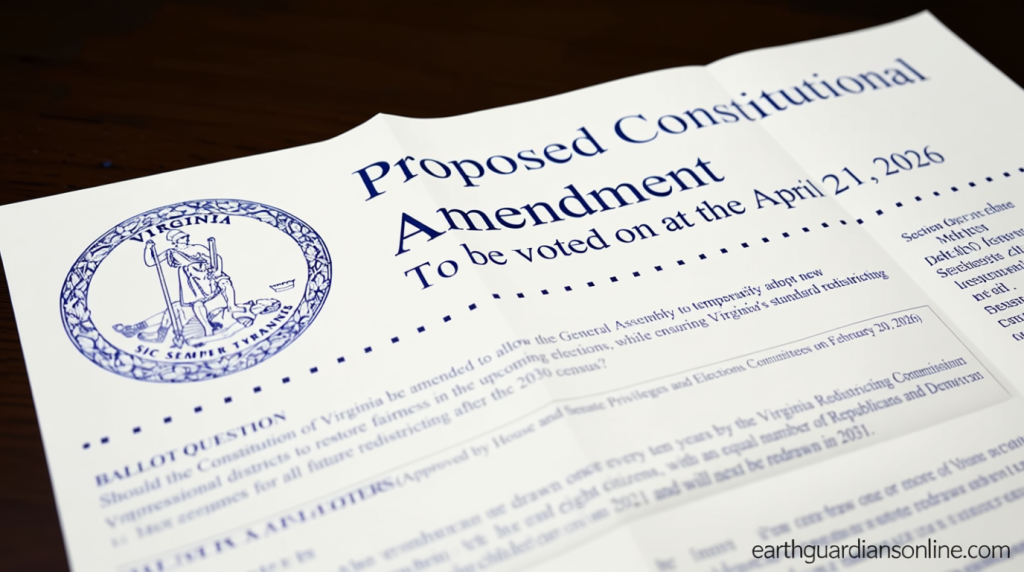
Virginia Democrats Seek Supreme Court Intervention in Congressional Map Dispute
Virginia Democrats ask US Supreme Court – Virginia’s Democratic lawmakers have petitioned the US Supreme Court to restore a congressional map that would have favored their party in the upcoming midterm elections, marking another significant legal challenge in the ongoing mid-decade redistricting efforts. This latest appeal follows a recent ruling by Virginia’s state Supreme Court, which invalidated the Democrats’ attempt to redraw the state’s House districts through a referendum held in April. The decision, which the Democrats claim was “deeply mistaken,” effectively halted their plan to secure additional seats by shifting electoral boundaries to their advantage.
State Court’s Ruling Sparks Federal Appeal
The state Supreme Court ruled that the process used to create the referendum violated the state constitution, specifically requiring the General Assembly to approve a constitutional amendment twice before presenting it to voters. The initial vote in late October 2025, which Democrats argued was valid, was challenged by Republicans, who contended that early voting for the general election had already begun, thereby undermining the referendum’s constitutionality. Virginia Democrats, however, assert that the state court misinterpreted the federal definition of “election,” incorporating early voting into its analysis, a point they are leveraging in their federal appeal.
Chief Justice John Roberts has taken the lead in handling the Virginia case, as it falls under the jurisdiction of the 4th US Circuit Court of Appeals. Roberts requested a response by Thursday evening, setting the stage for a potential expedited review. The appeal is not directly tied to the recent Supreme Court decision that weakened the Voting Rights Act of 1965, but Democrats argue it was a strategic move to counter the political gains Republicans have made from that ruling. The redistricting plan, if implemented, could have added up to four new Democratic seats, drastically altering the state’s congressional representation and potentially reducing GOP dominance to a single district.
Broader Implications of Midterm Redistricting
Virginia’s case is part of a larger trend as states across the nation rush to finalize new congressional maps ahead of this fall’s elections. The decision in late April, which curtailed protections under the Voting Rights Act, has prompted several southern states to revise their boundaries, seeking to maximize their electoral influence. While the Virginia appeal is grounded in state law, the broader implications of the redistricting process are being scrutinized at the federal level, with the US Supreme Court now deeply involved in multiple cases that could shape the outcome of the midterms.
Democrats’ request to the Supreme Court highlights the tension between state and federal interpretations of electoral procedures. They claim that the state Supreme Court’s ruling has caused immediate harm by forcing the state to use a different map than the one approved by the legislature. “By compelling Virginia to hold elections under districts not ratified by the people, the state court has stripped voters, candidates, and the commonwealth of their right to the lawfully enacted congressional boundaries,” the Democrats stated in their appeal. This argument underscores their belief that the decision undermines the integrity of the electoral process and has national consequences.
Supreme Court’s Role in Redistricting Debates
As the Supreme Court reviews the Virginia case, it simultaneously addresses other redistricting disputes, including a request from Alabama to adjust its congressional map. The justices granted Alabama permission to use a boundary that limits the number of districts where Black voters can elect their preferred candidate. This move has drawn criticism from Democrats, who view it as another example of the court prioritizing partisan interests over equitable representation. Meanwhile, the court’s internal debates over its impact on the midterms continue to intensify, with some justices openly questioning the extent of its political influence.
Liberal Justice Ketanji Brown Jackson recently clashed with Justice Samuel Alito regarding the speed at which Louisiana could redraw its map. Jackson accused the court of disregarding its “principles” in favor of influencing the November elections, while Alito countered by calling her arguments “trivial” and “baseless.” These exchanges reveal a growing divide over the court’s role in shaping electoral outcomes. Chief Justice Roberts, meanwhile, expressed concern over the public’s perception of the Supreme Court as a political entity, lamenting the widespread confusion about its role in the redistricting process.
The Virginia case also intersects with another legal theory being considered by the justices in a separate case involving mail ballots. Democrats argue that the state Supreme Court’s misinterpretation of “election” in their case mirrors the justices’ approach in evaluating the validity of mail ballots submitted after Election Day. This connection suggests that the court may be applying a consistent framework to assess the constitutionality of various redistricting strategies. However, the lack of a direct link to the Voting Rights Act decision means the appeal’s success could hinge on broader interpretations of state and federal law.
Partisan Dynamics and Legal Precedents
The redistricting conflict in Virginia reflects the broader partisan battle over electoral fairness. While Republicans have argued that the state’s process was flawed, Democrats emphasize the democratic process that led to the referendum’s approval. The case raises questions about the balance of power between state and federal courts in redistricting matters. Since the state Supreme Court’s ruling was based on state law, the federal court’s intervention would set a precedent for future disputes, potentially expanding its authority over state-level electoral decisions.
Virginia’s redistricting plan, which aimed to create a more favorable map for Democrats, had already been approved by the General Assembly. The referendum, which followed, was a constitutional amendment to formalize the change. However, the state Supreme Court’s decision to overturn this process has left the legislature’s plan in limbo, forcing the state to use a different configuration for the upcoming elections. This situation has drawn comparisons to other states where similar legal battles have emerged, with the Supreme Court now serving as a central arbiter in determining the validity of redistricting efforts.
As the justices weigh Virginia’s appeal, the case may serve as a test of their willingness to intervene in state-level electoral processes. The decision could also influence how other states handle their own redistricting challenges, particularly those involving early voting and mail ballots. With the midterms approaching, the stakes are high for both parties, and the outcome of this appeal may determine whether Virginia’s Democrats can capitalize on their proposed map to increase their representation in Congress.
Looking Ahead: A Critical Election for the Court
The Virginia case is part of a growing list of redistricting disputes that will shape the political landscape of the 2026 midterms. As the Supreme Court navigates these cases, its reputation as a politically neutral institution faces scrutiny. The justices’ handling of the Virginia appeal and the Alabama case will be closely watched, with critics arguing that their rulings may tip the balance in favor of one party over the other. For Virginia Democrats, the hope is that the federal court will recognize the state’s efforts to secure fair representation and reinstate their congressional map before the November elections.
