
In wild late-night posting spree, Trump attacks Obama with imaginary quote and false conspiracy theories
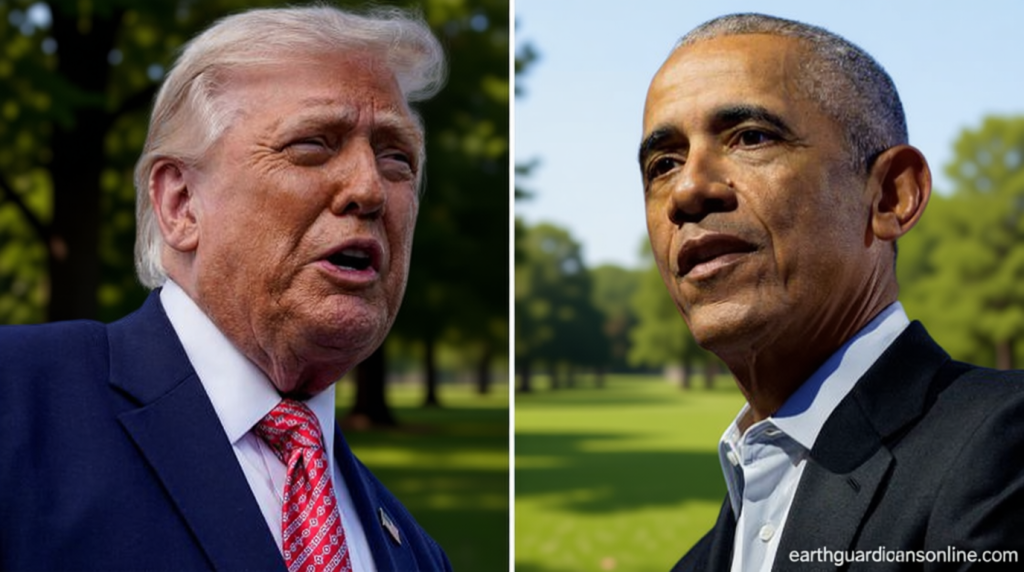
Trump’s Wild Late-Night Posting Spree Targets Obama with Fabricated Claims
In wild late night posting spree – During a wild late-night posting spree, Donald Trump unleashed a torrent of social media content late Monday night, flooding his platforms with allegations and conspiracy theories aimed at former President Barack Obama. The surge of posts, which continued into Tuesday morning, included misleading statements and recycled narratives that painted Obama as a political threat. Fact-checkers later analyzed the content, revealing how Trump’s posts often lacked evidence, relying instead on sensational claims to shape public perception. This episode highlights the aggressive tactics used in his late-night posting spree to challenge opponents.
Constructed Quotes and Unverified Accusations
A key element of Trump’s late-night posting spree involved a fabricated quote attributed to Louisiana Senator John Kennedy. The post claimed Kennedy had accused Obama of embezzling $120 million from his Affordable Care Act initiatives, a statement that was never made by the senator. Independent fact-checkers confirmed the quote was entirely invented, with its origins traced to a satirical website known for spreading misleading content. The misleading phrasing—such as “allocated money under his own laws using taxpayer-generated prestige”—was then falsely assigned to other figures, including FBI Director Kash Patel and pop icons Vince Gill and Madonna.
“Someone told me there was something floating around about me accusing Obama of stealing $120 million. I didn’t say that. I don’t know where it came from.”
Despite the lack of support, Trump continued to amplify the claim through his late-night posting spree, using it to fuel distrust in Obama’s policies. Kennedy later clarified he had no connection to the statement, emphasizing how Trump’s strategy often involves rebranding or inventing sources to lend credibility to his attacks.
Conspiracy Theories and Exaggerated Claims
As part of his late-night posting spree, Trump circulated a post from an account using the late John F. Kennedy Jr.’s image, alleging that Obama had secretly wiretapped Trump Tower during the 2016 campaign. The claim drew comparisons to the Watergate scandal, but no credible evidence was presented to back it up. The Justice Department noted in 2017 that it had no records confirming such surveillance, yet Trump repeatedly used this narrative to question Obama’s integrity.
Additionally, Trump reposted a webpage filled with dubious assertions about the Obama administration. The site claimed Hillary Clinton had used a private email server to leak classified information, a claim widely debunked by experts. It also falsely accused Obama of orchestrating a coverup, with a misleading reference to nine New York police officers dying under suspicious circumstances. The “Birth Certificate Scandal” was another false narrative used in his late-night posting spree to question Obama’s eligibility for office.
Post-Election Smears and Legal Missteps
Trump’s late-night posting spree extended into the 2020 election aftermath, where he targeted Biden and his allies. A post from former national security adviser Michael Flynn asserted that the election had been “stolen,” a claim without solid proof. The same day, Trump shared a video in which a conservative commentator labeled Obama a “Trojan horse for the Marxists,” suggesting he had secretly undermined American values. This rhetoric was part of a broader pattern of misinformation during his late-night posting spree.
Another video from the late-night posting spree featured Tulsi Gabbard, who later became Trump’s director of national intelligence. The clip included baseless allegations that Obama and Clinton had influenced Biden’s decisions, even as their own actions were scrutinized. The video also referenced Sidney Powell, a pro-Trump attorney, whose earlier claims about election fraud were later found to be unsupported by evidence. These tactics underscore how Trump leverages late-night posting to sustain his political narratives.
Recycled Claims and Persistent Narratives
Throughout his late-night posting spree, Trump repeatedly recycled similar claims to maintain momentum. For example, he cited a poorly sourced report from One America News, which claimed Dominion voting machines had “deleted 2.7 million Trump votes nationwide.” This assertion, shared multiple times, lacked concrete proof and was already criticized for its lack of thorough investigation. The same report was later used to spread misleading information about Pennsylvania’s election results, further exemplifying the repetitive nature of his late-night posting strategy.
Trump’s late-night posting spree also included exaggerated interpretations of real events. By framing these as evidence of widespread fraud or conspiracy, he sought to rally his base and shift focus from his own policies. This approach has been consistent across his political career, using late-night posting to dominate the narrative and discredit opponents with minimal factual basis.
