
Supreme Court allows Alabama to eliminate congressional district held by a Black Democrat
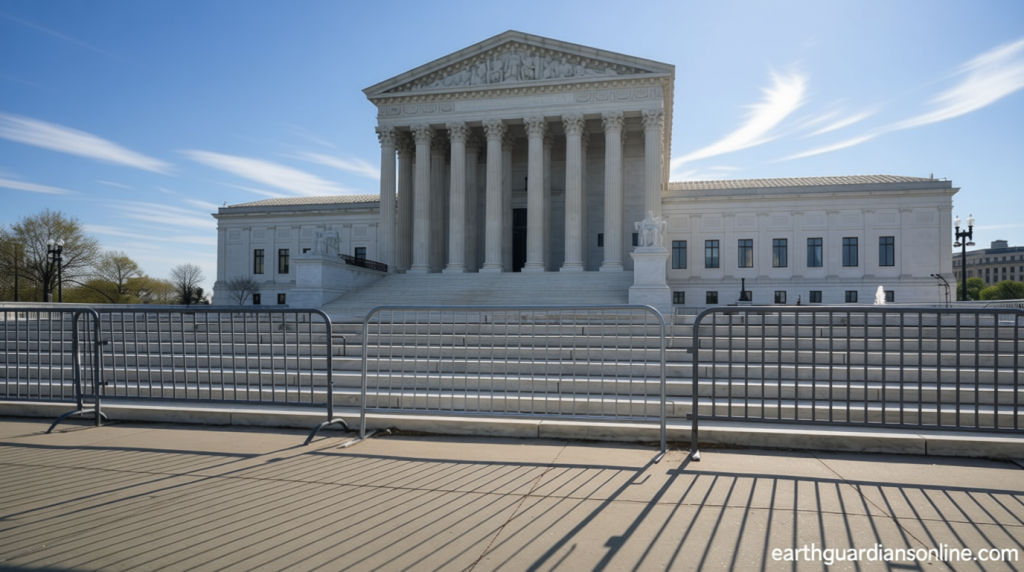
Supreme Court Allows Alabama to Reinstated Previous Congressional Map
Supreme Court allows Alabama to eliminate – In a swift and unexpected decision on Monday, the U.S. Supreme Court cleared the way for Alabama to resume using a congressional district configuration that includes a single majority-Black district. The ruling, issued without detailed explanation, came in response to an urgent request from Alabama state officials who sought to overturn a lower court order that had previously blocked the implementation of the 2023 map. The decision has sparked immediate debate, with the court’s three liberal justices issuing a dissent that highlights concerns over its impact on voting rights and electoral fairness.
The state’s move to restore the older map was prompted by the Supreme Court’s landmark ruling in late April, which significantly weakened the enforcement of the Voting Rights Act of 1965. That decision, centered on Louisiana’s congressional boundaries, set a precedent that allowed states to redraw districts with fewer restrictions on minority representation. Alabama’s state legislature quickly seized on this ruling, arguing that the 2023 map, which created a single majority-Black district, was constitutionally sound and should be reinstated. The court’s conservative majority, aligning with the Louisiana case, approved the request, enabling the state to proceed with its updated electoral configuration.
Alabama’s congressional map, which was first approved in 2023, had been contested by civil rights advocates who claimed it diluted the voting power of Black communities. The lower court had initially halted its use, citing provisions of the Voting Rights Act that required states to ensure districts were not designed to suppress minority influence. However, the Supreme Court’s intervention has now sidelined that objection, allowing the state to use the map as originally intended. The decision underscores the court’s growing skepticism toward the Act’s protections, particularly in cases involving redistricting.
The ruling has been met with criticism from the liberal justices, who argued that the decision creates confusion and undermines the intent of the Voting Rights Act. Justice Sonia Sotomayor, in a dissent joined by Justices Elena Kagan and Stephen Breyer, stated,
“The decision is inappropriate and will cause only confusion as Alabamians begin to vote in the elections scheduled for next week.”
She emphasized that the court’s intervention risks eroding the safeguards put in place to prevent racial gerrymandering, particularly in states with a history of discriminatory practices.
Background on Alabama’s Redistricting Efforts
The 2023 congressional map was drawn under Alabama’s new legislative majority, which had taken control of both chambers following the 2022 elections. The map was designed to consolidate Black voters into one district, a strategy that critics argued was aimed at minimizing their influence in the state’s other districts. This approach has been a point of contention, with opponents accusing the legislature of creating a “majority-minority” district to dilute Black voting power across the remaining districts.
The state’s push to reverse the lower court’s decision came just days before the upcoming elections, with officials arguing that the delayed implementation of the map would disrupt the electoral process. Alabama’s governor and state lawmakers had petitioned the Supreme Court to intervene, citing the April ruling as a justification for their actions. The court agreed, granting a temporary stay that allows the state to use the 2023 map for the current election cycle. This marks a significant shift in the balance of power, as the Supreme Court has become a key player in shaping the boundaries of electoral districts across the country.
The Voting Rights Act and Its Legal Challenges
The decision in Alabama is part of a broader trend of the Supreme Court narrowing the scope of the Voting Rights Act. Since its enactment in 1965, the law has been a cornerstone of protecting minority voters from discriminatory practices, including gerrymandering. However, recent rulings have cast doubt on its effectiveness, particularly in states where redistricting is used to reduce the political power of marginalized communities.
The Louisiana case, which influenced the Alabama ruling, centered on the constitutionality of Section 2 of the Voting Rights Act. The court’s majority argued that the law’s requirements for equitable representation are outdated and overly broad, allowing states to redraw districts with minimal oversight. This reasoning has been applied to Alabama’s situation, where the 2023 map was deemed compliant with the new legal standards. The liberal justices, however, contended that the ruling ignores the historical context of the Act and fails to account for its role in ensuring fair electoral outcomes.
Legal experts have noted that the Alabama decision could set a precedent for other states seeking to reshape their districts with fewer constraints. With the Voting Rights Act’s protections weakened, states may now have greater flexibility to design maps that prioritize majority-minority districts, potentially altering the dynamics of representation in regions with diverse populations. The ruling also highlights the growing divide within the court over the interpretation of voting rights, with the conservative bloc favoring a more lenient approach and the liberals advocating for stronger safeguards.
Implications for the Upcoming Elections
The restored congressional map will be in effect for the next round of elections, which are set for next week. This means that the district, which is expected to elect a Black representative, will remain as a symbol of minority representation in Alabama. However, the decision has raised questions about the fairness of the map, particularly in the other districts where Black voters are spread more thinly.
Proponents of the decision argue that the 2023 map is a legitimate reflection of Alabama’s demographic changes and that the lower court’s order was an overreach. They point to the state’s ability to redraw districts as part of its constitutional rights, emphasizing that the process is designed to ensure competitive elections. Critics, on the other hand, warn that the map may lead to the underrepresentation of Black voters, particularly in the context of a state where the majority of Black residents are concentrated in a single district.
The ruling has also drawn attention to the role of the Supreme Court in shaping the nation’s electoral landscape. By allowing Alabama to revert to its older map, the court has demonstrated its willingness to prioritize state autonomy over federal oversight in redistricting cases. This approach has been criticized as a way to enable partisan gerrymandering, with some legal analysts suggesting that the decision may have broader implications for the future of voting rights in the United States.
Virginia Democrats Seek Similar Relief
While the Alabama case is the focus of the current ruling, it is not an isolated event. Virginia Democrats have also filed a request with the Supreme Court, asking for similar relief to allow their state to implement a new congressional map. The Virginia case, which is still under review, mirrors Alabama’s situation in that it involves claims of minority voter dilution. If the Supreme Court grants Virginia’s request, it could signal a pattern of decisions that prioritize state redistricting strategies over federal protections.
The Virginia case highlights the ongoing debate over the Voting Rights Act and its relevance in modern electoral politics. Advocates for the Act argue that it remains essential in preventing discriminatory practices, while opponents claim it is no longer necessary due to advancements in voting technologies and the growing influence of partisan agendas. The Supreme Court’s decision in Alabama may influence the outcome of the Virginia case, potentially reinforcing the trend of weakening the Act’s enforcement.
As the elections approach, the implications of the Alabama ruling will become clearer. The restored map may affect the outcome of key races, particularly in the majority-Black district where the political landscape is expected to remain competitive. However, the decision has already sparked a new wave of legal and political discourse, with discussions about the future of representation and the role of the Supreme Court in shaping electoral fairness.
