
Clash of perception: Why talks between Iran and the US are deadlocked
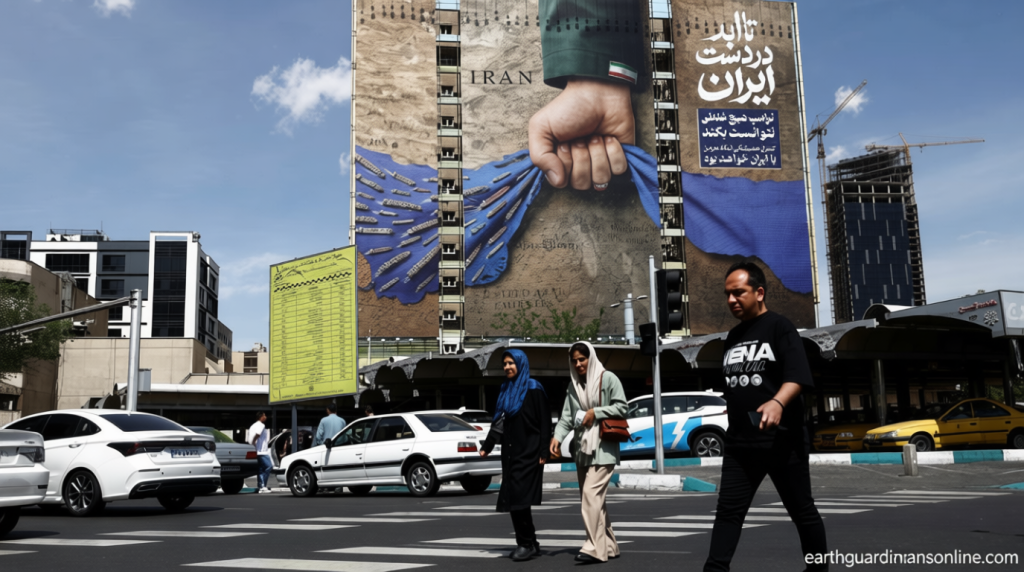
Clash of Perception: Why Talks Between Iran and the US Are Deadlocked
Clash of perception – After a 10-day wait, the U.S. received Iran’s counterproposal, which underscored the Islamic Republic’s resolve to secure a decisive outcome. Tehran’s demands, outlined in a statement released Sunday, emphasized its ambition to achieve a major victory even as President Donald Trump pressed for the regime’s surrender. Despite the lack of public disclosure on the exact terms, Iranian state media highlighted key points: an end to the war, sovereignty over the Strait of Hormuz, and comprehensive sanctions relief. These bold conditions formed a framework that Trump dismissed as “totally unacceptable,” calling it “a piece of garbage” during a Monday press briefing. However, the specifics of his objections remain unclear, shrouded in the ambiguity surrounding the proposal’s content.
Iran’s Strategic Position
Tehran has consistently framed its stance as one of strength, aligning with its broader effort to project dominance to domestic audiences. Since the U.S. and Israel initiated strikes against Iran over 10 weeks ago, the Islamic Republic has adopted a strategy of defiance, refusing to acknowledge any sign of defeat. Instead, it portrays itself as prepared to extend the conflict indefinitely, aiming to intensify pressure on Washington to extract significant concessions. This approach, according to Iranian officials, is designed to strengthen the regime’s financial position and ensure its long-term survival. “They think I’ll get tired, or get bored, or I’ll have some pressure,” Trump remarked, insisting that “there’s no pressure at all. We’re going to have a complete victory.” His comments reflect a belief in swift dominance, while Tehran’s leaders appear determined to prolong the standoff.
The core of the impasse lies in diverging priorities. Trump seeks immediate concessions, including a temporary halt to Iran’s nuclear program and the surrender of its existing stockpile of highly enriched uranium—estimated at 440 kilograms. U.S. officials have suggested a 10-year freeze as a potential solution. In contrast, Iran proposes a staggered, phased agreement. Its initial phase focuses on ending the war, lifting sanctions, and removing the U.S. naval blockade of the Strait of Hormuz. Talks on the nuclear program, however, are postponed to later stages. This phased strategy is intended to allow Tehran to secure tangible victories before addressing more contentious issues.
Perceptions and Trust Issues
Analysts suggest the deadlock stems from a clash of perceptions. Sanam Vakil, director of the Middle East and North Africa Program at Chatham House in London, noted, “We’re in a standoff because President Trump doesn’t understand why these guys are not making a deal to save themselves.” Vakil argued that Iran’s refusal to compromise early reflects a lack of trust in Trump’s reliability. “They will not give him concessions at the start of the agreement because they don’t trust him,” she added, pointing out that Iranian leaders have been “personally burnt by him” in past negotiations.
Iran’s Foreign Ministry spokesperson, Esmaeil Baghaei, framed the disagreement as a conflict between a party seeking its own rights and one imposing undue constraints. “The disagreement is between a party that is solely seeking its fundamental rights and a party that insists on violating the rights of the other side,” he said, asserting that Iran’s demands are “reasonable” and “responsible.” This narrative positions Tehran as the aggressor, with the U.S. as the dominant force imposing restrictions. However, the regime’s reply suggests a belief that it has already secured survival, not just a tactical advantage.
Guarantees and Regional Alliances
As Trump seeks to maintain pressure on Iran, the Islamic Republic has pushed for more comprehensive guarantees. Tehran demands assurances that the U.S. will not resume hostilities, a condition that aligns with its strategy of ensuring long-term stability. To this end, Iranian officials have proposed involving third parties, notably China, as a neutral guarantor for any future agreement. Ahead of Trump’s visit to China this week, Iran’s foreign ministry hinted at Beijing’s potential role in mediating the dispute.
Iran’s envoy to Beijing, Abdolreza Rahman Fazli, stated in a post on X that “given the position that China holds for Iran and other countries in the Persian Gulf region, Beijing can serve as the guarantor for any agreement.” He argued that any potential accord must include guarantees from major powers and be formalized through the United Nations Security Council. This move underscores Tehran’s desire to leverage regional alliances, positioning China as a critical player in the negotiations. The inclusion of China may also serve to complicate U.S. efforts to isolate Iran, adding a new layer of complexity to the stalemate.
Meanwhile, Trump’s insistence on immediate nuclear concessions has drawn criticism from some quarters. While his team aims for a swift resolution, Iranian leaders view this as a premature demand. “They change their mind when the two sides appear to reach points of agreement,” Trump complained, a sentiment that may reflect the Iranian military’s reluctance to commit to measures that satisfy his conditions. This dynamic highlights the challenges of negotiation, where mistrust and differing strategic goals create an insurmountable divide.
Experts warn that the current deadlock could have far-reaching consequences. The failure to reach an agreement may escalate tensions, prolong the conflict, and deepen the divide between the U.S. and Iran. Trump’s refusal to accept Iran’s counterproposal signals a willingness to persist in his strategy of pressure, even if it means extending the war. For Tehran, however, this delay is a calculated risk, allowing it to build momentum and secure strategic advantages before committing to major concessions.
The situation has also raised questions about the role of international diplomacy. While Iran seeks to involve China and the UN, the U.S. appears focused on unilateral action. This approach may undermine efforts to broker a lasting peace, as both sides prioritize their immediate objectives over broader cooperation. The clash of perception, as Vakil described, is not just a matter of policy but a reflection of deeper ideological and strategic differences.
As the talks continue, the deadlock remains a testament to the challenges of bridging two opposing visions. The U.S. envisions a quick, decisive victory, while Iran aims for a negotiated outcome that ensures its survival and sovereignty. With the clock ticking and the stakes rising, the question is whether either side will be willing to adjust its demands in the name of peace—or if the conflict will persist, defined by a series of unmet expectations and shifting priorities.
“The Iranian regime’s reply reflects the mindset of a leadership that believes it survived the war and won, not that it lost it,” said Danny Citrinowicz, a senior researcher at the Institute for National Security Studies. “As a result, its demands remain high, and its willingness to compromise is extremely limited.”
In the absence of clear progress, the standoff between the U.S. and Iran continues to shape the region’s geopolitical landscape. The lack of mutual understanding has left both sides locked in a cycle of counterproposals and rejections, with the potential for escalation looming large. For now, the war remains a battleground of perceptions, with neither side yielding to the other’s vision of victory.
